In the spring of 1942, the beaches running through the Heritage Crossroads Highway corridor were the front row of a war most Americans imagined as far away. German U-boats surfaced within a mile of St. Augustine Beach. Nazi saboteurs waded ashore at Ponte Vedra in St. Johns County, buried explosives in the dunes, and caught a northbound bus. Oil slicks and wreckage from torpedoed tankers drifted onto Flagler Beach. For six months, this 98-mile stretch of Florida coastline absorbed some of the most direct domestic violence of the Battle of the Atlantic - a campaign the United States was, in those first months, spectacularly unprepared to fight. This is not the statewide story of Florida and World War II. It is the specific story of this corridor, these waters, and these communities.
Operation Drumbeat and the Undefended Shore
Five boats, an unlit continent
Operation Paukenschlag - the word translates as "drumbeat" - launched on January 13, 1942, sending five German Type IX U-boats toward the American East Coast. Admiral Karl Donitz's calculation was straightforward: American shipping lanes were dense, American coastal defenses were thin, and Pearl Harbor was six weeks in the past. What U-boat captains did not expect was what waited for them when they arrived.
The American coastline was entirely unblacked-out. Resort hotels blazed. Neon signs stayed lit. The lights of coastal cities sat on the horizon, and ships moving through those waters were silhouetted against them in perfect relief. German commanders who had spent two years dodging Royal Navy escorts in the dark North Atlantic found themselves hunting in what amounted to a lighted shooting gallery. The term their crews used for this campaign - the Second Happy Time - was not exaggerated. Between January and August 1942, German U-boats sank 609 ships totaling more than three million tons along the American eastern seaboard. At least 24 of those vessels went down in Florida waters.
The Heritage Corridor's coastal cities - St. Augustine, Flagler Beach, Daytona Beach, and the towns between - were no different. Resort hotels and neon-lit storefronts stayed fully illuminated through the early months of 1942, projecting a backdrop that helped U-boat commanders identify and target tankers in silhouette. Blackout orders eventually came, but enforcement lagged far behind the sinkings.
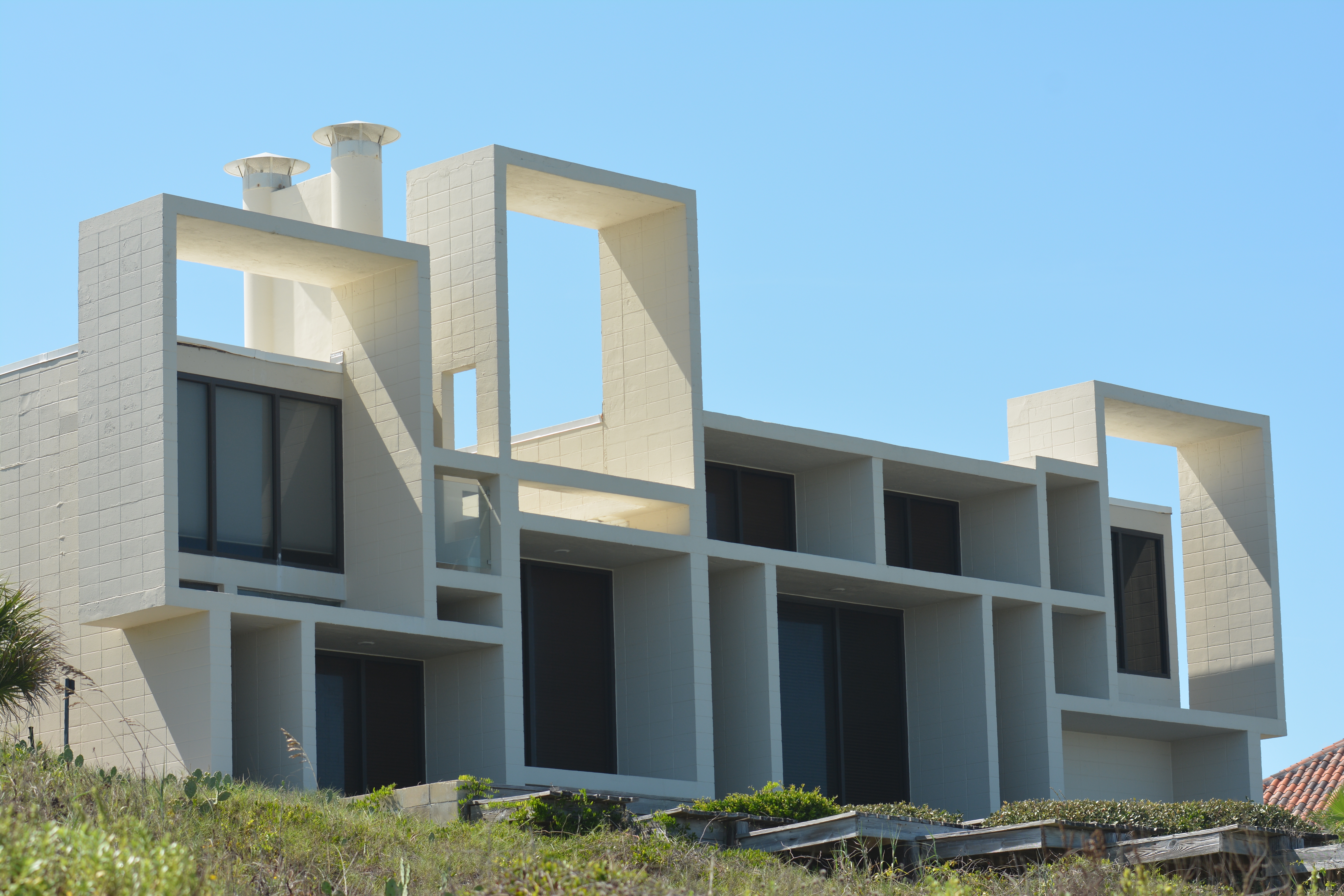
Ships Burning in Sight of Shore
The attacks closest to the Heritage Corridor came in waves through the winter and spring of 1942, and local residents had no doubt what was happening.
On February 22, 1942, the tanker SS Cities Service Empire - 465 feet long, carrying more than 9,000 barrels of crude oil - was torpedoed by U-128 approximately 25 miles north of Cape Canaveral. Two crewmen drowned. Survivors rowed themselves ashore and were taken in by local residents, arriving wet and shaken on a Florida beach that probably felt, to them, like the edge of the world. The ship's oil spread across the surface and kept spreading.
On March 21, 1942, the British cargo vessel SS Daytonian - more than 6,400 gross tons - was torpedoed. That same day, the American cargo ship SS Sahale dodged two torpedoes just 30 miles off Daytona Beach. Two attacks near one corridor city in a single afternoon was not coincidence; it was the rhythm of a campaign in full operation.
What washed ashore throughout that spring told a physical story no newspaper could fully capture. Oil. Debris. Life preservers. In some cases, bodies. Residents of Flagler Beach and the surrounding coast did not need to read about the Battle of the Atlantic - they found evidence of it at the waterline throughout 1942.
U-123 Off St. Augustine Beach
The most precisely documented moment of the U-boat campaign along the Heritage Corridor came on the evening of April 10, 1942. At six o'clock, German submarine U-123, commanded by 28-year-old Reinhard Hardegen, surfaced one mile from St. Augustine Beach.
One mile. On a clear evening, that is close enough to see structures on shore. The St. Augustine Lighthouse at the northern end of the corridor was operational throughout the war and staffed for coastal observation. That evening, something was moving in the water just offshore, and no American warship was positioned to respond.
Hardegen did not attack there. He continued north. At 10:20 that same night, U-123 torpedoed the tanker SS Gulfamerica off Jacksonville Beach. The Gulfamerica was on her maiden voyage, carrying 90,000 barrels of fuel oil from Port Arthur, Texas, to New York. The torpedo hit was not enough for Hardegen. He surfaced U-123 between the burning tanker and the beach - positioning his submarine between the fire and the audience onshore - and finished the ship with his deck gun.
Evening crowds were watching from the Jacksonville Beach boardwalk and pier. Nineteen crew members died; twenty-nine survived. Spectators on shore watched a surface battle between a German warship and a dying American tanker from what might as well have been bleacher seats. Hardegen knew they were watching. It was a performance as much as an attack, and the whole chain of events - the late-afternoon surfacing near St. Augustine, the night attack, the deck gun finish - traced a single patrol line directly through the northern Heritage Corridor.
The Second Happy Time - the name German submariners gave to their January-August 1942 Eastern Seaboard campaign - reflects both how effortless the hunting was and how catastrophically unprepared the American response turned out to be during those months.Documented designation used by Kriegsmarine submariners for the 1942 Eastern Seaboard campaign
Operation Pastorius: Four Agents in the Dunes
The Ponte Vedra landing
The U-boat campaign's most direct connection to the Heritage Corridor came not through torpedoes but through a rubber raft. On the night of June 16-17, 1942, four German agents came ashore at Ponte Vedra Beach in St. Johns County. They arrived aboard U-584, they were trained operatives of the Abwehr's Brandenburg Sabotage School, and they carried enough materiel to supply a prolonged campaign against American infrastructure.
What they buried in the Ponte Vedra dunes that night included:
- Explosive charges designed to destroy railroad facilities and bridges
- Incendiary devices targeting industrial plants and storage sites
- Timing mechanisms and detonators for delayed attacks
- Four crates of sabotage equipment in total, intended to sustain the team through multiple operations
The four men - Edward Kerling, Werner Thiel, Hermann Otto Neubauer, and Herbert Haupt - were part of Operation Pastorius, a two-team sabotage mission. After burying the crates, they cleaned up, changed into civilian clothes, and did something remarkably ordinary: they found a Greyhound bus stop and bought tickets north.
How the plot collapsed
The sequence of the plot's failure ran as follows:
- A companion team had already landed on Long Island on June 13, 1942; team member George Dasch quickly decided to betray the operation.
- Dasch traveled to Washington and contacted the FBI, delivering the names and plans of all eight saboteurs.
- The FBI arrested the entire Ponte Vedra team as they moved through New York, before any sabotage was attempted.
- All eight participants faced a military tribunal and were convicted.
- On August 8, 1942 - less than two months after the Ponte Vedra landing - all eight men were electrocuted in Washington, D.C.
The speed of the resolution should not obscure how close this came to working. What stopped it was human betrayal, not military interdiction. A Florida Historical Marker commemorating Operation Pastorius stands today in Ponte Vedra Beach, erected in 1989 - one of the few public acknowledgments anywhere on the Heritage Corridor that enemy personnel actually set foot here during the war.
The Home Front Responds
Blackouts and Civil Defense
Coastal cities from St. Augustine to Daytona Beach were eventually ordered into strict nighttime blackouts after months of hesitation. What that meant in practice was the elimination of every light visible from the sea - resort hotel exteriors, street lamps, neon signs, automobile headlights near the beach. The Flagler Beach Historical Museum holds records of the specific blackout measures imposed on the town. These were not abstract wartime precautions; they were direct responses to oil washing ashore and to the knowledge that tankers were burning within sight of local beaches.
Horses on Flagler Beach
Among the least-known home front responses along the Heritage Corridor was the mounted beach patrol. The Coast Guard was authorized to use horses in September 1942, and by year's end more than 24,000 men and roughly 3,000 horses were patrolling more than 3,700 miles of American coastline. Two-man mounted teams often rode with trained dogs wearing canvas booties to protect their feet from oyster shells on tidal flats.
What those riders were looking for along Flagler Beach and the corridor shoreline:
- Signs of enemy landings - footprints, disturbed sand, cached equipment in the dunes
- Wreckage and debris from offshore sinkings that might carry intelligence value
- Signals or lights that could be communicating with offshore submarines
- Survivors from torpedoed vessels washing ashore and needing rescue
The image of mounted Coast Guardsmen riding the same stretch of Flagler Beach that tourists walk today is striking precisely because it is so little known. The corridor's wartime history is not all naval and aerial - some of it was conducted at a walk, in the dark, by men on horseback scanning a shoreline that could give up anything.
NAS DeLand and the Counter-Offensive
The military response along the corridor was not purely defensive. Naval Air Station DeLand, established November 17, 1942 - after the city of DeLand in Volusia County donated the land to the Navy - flew active anti-submarine patrols over the corridor's offshore waters using PV-1 Ventura and PB4Y-2 Privateer patrol bombers. Crews flying those patrols east of the Heritage Corridor were searching for the same submarines that had torpedoed the Gulfamerica and Cities Service Empire, and by 1943 they were finding them.
| Ship | Date | Attacker | Proximity to Corridor | Crew Outcome |
|---|---|---|---|---|
| SS Cities Service Empire | Feb. 22, 1942 | U-128 | Approx. 25 miles north of Cape Canaveral | 2 killed; survivors rowed ashore |
| SS Daytonian | March 21, 1942 | German U-boat | Off Daytona Beach region | Ship lost |
| SS Sahale | March 21, 1942 | German U-boat | 30 miles off Daytona Beach | Escaped - both torpedoes missed |
| SS Gulfamerica | April 10, 1942 | U-123 (Hardegen) | Off Jacksonville Beach; same patrol surfaced near St. Augustine | 19 killed, 29 survived; sank |
NAS DeLand remained active through 1946. Its contribution was part of the broader Allied shift - improved convoy procedures, more patrol aircraft, coordinated hunter-killer groups - that gradually made American coastal waters less hospitable to U-boats. The fact that the station originated in a civic land donation from Volusia County connects the corridor's civilian community directly to the counter-offensive.
What Visitors Can Find Today
Flagler Beach Historical Museum
The Flagler Beach Historical Museum in Flagler Beach preserves German submarine artifacts as part of its permanent collection, alongside records documenting the blackout measures imposed on the town. This is the most direct point in the corridor where a visitor can stand in front of physical objects connected to the offshore U-boat campaign. Check current hours before visiting - the museum is a local institution with a schedule that varies by season.
The Operation Pastorius marker at Ponte Vedra Beach
A Florida Historical Marker commemorating Operation Pastorius stands in Ponte Vedra Beach, St. Johns County, erected in 1989. It marks a site where enemy agents actually came ashore on American soil - not a memorial to something that happened nearby, but to something that happened at this stretch of coast. The Florida Division of Historical Resources maintains the official marker database, which lists locations for all state historical markers.
St. Augustine Lighthouse
The St. Augustine Lighthouse at the northern end of the Heritage Corridor was in service throughout the war and has documented its wartime role in coastal observation. The lighthouse museum holds records from this period. For anyone following the corridor's WWII story geographically, the lighthouse is the logical starting point - it stands at the northern boundary of the route, and it was the first landmark Hardegen's U-123 would have passed on that April evening in 1942 as the submarine made its way north.
Offshore wreck sites
- The SS Gulfamerica's remains lie in Atlantic waters off Jacksonville Beach, one of several documented WWII wreck sites off the Florida northeast coast
- The SS Cities Service Empire lies in waters off the Cape Canaveral region and appears in Florida's historical wreck records
- NOAA's Office of National Marine Sanctuaries and the Florida Fish and Wildlife Conservation Commission maintain current dive site information - conditions, access rules, and legal protections on specific wrecks change, so verify before planning a dive
Why This History Stays Hidden
The generic answer - that postwar attention shifted to other theaters - explains part of the forgetting. Several more specific forces did the rest.
Wartime censorship was the first. The Office of Censorship, established in the days after Pearl Harbor, issued voluntary but widely followed guidelines asking American news organizations to suppress information about ship losses - locations, numbers, causes. Local papers complied. The sinkings occurring within sight of Florida resort beaches generated almost no contemporaneous press record. History that isn't reported in the moment doesn't form the base that later commemoration builds on.
A second factor was economic. St. Augustine, Daytona Beach, and Flagler Beach depended on resort income. The same local pressure that delayed blackout enforcement worked against official acknowledgment of the offshore killing ground. The corridor's wartime story was bad for the brand these towns were maintaining even in wartime.
Third: the merchant mariners who died on the torpedoed tankers were civilian employees of private shipping companies. They had no military branch to hold their history after the war, no veterans' organization to lobby for monuments, and no eligibility for the commemoration infrastructure that keeps other WWII stories visible. Their losses fell entirely outside the institutional channels through which American WWII history was preserved and taught to subsequent generations.
Operation Pastorius is a partial exception - the FBI's handling generated significant press after the arrests - but the speed of the resolution worked against sustained memory. Enemy agents landed, were caught within weeks, and were executed before summer ended. A story that closes that fast generates headlines and then recedes. What remained on the Ponte Vedra shoreline after August 1942 was an unmarked stretch of beach, indistinguishable from any other.
Frequently Asked Questions
How close did German U-boats actually get to Heritage Corridor beaches?
The one-mile figure for U-123 near St. Augustine is the most precisely documented instance, but close inshore operations were routine rather than exceptional during those months. The core problem was that American defenses in early 1942 were organized around open-water threats - convoy escorts and long-range patrols - not shallow inshore operations. Type IX submarines could work inside the coastal depth contours where tankers ran, and there were simply no patrol craft stationed to respond when one appeared at the surface a mile from shore.
The unblacked-out coastline mattered beyond just silhouetting targets. U-boat commanders used lit coastal features for navigational position fixes. When Hardegen surfaced near St. Augustine that April evening, he was most likely taking a bearing before the night attack at Jacksonville Beach - the lights onshore gave him enough precision to run north and position U-123 for the Gulfamerica attack a few hours later. The shore itself was a navigational instrument, which is why the prolonged failure to darken it had consequences beyond the visible ones.
Can visitors still see the Operation Pastorius landing site at Ponte Vedra Beach?
The Florida Historical Marker gives you a location, but the experience of the site is primarily imaginative rather than documentary. Ponte Vedra Beach is an active shoreline - the dunes the Pastorius team used for concealment have shifted over eight decades of storm cycles and development, and no physical trace of the June 1942 landing is visible. What a visitor encounters is beach and marker, with a significant gap between what the marker describes and what the site currently shows. There is no preserved structure, no recovered equipment in situ, nothing that connects the present shoreline to the specific night of June 16-17, 1942. That invisibility is part of why the site is harder to hold in memory than the lighthouse or the Flagler Beach museum - the evidence exists on paper, not in the ground. Use the Florida Division of Historical Resources marker database for the current location before you go.
Is Operation Pastorius connected to the same U-boat campaign that attacked shipping offshore the Heritage Corridor?
Yes, directly. U-584, which landed the Ponte Vedra saboteurs in June 1942, was part of the same Kriegsmarine submarine force conducting the Paukenschlag campaign against American shipping since January. The sabotage mission and the torpedoing campaign were separate operations with different command structures, but they drew on the same submarine fleet, the same assessment of American coastal vulnerability, and the same operational window - the months when the U.S. East Coast was poorly defended and the losses were catastrophic.
What happened to the ships torpedoed off the corridor - can divers reach the wrecks?
Several wrecks from the 1942 campaign lie in Atlantic waters off the northeast Florida coast, and some are accessible to certified divers. Florida dive charters operating out of St. Augustine, Daytona Beach, and Jacksonville are the best current source for which sites are actively dived and what conditions to expect. NOAA and Florida state maritime records list known wreck coordinates, but conditions, visibility, and legal protections on specific wrecks change - verify before planning any dive.
Did NAS DeLand actually make a difference against the U-boats, and does anything remain of the base?
NAS DeLand flew anti-submarine patrols from late 1942 through 1946, contributing to the broader Allied effort that gradually reduced U-boat effectiveness along the American coast - by mid-1943 the balance had shifted significantly. The former base property in DeLand has been repurposed over the decades, but Volusia County historical societies maintain documentation on the station's wartime origins and operations for researchers and visitors who want the full record.
Why is the horse-mounted Coast Guard beach patrol so obscure despite how significant it was?
Several specific factors compound the general point about short-lived programs leaving less evidence.
The patrol's operations were deliberately withheld from public reporting during the war. Coverage patterns, frequency, and staffing levels were treated as operationally sensitive information - publishing what stretches of coast were covered and when could have helped enemy agents identify gaps. The secrecy that made the patrol more effective meant it left almost no contemporaneous press record for later history to draw on.
The program was also structurally designed to disappear. It had no permanent installations. When the offshore threat diminished, the patrol was scaled back and dissolved without ceremony - no base to decommission, no equipment transferred to a museum, the horses returned or sold and the men dispersed to other assignments. Programs that end by simply stopping, rather than by closing an installation or concluding a named campaign, leave almost no physical or administrative anchor.
The Coast Guard itself operated under Navy jurisdiction for the war's duration, and that transfer complicated postwar record-keeping. The beach patrol's history ended up falling between two bureaucratic homes when the war ended. The Flagler Beach museum's holdings on this period reflect genuine preservation work precisely because the official record is thin.