Mala Compra Plantation sits beside the Matanzas River Intracoastal Waterway in Bings Landing County Park, midway through Flagler County on the Heritage Crossroads Highway corridor. The site is free, uncrowded, and easy to underestimate: a boardwalk over coquina ruins, a few interpretive signs, a well. But three distinct American stories converge here in a way that puts Mala Compra in a category of its own on the entire 98-mile route. The first Hispanic member of the U.S. Congress built this plantation. John James Audubon spent a productive winter here documenting birds he had never seen before. And a U.S. Army post rose from the same ground where a cotton warehouse would burn during one of Florida's most consequential wars. Most visitors walk the boardwalk with no idea any of it happened beneath their feet.
The Man Behind the Plantation
Joseph Marion Hernández was born on May 26, 1788, in St. Augustine - a native Floridian before Florida was part of the United States. His parents were Minorcan immigrants, part of the Mediterranean community that had settled the ill-fated New Smyrna colony in the 1760s and relocated north when that settlement collapsed. Hernández grew up under Spanish colonial rule and came of age exactly when that world ended. When the United States acquired Florida in 1821, he was 33 years old, fluent in the land-grant culture of the period, and positioned to act quickly.
Within two years of American acquisition, Hernández was elected as Florida's first congressional delegate. He served from September 1822 to March 1823, becoming the first Hispanic person to serve in the U.S. Congress - a milestone that went largely unacknowledged for generations and remains absent from most standard accounts of Congressional history. His work in Washington focused on land claims and territorial governance, the central concerns of a region transitioning from Spanish to American law. Then he came home and built an empire.
His three holdings along the northeast Florida coast - Mala Compra, St. Joseph, and a third property - totaled 2,265 acres and formed one of the largest plantation systems in the region. The name Mala Compra translates from Spanish as "bad bargain" or "bad purchase." The irony of that name only deepens the further into the plantation's story you go.
Cotton, Slavery, and Coastal Agriculture
Mala Compra operated as a cotton plantation from 1816 to 1836. Contemporary publications noted its outstanding productivity - a distinction that rested entirely on the labor of enslaved people. Hernández employed between 60 and 150 enslaved workers across his three plantations at various points during operations, a range that reflects both seasonal demands and the expansion of his holdings over two decades. The Matanzas River served as the distribution channel: cotton moved by water to markets, and supplies came back the same way, giving the plantation economy of this coast its particular geographic logic.
Fifteen miles south, John Bulow's plantation at what is now Bulow Plantation Ruins Historic State Park operated on sugar rather than cotton, using a comparable labor structure and the same coquina building material. The two operations were part of the same coastal plantation economy, sharing waterway access and facing the same vulnerability: exposed positions in a region where the Second Seminole War would soon render every plantation a target. Drivers who continue south from Mala Compra to Bulow in a single afternoon trace the cotton-to-sugar geography of the northeast Florida coast before 1836 - and see the results of 1836 at both ends of the drive.
Audubon's Winter at Mala Compra
John James Audubon arrived in St. Augustine on November 20, 1831, in the middle of the most productive field season of his career. He had come to Florida specifically to find birds unavailable farther north, and the northeast coast rewarded him beyond expectation. Over the entire Florida expedition, he identified 52 bird species he had never before documented and drew 18 of them - a yield that stands as one of the most concentrated periods of new discovery in the Birds of America project.
During his time around St. Augustine, Audubon visited Hernández's plantations. The coastal hammocks, tidal marshes, and open river edges around Mala Compra were the precise habitat he was hunting. Several of his most significant new species came from this stretch of coast:
- Great White Heron - a bird he encountered here for the first time and documented in careful detail
- Roseate Spoonbill - its distinctive pink plumage requiring the Florida visit to paint from life
- Brown Pelican - common along the Matanzas, absent from his earlier northeastern observations
His journals from the period describe the landscape around the plantations with precision: live oak hammocks pressing to the river's edge, shallow flats thick with wading birds, open water that held the species he had traveled south from Charleston to find. The Matanzas River at Bings Landing still draws herons, egrets, and spoonbills to the same shoreline. The flyway has not changed. Birders who walk the Mala Compra boardwalk and then spend time on the park's fishing pier or in a kayak on the river are working Audubon's habitat - the same water, the same edge, nearly two centuries later.
War Comes to the Corridor
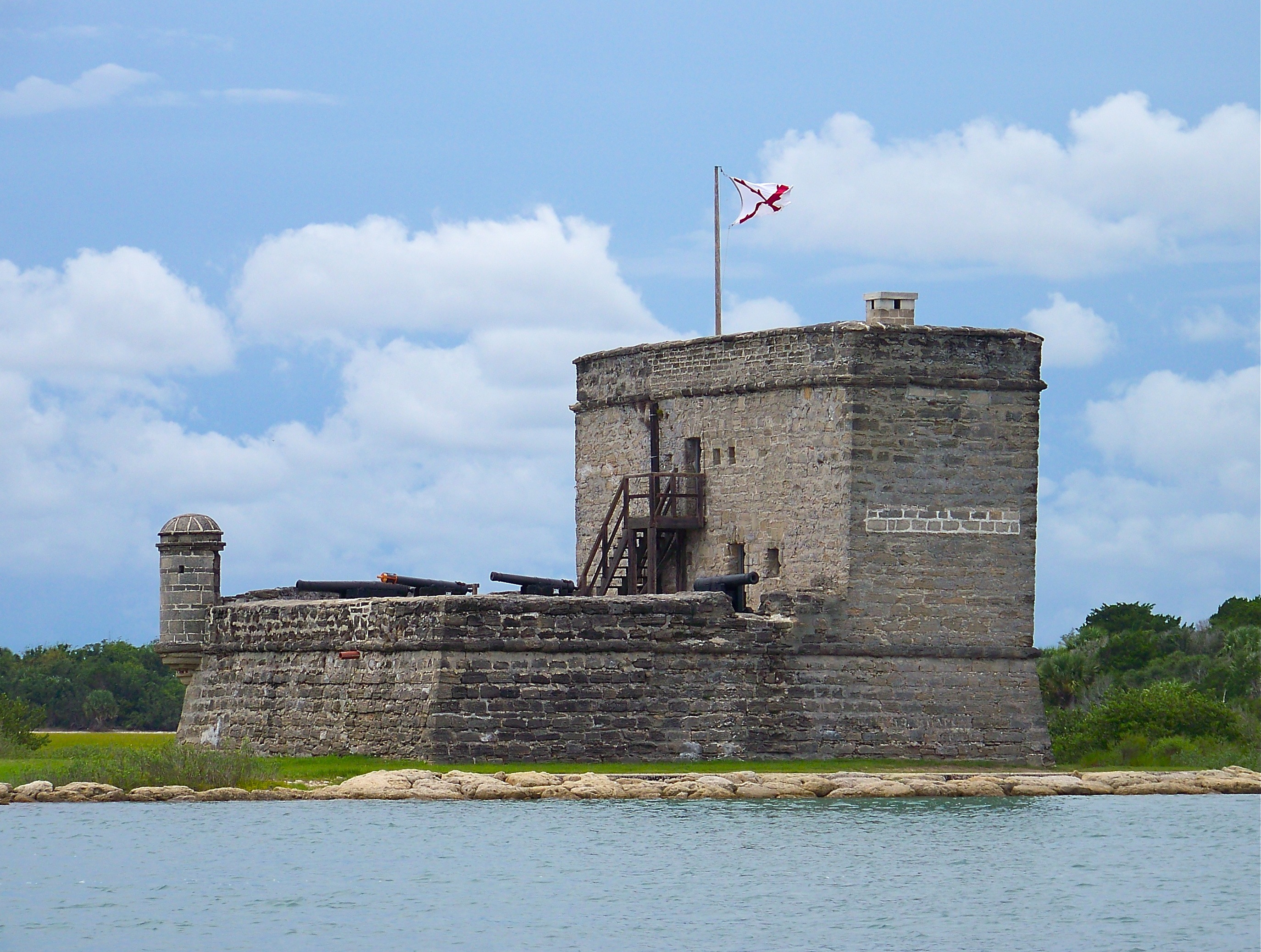
The Second Seminole War began in late 1835 and reached the northeast Florida coast within months. The U.S. military recognized immediately what the plantation network offered: solid coquina structures, cleared agricultural land, and direct water access along the Intracoastal Waterway.
- Both Mala Compra and St. Joseph Plantation became U.S. military posts during the winter of 1835 and into spring 1836.
- Seminole forces specifically targeted the cotton warehouse at Mala Compra, burning it in 1836.
- The fire ended commercial operations at the plantation permanently - no cotton moved from Mala Compra after that year.
- Hernández transitioned from planter to commander, eventually reaching the rank of brigadier general.
The same destruction played out fifteen miles south: Bulow Plantation burned in 1836. An agricultural economy built over two decades collapsed in a single season. That abruptness is visible in the archaeology at Mala Compra: the artifact record reflects sudden abandonment, not gradual wind-down, which helps explain why so much material survived undisturbed beneath the vegetation until the 1989 county purchase.
The Capture of Osceola
By October 1837, the war had dragged on for nearly two years with no resolution in sight. Hernández was now serving under General Thomas Jesup. Osceola, the most widely known Seminole leader, had made contact requesting negotiations near Fort Peyton, south of St. Augustine.
On October 21, 1837, Hernández commanded the capture of Osceola and 81 followers. The Seminoles arrived under a white flag of truce. Hernández's forces surrounded them and took them prisoner - a move authorized by Jesup but carried out by Hernández personally on the ground. The response was swift and broad: members of Congress condemned the action, and the international press vilified it as a violation of the laws of war.
The man who made history as Florida's first congressional delegate is also the man who ordered a capture under a flag of truce that the United States Congress condemned and European newspapers held up as evidence of American bad faith - two facts that belong to the same biography, both visible from the ruins he left on the Matanzas River.
Osceola died at Fort Moultrie, South Carolina, in January 1838, roughly three months after his arrest. His death while imprisoned - following a capture already condemned as illegitimate - intensified the backlash that had begun immediately after Fort Peyton. For Hernández, the incident cemented his military effectiveness and permanently complicated his historical legacy. Every existing Mala Compra interpretive page omits this episode entirely. Standing at the plantation he built, the gap is hard to justify.
From Fish Camp to Archaeological Site
After 1836, the Mala Compra property passed through various hands over the following century and a half. By the late 20th century it had become an abandoned fish camp - a common fate for old Florida river-edge land with no active commercial use. Flagler County purchased the property in 1989 with no specific knowledge of what lay beneath the vegetation. Workers clearing trash from the site found the plantation ruins by accident: coquina foundations hidden under decades of overgrowth, not identified from any prior historical record or archaeological survey.
Formal excavations began in 1999. Investigators identified the main house and kitchen and found that the main building had a coquina block foundation on its east side and masonry footers on the west - a hybrid construction reflecting the availability of local shell-limestone and the practical realities of building on a coastal flood plain. The coquina well still stands at the site; its above-ground sections have been partially rebuilt for structural stability, but the below-ground portion is entirely original 19th-century construction, unmodified since Hernández's workers built it.
Why Coquina Outlasts Everything Else
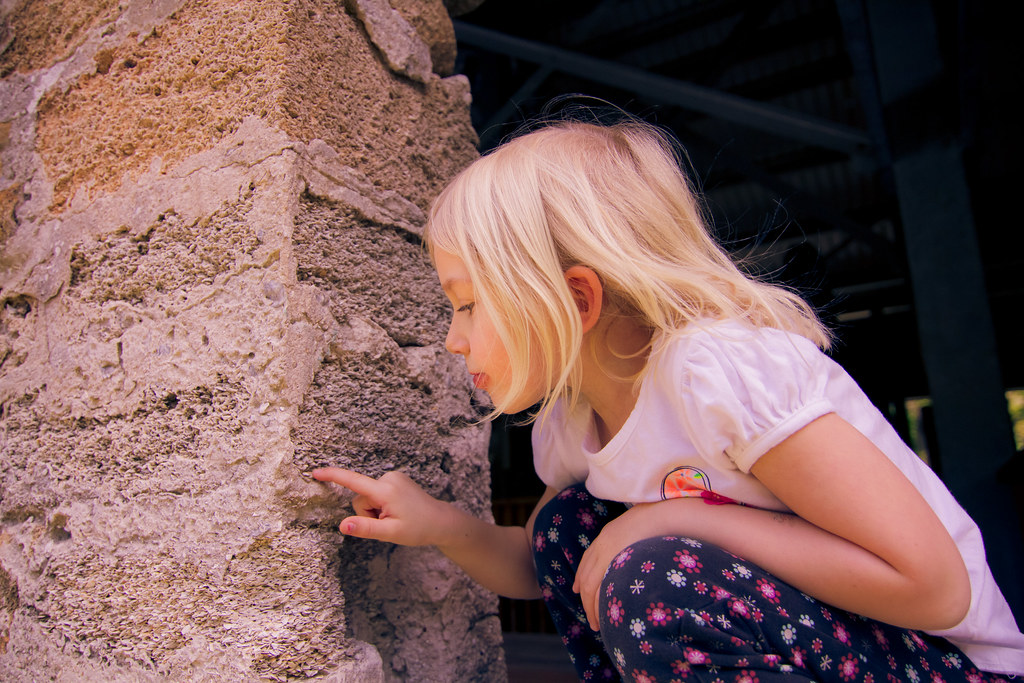
Coquina is a soft limestone made of compacted shell fragments, quarried from Anastasia Island near St. Augustine. It was the dominant building material in northeast Florida for two centuries, and for good reasons: it hardens on exposure to air, resists saltwater corrosion, and absorbs impact rather than fracturing. Wooden structures at Mala Compra burned or rotted. The coquina footings are still readable. Fort Matanzas, built in the early 1740s fifteen miles north, survives for exactly the same reason. Coquina appears at multiple Heritage Crossroads stops because a single material shaped the entire built environment of this coast during the colonial and early American periods.
Over the course of excavations, archaeologists recovered more than 14,000 artifacts from the site:
- Ceramic fragments representing both utilitarian kitchen wares and finer household pieces
- Wine bottles and kitchen utensils indicating domestic life at the main house
- Kaolin pipes - the short-stemmed clay pipes common among working people in the early 19th century, found across the site
- Hinges, nails, and construction hardware that document how the buildings were assembled
- Gun parts reflecting the militarized period of the plantation's final years before the warehouse burned
The site was added to the National Register of Historic Places on March 5, 2004, recognizing both the integrity of the archaeological record and the site's significance to Florida political, military, and cultural history.
Visiting Mala Compra Today
Bings Landing County Park is free and open year-round from sunrise to sunset. A covered boardwalk carries visitors over and around the exposed coquina foundations and the well, with interpretive panels at each major feature explaining the plantation layout, the excavation history, and specific artifact finds. The boardwalk design protects the archaeology while allowing close examination - you can look directly down into the foundation courses and see the well's original stonework without disturbing either.
Planning Your Visit
- Park in the main Bings Landing lot and follow signs toward the river - the boardwalk entrance is marked from the parking area.
- Read the first interpretive panel before stepping onto the boardwalk; it maps the overall plantation layout and orients you to the main house footprint before you see the foundations.
- Walk the full boardwalk loop and pause at the well - the difference between the rebuilt upper courses and the original below-grade stonework is visible once you know to look for it.
- After the ruins, walk to the fishing pier for a view of the Matanzas River - the same waterway Hernández used to ship cotton and the U.S. Army used to supply its posts in 1835 and 1836.
- On weekends, check at the kayak launch for rental availability; paddling the Matanzas puts Audubon's habitat in direct physical context and offers a different angle on why this river corridor mattered to the plantation economy.
Beyond the boardwalk, Bings Landing offers a motorized boat launch, fishing pier, picnic pavilions with grills, a playground, and restrooms. Wading birds work the Matanzas shoreline year-round. For current kayak rental hours and rates, check the Flagler County Parks website before your visit - schedules shift seasonally and any figures printed elsewhere may be out of date.
Corridor Connections
Mala Compra connects naturally with four other Heritage Crossroads stops that each add a distinct layer to the corridor's story without redundancy.
| Site | Direction from Mala Compra | Primary story | What survives |
|---|---|---|---|
| Washington Oaks Gardens State Park | About 6 miles north | 20th-century estate, ornamental gardens | Formal gardens, coquina rock shoreline |
| Fort Matanzas National Monument | About 15 miles north | Spanish colonial defense, 1740s fortification | Original coquina fort; free ferry access |
| Old Brick Road segment | About 10 miles south | Early automobile era, 1915 brick pavement | Original brick surface, canopy drive |
| Bulow Plantation Ruins Historic State Park | About 15 miles south | Sugar plantation - burned in same 1836 campaign | Coquina sugar mill ruins, spring, trails |
Pairing Mala Compra with Bulow is the most historically coherent combination on the corridor. Both plantations were built by the same generation, used coquina construction, depended on enslaved labor, and were destroyed in the same conflict in the same season. Seeing both sets of ruins in one afternoon makes the regional scale of that collapse concrete rather than abstract.
A coherent full-day drive might start at Fort Matanzas in the morning - free ferry to the island, ranger programs when available - then stop at Mala Compra and Bings Landing for the boardwalk and lunch at the pavilions, then continue south to Bulow before afternoon light drops. Washington Oaks works as a brief addition on the north end, or as a separate visit focused on its gardens and Atlantic-side coquina shore, which looks nothing like the river side of the corridor and rounds out the geography.
Frequently Asked Questions
Is there a fee to visit the Mala Compra ruins?
No. Bings Landing County Park and the Mala Compra boardwalk are free and open to the public year-round from sunrise to sunset. No reservation or permit is required to walk the boardwalk and view the foundations and well.
Can I rent a kayak at Bings Landing?
Weekend kayak rentals are available at the park's kayak launch. Hours and rates can change seasonally, so check the Flagler County Parks website for current information rather than relying on any figure that may be out of date. The launch is also open to visitors who bring their own kayaks or canoes.
How long did the archaeological excavation take, and is the dig still active?
Formal excavations began in 1999 and continued through the period leading up to the site's National Register of Historic Places listing on March 5, 2004. The site is now managed as an archaeological preserve rather than an active dig. Much of the property below grade has not been excavated, and that subsurface record is protected - which is why visitors are asked to stay on the boardwalk and not disturb the ground surface.