The Florida Agricultural Museum sits on Old Kings Road North in Palm Coast - the same packed-sand and later-brick corridor that British surveyors built in 1767 as the military road connecting St. Augustine to New Smyrna. That address is not incidental. The museum occupies the spine of the Heritage Crossroads Highway, a 98-mile scenic byway threading Flagler, St. Johns, and Volusia counties, and it anchors the byway's deepest living-history stop. Where most museums display objects behind glass, this 460-acre property reassembles entire buildings - a cattle homestead moved from South Volusia County, a sawtooth-rooflined citrus packing house, a surviving cottage from Florida's largest turpentine operation, an archaeological sawmill that pre-dates American statehood. Four centuries of agricultural life occupy one working landscape, and you see it with a guide, from a wagon, with livestock moving in the fields around you. No other stop on the Heritage Crossroads Highway does all of this on Old Kings Road itself.
Know Before You Go: Tours Are Mandatory
The most common mistake first-time visitors make is arriving and expecting to walk the grounds alone. Insurance requirements prohibit self-guided access entirely. Every visitor joins a guided tour - full stop. This shapes your day more than any other single fact about the museum.
Two distinct tours run on the property:
- Historic Buildings Tour - Approximately 90 minutes, delivered via tractor-drawn wagon. Covers 11 to 13 historic structures spanning four centuries, from a pre-statehood sawmill site to Depression-era citrus workers' quarters. Runs Friday through Sunday during regular hours.
- Animal Tour - A separate 40-minute experience focused entirely on heritage livestock. Runs Friday through Sunday, mid-morning to mid-afternoon. Covers Florida Cracker cattle, horses, sheep, and Piney Woods rooter hogs - breeds with direct genetic lines to Spanish colonial stock.
The two tours are not combined. If you want both, budget at least half a day. Call ahead or check the museum's current schedule before you go, because tour availability shifts with staffing and season. Weekends fill faster than Fridays.
The Pioneer Homestead: The Whidden-Clark House and Florida Cracker Life
The Whidden family built this homestead in 1880 as a cattle camp - a working base, not a fine residence. Their employees, the Clarks, eventually purchased the property and raised three sons there. The family lived without running water or electricity from roughly 1900 until 1970. That span covers two World Wars, the invention of television, and the Apollo program. The house was physically moved from South Volusia County to its current Flagler site when the museum assembled its campus in 2008-2009 using state grant funds.
The term 'Florida Cracker' deserves explanation for visitors new to the region. It refers to the cattle-driving culture that dominated Florida's interior from the 1800s onward. The name likely derives from the crack of the long whips Cracker cowboys used to drive cattle through palmetto scrub - unlike Western cowboys who worked open range with lassoes, Florida drovers pushed animals through dense subtropical vegetation where a thrown rope was useless. The Whiddens and Clarks represent this world directly: small-scale cattle operators living close to the land, largely outside the cash economy.
The tour shows visitors the physical reality of that life - the sleep spaces, cooking arrangements, the layout of a structure built for function. The house does not soften the picture. Seven decades under the same roof, without utilities, is a candid statement about rural Florida life that most heritage sites avoid.
The Strawn Citrus Complex: From De Leon Springs to Flagler
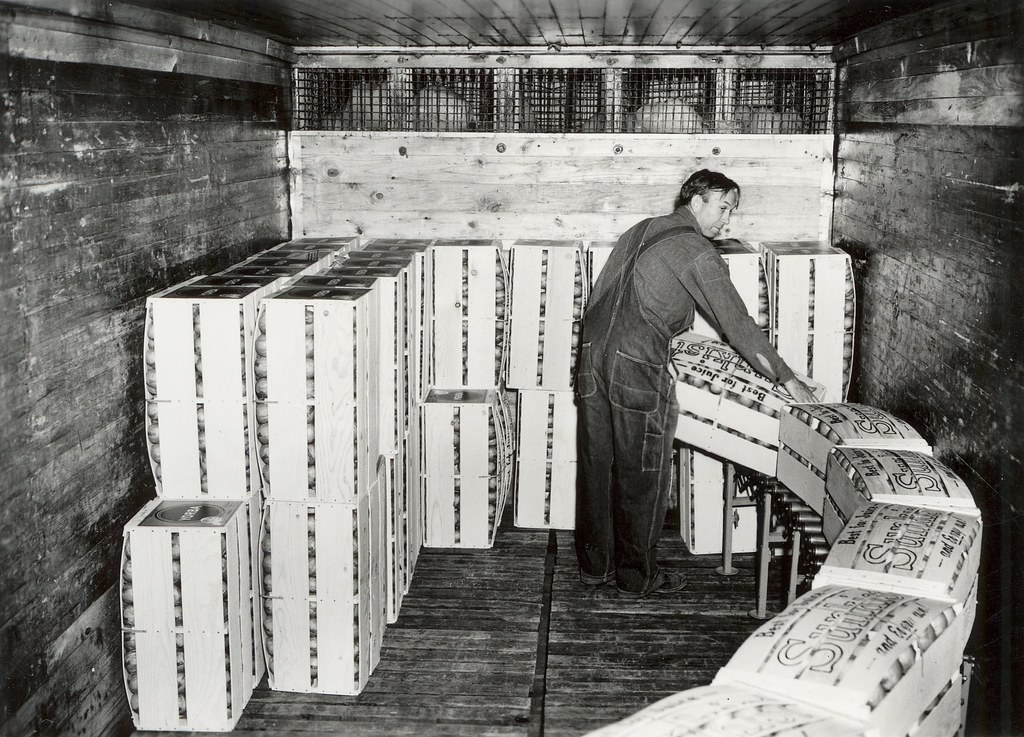
Theodore Strawn settled near De Leon Springs in 1882, beginning what would become one of the more remarkable survival stories in Florida agricultural history. The catastrophic freezes of 1894 and 1895 destroyed the Florida citrus industry almost completely - groves that had taken decades to mature were dead within days. Strawn survived them. By 1915, his operation was shipping close to 20,000 boxes of oranges annually under the 'Bob White' brand, a volume representing serious commercial scale for the era.
The complex ran continuously from 1885 to 1989 - more than a century of production. Five historic structures from the operation are now reassembled at the museum. They document different phases of the business:
- The steel replacement packing house with the distinctive sawtooth roofline, built after the original structure burned in 1921 - now one of the most visually striking buildings on the property
- Depression-era workers' quarters that reveal the labor hierarchy of commercial citrus: the physical separation of management and workers, the cramped conditions, the infrastructure built to house seasonal pickers cheaply rather than comfortably
- Supporting outbuildings that trace how an operation this size moved fruit from grove to rail car
The sawtooth roofline is worth examining closely. That design - a series of ridged peaks rather than a simple gable - admitted diffuse north light through vertical glazing without direct sun glare, critical for grading fruit by color. Seeing it on a Florida citrus packing house rather than a Midwestern factory is a reminder that the Strawn operation was industrially scaled, not a family grove. Most online guides call these "1930s citrus buildings." That label misses the founding entirely - the De Leon Springs origin, the freeze survival, the century of continuity. The structures look different once you know what they outlasted.
Hewitt's Sawmill Archaeological Site: Florida's Pre-Statehood Industrial History
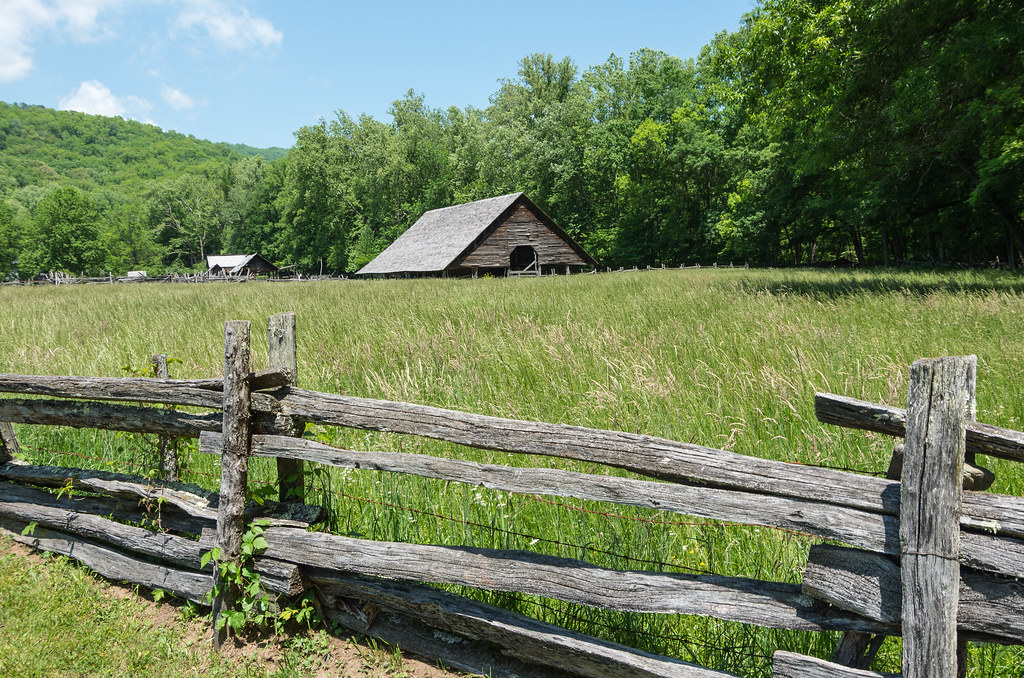
A shaded 3/4-mile hiking trail leads from the main touring area to Hewitt's Sawmill, a water-powered mill that operated from approximately 1770 to 1813. Florida did not become a U.S. territory until 1821. This mill ran for more than four decades before that - through the British Period, the Second Spanish Period, and into the earliest years of American governance. It is industrial activity on this landscape that predates almost every other structure in the state.
The site is archaeological, not reconstructed. Visitors see evidence of the mill rather than a working replica: traces of the millrace, structural remnants, the landscape modifications that directed water to drive the saw blade. For visitors accustomed to living-history museums where everything is rebuilt and operational, this is a different kind of reading - interpreting a landscape for what it once was, not watching a demonstration of what it does now. The interpretive signage helps, but the guide's context on the wagon tour before you reach the trail is what makes the site legible.
The trail passes through mature Florida vegetation. Allow extra time if you plan the sawmill walk in addition to the wagon tour.
The Florida Agricultural Museum is the only stop on the Heritage Crossroads Highway that sits on Old Kings Road itself - and the only one that documents the agricultural arc from Timucua settlement through the turpentine era on a single landscape.
Heritage Livestock: Florida's Ancient Breeds
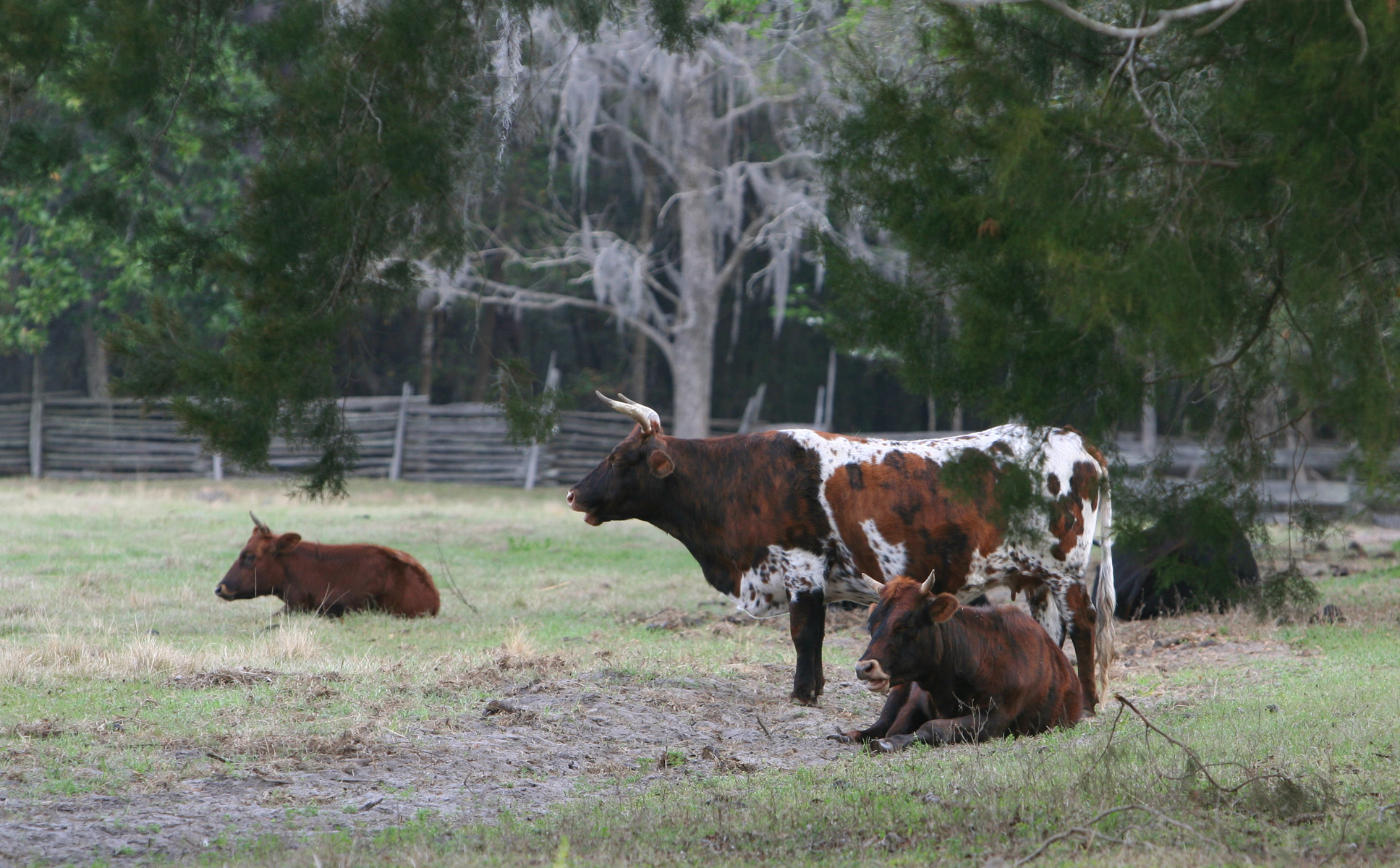
The Animal Tour exists because the breeds here are not decorative. Florida Cracker cattle, Florida Cracker horses, Piney Woods rooter hogs, and Florida Cracker sheep all descend from Spanish colonial stock introduced to Florida in the 1500s. They survived in subtropical conditions for centuries without systematic breeding programs, developing traits - heat tolerance, disease resistance, the ability to thrive on sparse native grasses - that modern commercial breeds have largely lost through selection for production volume.
What distinguishes each:
- Florida Cracker cattle - Small, lean, long-horned descendants of Andalusian cattle. Their ability to convert low-quality native grasses into body weight made them the foundation of Florida's cattle industry for three centuries.
- Florida Cracker horses - Compact, gaited horses used by Cracker cowboys in dense scrub. The smooth four-beat gait made them practical for all-day work in terrain where a trotting horse would exhaust both rider and animal within hours.
- Piney Woods rooter hogs - Feral-origin swine that survived in Florida's pine flatwoods largely on their own for generations. Genetically distinct from any commercial pork breed.
- Florida Cracker sheep - A minor breed rarely seen outside dedicated conservation programs, tracing to the Spanish churra sheep brought to the Americas in the 1500s.
Conservation status matters here. Several of these breeds qualify as critically rare under livestock genetic diversity programs. Seeing them at the museum is not just a heritage experience - it is contact with genetics that could matter for future agricultural adaptation in subtropical climates.
The Old Florida Museum and Dirt Detectives: Timucua to Turpentine
Inside the larger campus sits a separate institution: the Old Florida Museum. It covers ground that most agricultural museums avoid - the full multicultural food-and-farming story of the peninsula. Timucua agricultural practices, African food traditions carried by enslaved people and their descendants, Portuguese bakeries, Caribbean cooking, and Florida Cracker foodways all appear here. The framing is deliberate: Florida's agricultural past as a layered, contested, multicultural inheritance, not a single Anglo-pioneer narrative.
The Dirt Detectives program extends this into hands-on territory. Participants handle skulls, bones, Native American pottery shards, and ancient seashells. Aimed at school groups but open to the public, it is one of the few places in northeast Florida where a visitor can hold a pottery fragment made by Timucua people and connect it directly to the agricultural landscape outside the door.
The Meldrim Cottage and Florida's Turpentine Industry
One of the least-covered chapters in Florida's agricultural history is the turpentine industry, and the Meldrim cottage is close to the only place in the state where visitors can encounter it directly. The cottage comes from what was once the largest turpentine operation in Florida and is its last surviving built example. It has been relocated to the museum grounds and is slated to display timber and turpentine artifacts.
The turpentine industry harvested pine resin across North Florida and the Panhandle from the mid-1800s through the mid-20th century, producing turpentine and rosin for industrial use. The labor system that drove it was brutal - largely debt-peonage involving African American workers held on remote operations with little outside contact or recourse. The industry left almost no surviving physical record. The Meldrim cottage is a rare exception, and its presence at the museum gives the Old Florida Museum's multicultural framing an economic history to anchor it. Check with staff on current exhibit development, as installations were ongoing at the time of writing.
Horseback Rides, the Train, and Active Experiences
The I-95 Bridge and 3,000-Acre Trail Network
Horseback trail rides at the museum cross a bridge over Interstate 95 that is designated for horses only. On the other side, 3,000 acres of trail land open up - an adjoining tract that dwarfs the main campus. Horses walking over an active interstate on a dedicated equestrian span is genuinely unusual. It does not appear in any major travel guide covering this area, yet it is one of the most distinctive equestrian experiences in northeast Florida.
Advance booking is strongly recommended, particularly on weekends. The 3,000-acre network offers ride lengths and terrain the main property cannot match. Riders bringing their own horses should contact the museum ahead of time for current requirements and booking procedures.
The 1/8-Scale Ridable Train
A 1/8-scale model train runs a one-mile route through the property. It is a newer addition to the museum's programming and gives younger visitors a different mode of moving through the landscape. The train operates during regular museum hours, though availability can vary - confirm when you arrive.
Summer Riding Camps
The museum offers summer riding camps for children annually. These are structured multi-day programs, not drop-in sessions. Families planning summer visits should contact the museum well in advance, as camp slots are limited.
Planning Your Visit: Practical Guide
The museum is open Friday through Sunday. Confirm current hours and tour schedules on the museum's official website before you go, as seasonal adjustments occur. An admission fee is charged for adults; young children may enter free - check the museum's current fee schedule directly rather than relying on any figure you find online, as rates change.
- Book your tour slot in advance, especially for weekends and Animal Tour days. Arriving without a reservation risks missing guided access entirely.
- Wear closed-toe shoes and clothes you can get dirty. The wagon tour and Hewitt's Sawmill trail both involve unpaved terrain and Florida vegetation.
- Bring water and sunscreen. The wagon crosses open pasture with limited shade; the sawmill trail is shaded but humid.
- Budget at least three hours if you want both the Historic Buildings Tour and the Animal Tour. Add time for the sawmill trail if you plan to walk it.
- If combining with other Heritage Crossroads stops, pair the museum with Princess Place Preserve to the north or the brick-paved stretch of Old Kings Road near Bunnell to the south - both complement the museum's timeline and are within a short drive.
Combining with the Heritage Crossroads Highway
The museum's position on Old Kings Road makes it the natural anchor for a Heritage Crossroads itinerary. The museum, founded in 1983, assembled its current campus of relocated buildings beginning in 2008 specifically to document the agricultural layers built along this corridor. Princess Place Preserve to the north adds the early 20th-century hunting retreat chapter. The brick stretch of Old Kings Road south of Bunnell gives a tactile experience of the original surface. Together they form a day spanning roughly 1,200 years of human activity on a single highway.
Food and Nearby Services
The museum does not operate a restaurant. Palm Coast's commercial corridors along US-1 and Palm Coast Parkway are within a short drive and carry standard dining options. Flagler Beach, roughly 20 minutes east, adds casual waterfront restaurants if you want to extend the day toward the coast.
| Experience | Approximate Duration | Days Available | Advance Booking |
|---|---|---|---|
| Historic Buildings Tour (wagon) | ~90 minutes | Fri - Sun | Recommended |
| Animal Tour | ~40 minutes | Fri - Sun, mid-morning to mid-afternoon | Recommended |
| Hewitt's Sawmill Trail | Self-paced, ~45 min | Fri - Sun | Not required |
| Horseback Ride (I-95 crossing) | Varies by package | Check current schedule | Strongly recommended |
| 1/8-Scale Train | ~20 minutes | Fri - Sun (when operating) | Not required |
| Dirt Detectives | Varies | Fri - Sun | Recommended for groups |
Frequently Asked Questions
Should I walk the Hewitt's Sawmill trail before or after the wagon tour?
After. The site is archaeological rather than reconstructed, and the physical evidence is harder to read without prior context. The guide's account on the Historic Buildings Tour explains what the landscape once was before you arrive on foot - the trail makes considerably more sense in that sequence. No advance booking is needed, but allow at least 45 additional minutes beyond your wagon tour time and factor it into your schedule before you commit to the Animal Tour on the same day.
Are the tours suitable for young children?
The tractor-drawn wagon format works well for children who can sit for 90 minutes. The Animal Tour and Dirt Detectives hands-on program are particularly suited to children and are designed around their engagement. The Hewitt's Sawmill trail is a 3/4-mile walk on uneven terrain - manageable for older children but potentially difficult for strollers or very young walkers.
What should visitors who want to bring their own horses know?
The museum offers guided rides that cross a dedicated equestrian bridge over Interstate 95 into a 3,000-acre trail network. Visitors who prefer to ride their own horses rather than join a museum-led ride should contact the museum before arriving - requirements and booking procedures for privately owned animals differ from those for museum rides. Advance booking is strongly recommended either way, and walk-in availability is limited on weekends.