Two miles north of St. Augustine, on a salt marsh island most travelers pass without knowing it exists, stands the place where the story of Black freedom in America actually begins. Not in the north, not through the corridors of the 19th-century Underground Railroad, but here - in Spanish Florida, in 1738, under a royal charter that predated the American republic by nearly four decades. Fort Mose is the first legally sanctioned free Black settlement in what is now the United States. In May 2025, a reconstructed fort rising more than 39 feet finally gave that story a physical presence again. For anyone traveling the Heritage Crossroads Corridor through Flagler, St. Johns, and Volusia counties, Fort Mose belongs at the start of the itinerary - not as a detour, but as the anchor that explains why this coastline shaped so much of American history.
What Fort Mose Is and Why It Matters
The name is usually shortened. The full name - Gracia Real de Santa Teresa de Mose - carries the weight of what it was: a legally chartered town, recognized by the Spanish crown, whose residents held their freedom not by running far enough or hiding well enough, but by right. Spanish Governor Manuel de Montiano officially established it on March 15, 1738. This was not a refuge camp or an informal village. It was a garrison with a militia, a church with a congregation, and more than 100 people in 38 households who had built lives on soil they could legally call home.
Fort Mose received its National Historic Landmark designation in 1994. The NPS added it to its Underground Railroad Network to Freedom in 2009. In 2019, UNESCO designated it a Site of Memory in the international Slave Route Project. These recognitions matter, but for decades the actual site - a patch of marsh with no visible structure - made the significance hard to grasp for a visitor standing there. The 2025 reconstruction changed that. At more than 39 feet, the rebuilt fortification brings the scale of what once stood here back into view. Fort Mose is now a place you can see, not just read about.
For Heritage Crossroads Corridor travelers, Fort Mose sits at the northern edge of the 98-mile route. It connects directly to stories the corridor already tells: Spanish fortifications at Fort Matanzas, the 1565 Matanzas Massacres, movement along Old Kings Road, and the long history of Black coastal communities running south through sites like Bethune-Volusia Beach.
The Spanish Freedom Policy: The 1693 Royal Decree
Spain did not free enslaved people out of moral conviction. The 1693 royal decree from King Charles II was a geopolitical weapon aimed directly at British colonial expansion in the Carolinas. By offering freedom to anyone who could reach Spanish Florida, Spain created a constant drain on British plantation labor and a permanent military problem for British colonial governors.
The conditions attached to the decree were specific. To receive legal freedom, a person had to:
- Convert to Roman Catholicism
- Pledge loyalty to the Spanish crown
- Men were required to serve four years in the colonial militia
These were not trivial demands. Military service was dangerous, and conversion meant abandoning spiritual practices carried from home. But the alternative - plantation slavery in British Carolina - made the conditions worth meeting. Spain gained soldiers, a buffer population between St. Augustine and British territory, and an incentive structure that kept British planters perpetually anxious. The people who came gained something that had no equivalent in the British colonial system: legal standing as free persons under a recognized government. This decree is one of the earliest emancipation edicts in the Western Hemisphere, predating the American Emancipation Proclamation by 170 years.
The Original Underground Railroad: Traveling South to Freedom
The first documented freedom seekers arrived more than 50 years before Fort Mose was chartered. In 1687, eight men, two women, and a nursing child escaped from the English Carolinas and reached Spanish Florida. They came overland, through territory with no guaranteed safety, trusting that what they had heard about Spanish policy was true. They were right.
Over the next five decades, others followed. The movement was not organized the way the 19th-century Underground Railroad would be - no conductors with mapped routes, no network of safe houses. What drew people south was information passed person to person: that in Florida, freedom had legal backing, that Spain would protect those who converted and served, that you could stop running.
Reaching Fort Mose meant more than escape. It meant a name on a Spanish colonial register, a congregation, a household. The people who built here were not hiding. They were building.
Life Inside Fort Mose: Community Origins and the Physical Settlement
Who Lived Here
The community that formed at Fort Mose came overwhelmingly from the Carolinas, but their origins reached back across the Atlantic to at least ten distinct African ethnic groups:
- Mandingo, Congo, and Carabali
- Mina, Gamba, and Lecumi
- Samba, Ganga, Arara, and Guinean
This was not a homogeneous community. People arrived speaking different languages, practicing different customs, carrying different memories of home. The church - a physical structure at the settlement's center - became the institution that held it together. Catholic conversion was a requirement of Spanish policy, but at Fort Mose it also became the shared public life of a community that had no other common institution.
The Physical Settlement
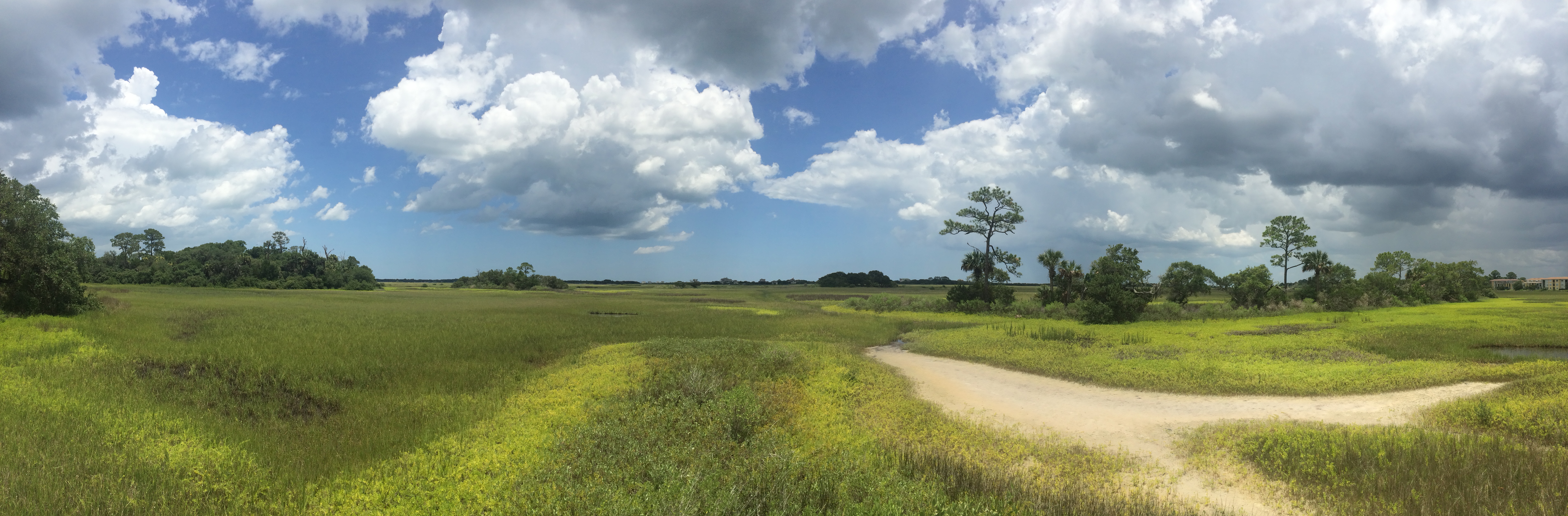
The first fort was built on an island in a salt marsh. Its layout included a church, approximately 20 houses, and a timber palisade wall topped with several towers. The marsh itself was part of the defense - difficult terrain for an army to cross quietly, and an early-warning buffer between St. Augustine and any force approaching from the north. When British soldiers came, they would have to move through water and reeds to reach the garrison on those walls.
Captain Francisco Menendez: The Full Story
No figure in Fort Mose's history is more important or more poorly served by brief retellings than Francisco Menendez. Born around 1704 among the Mandinka people of West Africa, he was enslaved and transported to South Carolina. In 1724 he escaped with nine others and reached Florida. He fought for Spain in early conflicts with the British, and when Governor Montiano established Fort Mose in 1738, he appointed Menendez commanding officer of its free Black militia - recognizing in him a man whose experience, leadership, and personal stake in defending Florida's freedom policy made him exactly right for the role.
The 1740 battle would define his military reputation. But the years that followed reveal a man whose freedom was never permanently secured, even after he had fought for it twice over.
In 1741, while serving as a privateer for Spain in the Caribbean, Menendez was captured by an English privateering vessel. A British colonial Admiralty Court in Nassau, Bahamas declared him a slave. He was given 200 lashes, with salt rubbed into the wounds afterward. This was not punishment for a crime. It was a statement: that British colonial authority would not recognize Spanish certificates of freedom, that any Black person could be re-enslaved if captured far enough from Spanish protection. Menendez survived. By 1759 he was back in Florida and again commanding at Fort Mose. When the community evacuated to Cuba in 1763, he went with them, established a free Black community in Havana, and died there - having carried the Fort Mose model across the water.
The Battle of Bloody Mose, June 26, 1740
In 1740, British commander James Oglethorpe led a force south from Georgia into Spanish Florida. His army captured Fort Mose - the community had evacuated to St. Augustine before the British arrived - and settled in for a siege of the city. Oglethorpe held the fort as a forward base and expected St. Augustine to fall.
Governor Montiano organized a counterattack. In the pre-dawn hours of June 26, a combined Spanish force struck through the marsh and took the fort by complete surprise - approximately 300 regular soldiers under Captain Antonio Salgado, joined by Menendez's Black militiamen and Seminole allies. When it was over, at least 68 British soldiers were dead and 34 captured. Spanish and allied losses numbered approximately 10 killed. Oglethorpe's siege collapsed. He withdrew toward Georgia and never again posed a serious threat to St. Augustine.
The battle's nickname - Bloody Mose - captures the violence without explaining the stakes. A British victory would have ended legal free Black settlement in Florida for the duration of British rule. Menendez and the militia fought not just for Spanish colonial interests but for the conditions that made their own lives possible. After the battle, the first fort was deliberately destroyed to prevent its reuse as a British strongpoint. The community remained in St. Augustine for more than a decade.
The Second Fort Mose: Archaeology and the 1763 Departure
| Feature | First Fort (1738-1740) | Second Fort (1752-1763) |
|---|---|---|
| Years active | About 2 years | About 11 years |
| How it ended | Deliberately destroyed after battle | Abandoned; community evacuated to Cuba |
| Construction type | Timber palisade with towers | Clay-faced earthworks with moat |
| What we know from | Primarily historical records | Excavated 1986-1988; location confirmed |
| Community outcome | Relocated to St. Augustine | Fort Mose community evacuated to Cuba; more than 400 people of African descent left Spanish Florida overall |
Spain rebuilt Fort Mose in 1752 as a better-engineered second fortification. The new design incorporated clay-faced earthworks and a surrounding moat - improvements over the original timber palisade that reflected both military experience and a longer-term commitment to the site. The community returned. Menendez resumed command. For eleven years, the second fort functioned as a stable garrison.
Then the Treaty of Paris ended the Seven Years' War in 1763. Spain traded Florida to Britain in exchange for Cuba. Overnight, legal free Black settlement in Florida ended. Rather than risk re-enslavement under British governance, the Fort Mose community chose to leave with the departing Spanish colonists; across all of Spanish Florida, more than 400 people of African descent made that crossing. They rebuilt in Havana, carrying the Fort Mose model into a new city.
What the Excavations Found
For more than two centuries, the fort's exact location was uncertain. Then, from 1986 to 1988, archaeologist Kathleen Deagan of the Florida Museum of Natural History led excavations that settled the question. Her team uncovered:
- The moat surrounding the fortification's perimeter
- Clay-faced earthworks matching historical descriptions
- Building support posts marking where structures once stood
- A silver Saint Christopher medal - a Catholic devotional object connecting Spain's conversion requirement to a specific person's daily life
- Rosary fragments confirming Catholic practice in the community
- Gunflints, evidence of the militia's ongoing military function
- Household ceramics from everyday use
The Saint Christopher medal rewards attention. Small, silver, and worn from handling, it is the kind of object a person carries as personal protection on a journey. Finding it at Fort Mose connects the abstract requirements of Spain's freedom policy to a specific person who held that medal and lived in that place. The archaeology did not just confirm where the fort stood. It confirmed how the people there lived.
Recognition, Reconstruction, and the 2025 Fort
Fort Mose received its National Historic Landmark designation on October 12, 1994. The NPS added it to the Underground Railroad Network to Freedom in 2009 - fitting, though the direction of travel here runs opposite to what that network usually commemorates. UNESCO's 2019 Site of Memory designation placed it alongside significant sites across four continents in the international Slave Route Project.
Physical reconstruction required dedicated effort and funding. The Florida State Parks Foundation assembled public and private funding - anchored by a substantial grant from Florida's African American Cultural and Historical Grants Program - to build a replica fort that visitors could actually see and enter. Groundbreaking was January 19, 2024. The reconstructed fort opened in May 2025.
The scale surprises people who have read about Fort Mose but not seen it. At more than 39 feet, the structure towers over the salt marsh. From the top, you see the landscape as the original garrison would have seen it: open water, marsh grass, St. Augustine in the distance. That view makes the site's military logic immediate. The marsh made approach difficult. Any force coming for the garrison - or for St. Augustine behind it - would have been visible from that height long before it arrived.
Visiting Fort Mose and the Heritage Crossroads Corridor
Planning Your Visit
Fort Mose Historic State Park is located north of St. Augustine. Find the full address, current admission fees, accessibility details, and seasonal schedule at floridastateparks.org. The visitor center charges a small per-person admission fee; check the official site for the current rate. Ranger-led tours run on a morning and afternoon schedule - take one. The rangers explain the marsh, the fortification's layout, and what the archaeology revealed in ways that a self-guided walk cannot replicate.
Building a Corridor Itinerary
Fort Mose works best as the first or last stop on a Heritage Crossroads Corridor day, because it reframes everything else along the route. One sequence that connects the threads:
- Start at Fort Mose - take the ranger tour and absorb the full story of Spanish freedom policy, the community that built here, and what the 2025 reconstruction reveals about the site's scale.
- Drive south to Fort Matanzas, roughly 14 miles away. The Spanish water fortification there guarded the southern approach to St. Augustine - a direct military counterpart to what Fort Mose guarded in the north. The two sites together show how Spain defended its free Black settlement from both directions.
- Pick up Old Kings Road south of St. Augustine. This was the main colonial road through the corridor, and its route through Flagler County tells the story of British colonial land grants that followed the 1763 Treaty of Paris - the same treaty that ended Fort Mose and drove its residents to Cuba.
- Continue south into Volusia County and end at Bethune-Volusia Beach. Mary McLeod Bethune's work to create a Black public beach on this coastline in the 20th century connects the long arc of Black freedom and community-building that begins at Fort Mose and runs the full length of the corridor.
This sequence covers more than 250 years of contested geography - Spanish, British, American; enslaved, free, and fighting to remain free - all within one 98-mile drive.
Frequently Asked Questions
Is Fort Mose older than the United States?
Yes. Fort Mose was chartered as a legally free Black community in 1738, nearly four decades before the Declaration of Independence in 1776. Spanish St. Augustine was founded in 1565, making this region one of the oldest continuously settled European communities in North America - far older than any institution in the British colonies that became the United States.
What is the difference between the first and second Fort Mose?
The first fort operated from 1738 until it was deliberately destroyed after the 1740 Battle of Bloody Mose. The community sheltered in St. Augustine during the interim years. Spain rebuilt a better-engineered second fort in 1752 incorporating earthworks and a moat; it remained active until 1763, when the Treaty of Paris transferred Florida to Britain and the community evacuated to Cuba. The reconstructed fort visitors see today is based on the second fort's location, confirmed by Kathleen Deagan's 1986-1988 excavations.
Who was Captain Francisco Menendez, and what happened to him after Fort Mose?
Menendez was born around 1704 among the Mandinka people of West Africa, enslaved in South Carolina, and escaped to Florida in 1724. Governor Montiano appointed him commanding officer of Fort Mose's militia in 1738. After the 1740 battle, he worked as a privateer for Spain until an English privateering vessel captured him in 1741 and a Bahamas Admiralty Court declared him a slave - he received 200 lashes with salt rubbed into the wounds. He was back in Florida by 1759, resumed command, and evacuated with the community to Cuba in 1763, where he established a free Black settlement in Havana before his death.
How does Fort Mose relate to the Underground Railroad?
The NPS added Fort Mose to its Underground Railroad Network to Freedom in 2009. The inclusion is fitting, but the direction here ran opposite to what that network usually commemorates. For more than a century before the American republic existed, freedom seekers fled British colonial slavery in the Carolinas by traveling south to Spanish Florida. Fort Mose was the destination - the place where that journey could end, not just pause, because Spanish law recognized the freedom of those who arrived.
What did Kathleen Deagan's excavations prove that documents alone could not?
Historical records described the second fort's layout and general location, but for more than two centuries no one could pinpoint exactly where it stood. Deagan's 1986-1988 fieldwork settled that question through physical evidence - the moat, earthworks, and building posts matched the documentary record and fixed the site. What the documents could not supply, and the artifacts could, was the texture of individual life inside the garrison. Military and administrative records capture policy; they do not capture a single person's daily habits. The silver Saint Christopher medal Deagan's team found - small, worn from handling - is that kind of evidence. It represents a choice someone made, to carry a Catholic devotional object for personal protection, connecting Spain's abstract conversion requirement to a specific person's lived faith. That gap between official policy and personal experience is what the archaeology closes.
Is Fort Mose worth visiting if I only have a few hours in the St. Augustine area?
Yes, particularly now that the 2025 reconstruction gives the site a visible focal point. Budget at least two hours: one for the visitor center exhibits, which explain the broader Spanish colonial and African diaspora context, and one for a ranger-led tour of the reconstructed fort and marsh. If you have more time, pairing it with Fort Matanzas to the south makes the Spanish defensive strategy around St. Augustine concrete and easy to understand.