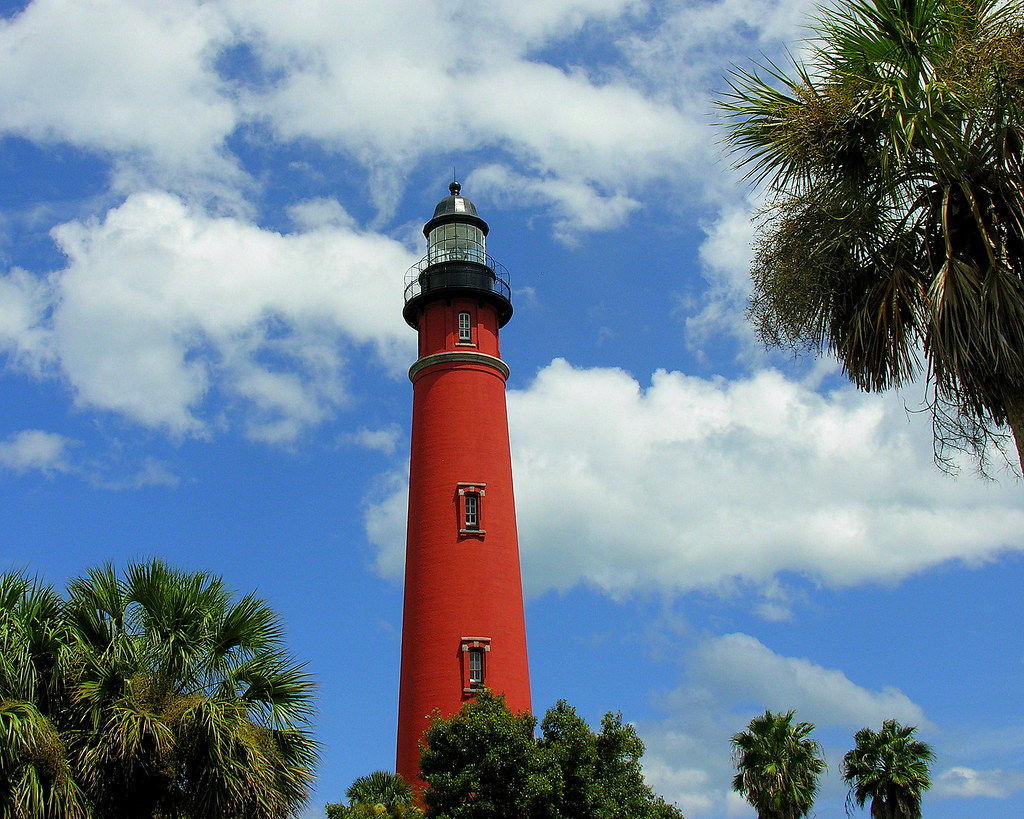
Most visitors to Ponce de Leon Inlet treat the lighthouse as a tall thing to climb and a view to photograph. That is understandable. The brick tower is Florida's tallest at 175 feet, the climb earns the view, and the surrounding inlet is genuinely beautiful. But the station holds three stories that almost no travel guide tells fully: a Civil War general drowned during its construction, the Coast Guard came within planning distance of turning it to reef rubble in 1970, and one of the defining short stories in American literature was written in the direct aftermath of a shipwreck just offshore. Alongside those stories, the lens collection draws scholars from across the world. This guide covers all of it.
Why Visit from the Heritage Corridor
The Heritage Crossroads Highway runs 98 miles through Flagler, St. Johns, and Volusia counties - a stretch of Florida coast shaped by Spanish exploration, Gilded Age tourism, and the old coastal trade routes. The Ponce de Leon Inlet Lighthouse sits at the corridor's southern Volusia County terminus, and it functions as something more than a scenic endpoint. The inlet was the critical maritime choke point for this entire coast. Everything that moved by sea along this stretch - supply ships, fishing vessels, coastal traders - had to either use this passage or carry on past it. The lighthouse was built to mark an inlet that had already killed more than 70 vessels before the light ever turned on. Understanding that history reframes the drive south from Flagler County: you arrive not at a tourist attraction but at the site where this coast's maritime geography forced human attention for centuries.
The inlet also connects to the corridor's Spanish colonial threads. The 1926 renaming from Mosquito Inlet to Ponce de Leon Inlet was part of a broader Florida effort to reclaim Spanish heritage as the state marketed itself to new residents and tourists during the land-boom era. That same rebranding impulse shaped the towns you pass through on the corridor drive north.
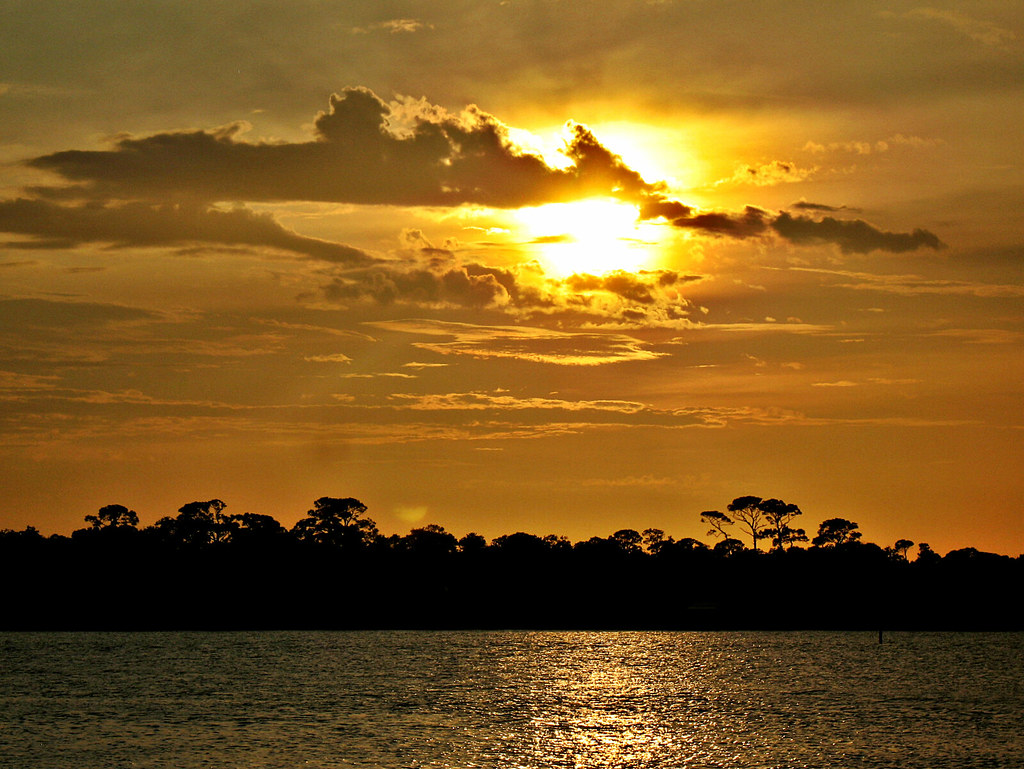
The Dangerous Inlet: 70-Plus Shipwrecks and Why a Lighthouse Was Urgent
Maritime historians rank Ponce de Leon Inlet the seventh most dangerous inlet on the entire Atlantic Coast. More than 70 documented shipwrecks have occurred in or near the passage, and the count understates the actual toll from the colonial and territorial eras. The geography explains the danger clearly:
- The bar at the inlet mouth shifts constantly, shoaling in ways that could trap a vessel that had safely used the passage months earlier
- Atlantic swells pile directly into the entrance without the buffer of a bay or sound to absorb them
- Ebb-tide currents run hard across the bar, catching vessels already slowed by the shallows
- The inlet sits on an exposed stretch of coast with no deep-water anchorage nearby for shelter during building storms
Florida's territorial government recognized the danger early. A lighthouse attempt was made at Mosquito Inlet - the inlet's name before 1926 - in 1835, but that tower never successfully operated. The lamp oil was never delivered, so the light was never lit; Seminole attacks starting in December 1835 forced keepers to abandon the station at the outset of the Second Seminole War, and the structure eventually collapsed from erosion in 1836. The project was abandoned for nearly five decades, during which commercial wrecks continued to accumulate and strengthen the political case for a permanent light.
The pre-1926 name matters more than most visitors realize. Every official document, lighthouse service record, and maritime registry before that year uses Mosquito Inlet. Researchers digging into the station's history or its wreck record need to search under both names - the renaming buried the historical paper trail under a different heading.
General Babcock's Drowning: the Construction Tragedy That Delayed the Light
Orville E. Babcock arrived at the inlet in 1884 to begin construction surveys. He was not a minor bureaucrat on a routine assignment. Babcock had served as a general in the Civil War and spent years afterward as private secretary to President Ulysses S. Grant - one of the most direct positions in the executive branch, with daily access to the president. After leaving the Grant administration under the shadow of the Whiskey Ring scandal (he was acquitted, but his reputation suffered), he took a quieter role with the Army Corps of Engineers' lighthouse construction program. That program eventually sent him to this Florida inlet.
On June 2, 1884, Babcock and three other men were crossing the inlet bar by boat. The bar capsized the vessel. All four men drowned.
Construction surveys had barely begun. The project needed a replacement superintendent, and the delay pushed back an already slow federal timeline. Jared Smith took over, completed the surveys, and saw the project through to the tower's 1887 completion. Without Smith's work, the light could have been delayed further.
The story has a heritage angle that fits naturally into any tour of the corridor. Babcock's drowning connects the lighthouse's origin to the Grant-era federal government at a moment of significant national transition, and it puts a specific human face on the abstract bureaucratic process of building a lighthouse.
The Keepers: William Rowlinski and Daily Life at the Light
William Rowlinski lit the tower for the first time on November 1, 1887. He was a Russian immigrant - an unusual background for a keeper on a Florida coast still largely shaped by Anglo and Spanish settlement - and he tended this light from 1887 until 1893 - roughly six years - before transferring to another station. He retired from lighthouse service in 1902. When he left the service, he did not go far. He bought a house on the Halifax River immediately adjacent to the lighthouse station, close enough to keep the tower he had climbed thousands of times within daily view.
Keeper life at an inlet station was relentless maintenance. The light required daily attention: cleaning the lens, trimming wicks, recording weather observations, logging passing vessels, and filing regular reports with the lighthouse district office. The keeper's family lived on station grounds and shared those rhythms. Two assistant keepers worked under the principal keeper and lived in their own dwellings on the property - all of those structures survive and are open today.
Stephen Crane and 'The Open Boat': Literary History at the Inlet
On January 2, 1897, the SS Commodore left Jacksonville carrying supplies and munitions for Cuban rebels fighting Spanish colonial rule. The ship had barely cleared the coast when a boiler-room leak flooded the vessel. She went down roughly 16 miles offshore.
Among the survivors was Stephen Crane - then 25, already the author of "The Red Badge of Courage," not yet the writer of his best work. Crane and three others - the captain, a cook, and an oiler named Billy Higgins - spent approximately 30 hours in a 10-foot dinghy. The lighthouse beam was their navigation point. They could see it. They rowed toward it through open water and building seas. The inlet's notorious surf caught them as they tried to land.
The boat overturned. Higgins drowned. Crane, the captain, and the cook survived.
Crane published "The Open Boat" that same year, drawn directly from those 30 hours. The story is now a fixture in American literature survey courses - a foundational work of naturalist fiction, built on four men's confrontation with an indifferent sea that offers no rescue, no providence, and no meaning beyond the physical fact of endurance. The lighthouse appears in the story as both literal beacon and ironic landmark: the light guides them toward shore and toward the surf that kills Higgins.
The lighthouse had been growing slowly larger. It had now almost assumed color, and appeared like a little gray shadow on the sky.Stephen Crane, "The Open Boat" (1897)
The fuller context - the Commodore's mission supplying Cuban rebels, the inlet's specific wreck history, the geography of that surf landing - turns the literary connection into genuine heritage. When you stand on the gallery deck 175 feet up and look 17 nautical miles out to sea, that is the water where Crane's dinghy held its position for a day and a quarter.
From Beacon to Nearly Rubble: the 1970 Deactivation and the Rescue of a Landmark
In March 1970, the Coast Guard deactivated the lighthouse. Most travel coverage stops there - a brief note the light went dark, then a fast-forward to restoration. What happened in the months after deactivation is the part almost no one explains.
The Coast Guard erected a 50-foot metal skeletal replacement tower across the inlet: functional, cheap, and entirely without character. With the 1887 structures now redundant, the agency formulated plans to demolish the tower, the keeper dwellings, and the outbuildings, and use the rubble as material for an artificial reef. The brick tower that had survived 83 years of Atlantic hurricanes came within formal planning distance of being reduced to reef fill.
Organized local resistance stopped it. Volunteers founded the Ponce de Leon Inlet Lighthouse Preservation Association in 1972, halted the demolition plans, and pushed for formal historic designation. The station was listed on the National Register of Historic Places the same year.
Preservation work continued for decades. On August 5, 1998, the station received National Historic Landmark designation - one of only 11 lighthouses in the entire United States to hold that status. The NHL designation is the highest level of federal historic recognition, reserved for properties of exceptional value in illustrating American heritage. Out of more than 800 historic light stations on record, 11 carry this designation. That number is almost entirely absent from travel coverage of the site, yet it is the single most precise measure of what the Preservation Association saved in 1972.
The Fresnel Lens Collection: Why Lighthouse Scholars Come Here Specifically
The lens collection is what separates this site from every other tower-and-view stop on the Atlantic Coast. Understanding why it matters requires knowing how classical lighthouse optics were classified.
| Lens Order | Relative Size | Typical Use | Approximate Range |
|---|---|---|---|
| First order | Largest | Major seacoast lights | Longest - up to 20-plus nautical miles |
| Second order | Large | Secondary seacoast lights | Slightly shorter |
| Third order | Medium | Harbor and bay entrances | Moderate |
| Fourth order and below | Small to very small | Rivers and small harbors | Short range |
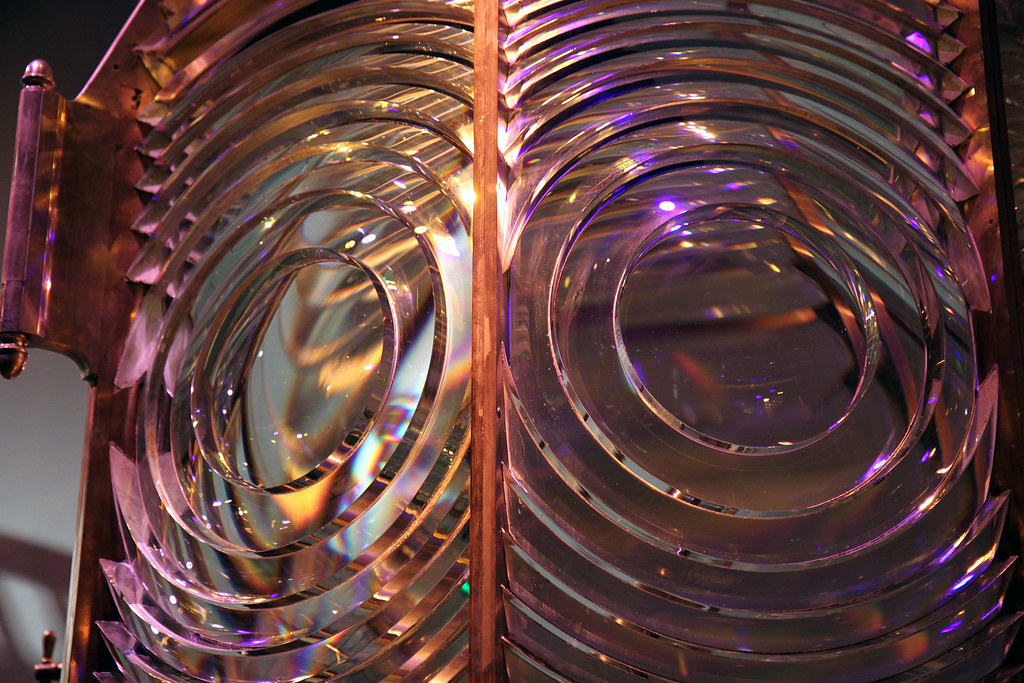
The Ponce de Leon tower carries a fixed first-order lens - the largest class, reserved for the most critical seacoast locations. That lens was manufactured in Paris in 1867 by the firm Barbier et Fenestre, a full 20 years before the tower itself was completed. It waited. When construction finished in 1887, it was assembled in the lantern room and set to work projecting the station's fixed light 17 nautical miles offshore.
A dedicated lens exhibit building, completed in 1995, houses a second major piece: the revolving first-order Fresnel lens removed from the Cape Canaveral Lighthouse. That lens is a different optical type - revolving rather than fixed - letting visitors compare both designs in the same space. The provenance story that every travel piece skips: the station's own original fixed first-order lens spent years at the Mystic Seaport Museum in Connecticut after removal from the tower. Curators recovered it and returned it to the station in 2003. The combination of the original lens, the Cape Canaveral lens, and full supporting exhibits is what the site's curators describe as one of the world's finest collections of classical lighthouse optics. Specialists make dedicated trips to see it.
Planning Your Visit: Tower Climb, Audio Tour, and Logistics
For a first-time visitor who wants to cover the full station properly, this sequence works better than the instinct to climb the tower first:
- Watch the orientation film in the Woodshed Theater before doing anything else - it covers construction and preservation history and gives context that makes every other exhibit richer
- Walk through the lens exhibit building while the facts from the film are fresh - the Barbier et Fenestre provenance and the Mystic Seaport return story make more sense with the film's timeline behind them
- Tour the principal keeper's dwelling and the two assistant dwellings - period furnishings, and worth more than a quick scan
- Visit the Cuban Rafts exhibit in the oil house or adjacent structure - it documents the migration history of Cuban rafters who made landfall at or near the inlet, a chapter entirely separate from lighthouse operations but woven into the same geography, and it has almost no presence in any travel coverage of the site
- Climb the tower last - by this point you know what you are looking at from 175 feet, which direction the Commodore sank, and why that bar below you drowned a Civil War general
Practical notes for the tower climb and general visit:
- Wear closed-toe shoes with grip - the cast-iron staircase is smooth and the spiral narrows near the top
- The upper sections are not appropriate for visitors with severe claustrophobia or significant fear of heights - the stairwell is enclosed and there is limited room to pass descending climbers
- Summer hours extend to 9 p.m. with the last tower climb at 8 p.m. - the evening light from the gallery deck is considerably better for photography than midday
- Admission includes a free audio tour more substantive than most lighthouse audio guides - use it rather than skip it
- Check the official site at ponceinlet.org for current admission fees and hours, as both change seasonally
The Full Grounds: Keeper Dwellings, Cuban Rafts Exhibit, and What Most Visitors Miss
The restored station complex is more than a tower. The structures that survived the 1970 near-demolition include the principal keeper's dwelling, two assistant keeper's dwellings, an oil house, a pump house, and three original wood shed and privy structures - all restored. The keeper dwellings are furnished to period and give concrete physical texture to what family life on a remote inlet station looked like in the 1890s. Most visitors spend fifteen minutes in each and move on. They merit more attention.
The exhibits most often missed entirely:
- The Cuban Rafts exhibit - the migration history it covers is noted in the planning sequence above; the exhibit itself is housed in the oil house and receives essentially no attention in travel coverage of the site.
- The Woodshed Theater runs the orientation film covering construction and preservation history - easy to walk past if you come in and head straight for the tower.
- Standing close to the Cape Canaveral lens in the exhibit building and tracing how concentric prism rings bend light toward the focal point takes five minutes and stays with you - most visitors register glass and brass without parsing the geometry.
Frequently Asked Questions
How tall is the Ponce de Leon Inlet Lighthouse and how many steps does it have?
The tower stands 175 feet tall, making it the tallest lighthouse in Florida and the second-tallest brick lighthouse on the US East Coast. It has 203 steps to the gallery deck (the main outdoor balcony) and 213 steps to the lantern room at the very top. Most visitors in reasonable physical condition complete the climb in 10 to 20 minutes, though the upper sections narrow and require care when passing other climbers.
Is the Ponce de Leon Inlet Lighthouse still an active aid to navigation?
The Coast Guard deactivated the historic 1887 tower in 1970 and erected a separate 50-foot metal tower across the inlet to handle active navigation duties. The historic tower was later relit as part of the restoration and currently shows as an active aid to navigation on charts, but the operational light for the inlet is the modern skeletal structure, not the 1887 brick tower.
What is the connection between Stephen Crane and the lighthouse?
In January 1897, Crane survived the sinking of the SS Commodore roughly 16 miles offshore and spent about 30 hours in a 10-foot dinghy navigating toward the lighthouse beam. When the boat overturned in the inlet surf during the landing attempt, oiler Billy Higgins drowned. Crane published "The Open Boat" that same year, drawing directly from the experience; it is now considered one of the foundational works of American naturalist fiction and appears in literature courses throughout the country.
Why does the station have two Fresnel lenses, and where did they come from?
The station's own original fixed first-order lens - manufactured in Paris in 1867 by Barbier et Fenestre - was removed after deactivation and spent years at the Mystic Seaport Museum in Connecticut before being returned to the station in 2003. A separate dedicated building, completed in 1995, houses a revolving first-order Fresnel lens from the Cape Canaveral Lighthouse. The two lenses represent different optical types, and together with supporting exhibits they form what curators describe as one of the world's finest collections of classical lighthouse optics.
What almost happened to the lighthouse in 1970, and who saved it?
After deactivating the tower in March 1970, the Coast Guard planned to demolish the 1887 structures and use the rubble as material for an artificial reef. Volunteers founded the Ponce de Leon Inlet Lighthouse Preservation Association in 1972, halted that plan, and secured listing on the National Register of Historic Places the same year. The station received National Historic Landmark designation in 1998 - one of only 11 lighthouses in the entire United States to hold that status.
Why do lighthouse records use two different names for the inlet?
The inlet was officially named Mosquito Inlet until 1926, when it was renamed Ponce de Leon Inlet as part of Florida's broader effort to market a Spanish colonial identity during the land-boom era. Every lighthouse service record, keeper log, and maritime document before 1926 uses the original name. Anyone researching the station's history before that date - including the construction period, the Babcock drowning, and Keeper Rowlinski's tenure - needs to search under Mosquito Inlet, not the current name.