The stretch of A1A running south from St. Augustine through Flagler County rewards travelers who know what to look for. At roughly 18 miles south of St. Augustine, where the road crosses from St. Johns County into Flagler County, a building sits so close to that boundary that the county line runs through the property itself. That building is Marineland, the world's first oceanarium, and the road you drove to reach it is the same one where more than 30,000 cars sat bumper to bumper on a hot June day in 1938 - all of them trying to reach the exact same spot.
The Improbable Founders and the Invention of the Oceanarium
The story of Marine Studios - Marineland's original name - starts not with marine biology but with Hollywood. By the mid-1930s, filming underwater sequences meant murky water and improvised equipment. No facility existed that kept multiple ocean species together in a single transparent-walled tank large enough for a camera crew to work in. Four men decided to build one.
The founders were not scientists. They were wealthy, well-connected, and willing to gamble on an untested idea. Cornelius "Sonny" Whitney was a great-great-grandson of Commodore Cornelius Vanderbilt. His co-investors included a chairman of Pan American Airways, a Standard Oil heir, and Ilia Tolstoy - grandson of the novelist Leo Tolstoy. They incorporated the project in 1936, built at the Flagler-St. Johns county line, and opened Marine Studios on June 23, 1938.
The word they coined for what they built - "oceanarium" - was deliberate. An aquarium keeps fish in separate tanks. An oceanarium recreates open-sea conditions where multiple species live together as they do in the wild. That distinction mattered both scientifically and cinematically: what filmmakers needed, and what researchers would later find invaluable, was natural behavior, not specimen display.
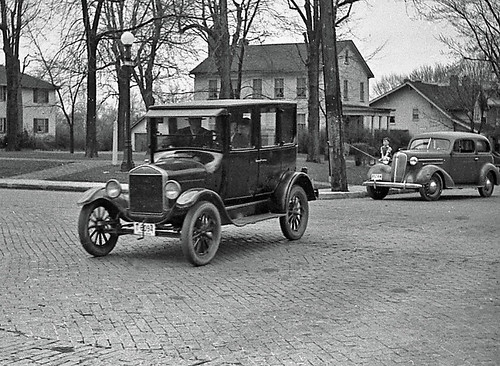
The 30,000 opening-day visitors reveal something about pre-war Florida. The state's population was under two million. A1A was a narrow coastal road. Yet enough people drove from across Florida and neighboring states to produce a traffic jam that, by modern standards, would qualify as a major regional incident. The Heritage Crossroads route follows that same road today - the same pavement those first visitors clogged on the way to the world's only oceanarium.
World War II: Three Roles the History Books Rarely Combine
When the United States entered World War II in December 1941, Marine Studios closed its gates to the public. What happened next is almost entirely absent from modern visitor guides, despite being one of the more striking chapters in Florida's wartime story.
The facility served three distinct military purposes simultaneously:
- Submarine Hill lookout: The U.S. Coast Guard stationed personnel at an elevated point on the property - still called "Submarine Hill" today - to watch for German U-boats operating off the Florida coast. German submarines were active in the Atlantic through 1942 and 1943, sinking merchant vessels within sight of shore.
- Shark repellent research: Government-contracted researchers at Marine Studios developed a shark repellent compound that was included in sea survival kits issued to downed Army and Navy pilots. The facility's existing shark population and saltwater infrastructure made it the practical site for this work.
- Combat dog training: Marine Studios also served as a training ground for military working dogs - a third wartime role that rarely appears alongside the other two in any account of the period.
The 1946 reopening came at exactly the right moment. The Baby Boom was underway. Americans had money to spend and appetite for novelty. Marine Studios re-entered civilian life with a maintained infrastructure and a built-in audience. What followed in the next five years would define how humans and dolphins related to each other for the rest of the twentieth century.
Dolphin Milestones: Birth, Training, and Hollywood
In 1947, a dolphin at Marine Studios gave birth - the first documented instance of a dolphin born in human care anywhere in the world. The calf was named Spray. The birth was not a managed breeding program. It happened because the oceanarium concept - keeping males and females of the same species together in natural conditions - created the circumstances for it. Researchers who witnessed the event understood they were watching something unprecedented.
Two years later, in 1949, Marine Studios hired Adolf Frohn, a veteran circus animal trainer, to make the first systematic attempt to train dolphins. The prevailing assumption was that dolphins could not be trained the way terrestrial mammals could. Frohn proved otherwise. By 1951, a dolphin named Flippy had mastered six distinct behaviors and was performing the world's first aerial dolphin act - leaping from the water on cue, in front of a paying audience. Nothing comparable had existed before that moment.
The same transparent tanks that made dolphin observation possible also made the site ideal for underwater filmmaking. Productions that brought Hollywood crews to Marine Studios include:
- Creature from the Black Lagoon (1954) - the film's underwater sequences were shot in the Marine Studios tanks
- Revenge of the Creature (1955) - the sequel returned to the same location for its underwater scenes
The facility's dual role as entertainment venue and research site - running parallel, reinforcing each other - is the thread that connects every era of Marineland's history.
Science on the Grounds: The Whitney Lab and Sea Turtle Hospital
On January 30, 1974, Cornelius Vanderbilt Whitney partnered with University of Florida biochemistry professor Dr. Sam Gurin to open the UF Whitney Laboratory for Marine Bioscience on the Marineland property. The lab was a working research institution from the start - not a satellite campus or a tourism complement. It published peer-reviewed marine science from a building that shared a driveway with a dolphin tank.
The Whitney Laboratory's scope has expanded over the decades to include a Sea Turtle Hospital that takes in injured and stranded sea turtles for rehabilitation and research. Turtles received at the hospital are treated, monitored, and returned to the wild where possible. The research generated there informs coastal conservation decisions well beyond Florida.
In April 2026, the University of Florida opened an expanded Whitney Marine Research Center on the same grounds, deepening the research capacity of a facility that has been producing science from this address for more than fifty years. Almost no visitor guide to Marineland mentions the Whitney Lab. Fewer still note that a working sea turtle rehabilitation hospital operates within walking distance of the dolphin programs.
The dual identity of Marineland - public attraction and active research institution - is what makes it genuinely unlike any other stop on the Heritage Crossroads route. Both halves are real, and both are open to visitors who know to look.
Hurricane, Closure, and the 2006 Reinvention
In 1999, Hurricanes Floyd and Irene struck the Florida coast in close succession. The damage to Marineland was extensive. The facility closed and stayed closed for seven years - long enough to end one era entirely and force a fundamental rethinking of what the place should become.
When it reopened in 2006, it did not attempt to recreate Marine Studios. It relaunched as Marineland's Dolphin Conservation Center, built around a new multi-million-gallon habitat designed around the behavioral needs of the dolphins rather than the viewing angles of a grandstand. The shift was practical as well as philosophical. Programs built around supervised interaction - swimming alongside dolphins, observing training sessions up close - replaced the older format of choreographed shows for seated crowds.
The facility operates today as Marineland Dolphin Adventure. The conservation orientation built into the 2006 reopening remains the framework it runs on - and the Historical Museum added in that era gives visitors a way to trace the full arc from underwater film studio to military outpost to the conservation center they are standing in.
Planning Your Visit Today
Programs and Daily Presentations
Marineland Dolphin Adventure is open daily. Hours and seasonal schedules are posted on the official Marineland website - verify before traveling, as they can shift. The facility offers tiered dolphin encounter programs at different levels of involvement, from observing a training session at the habitat edge to entering the water for a supervised swim. Program availability varies by season; check the official site for current offerings and fees rather than relying on third-party aggregators, which frequently carry outdated listings.
Beyond the dolphin programs, the daily schedule typically includes:
- Sand tiger shark feeding - a daily presentation at the shark habitat that offers a close look at feeding behavior in a species widely misunderstood by coastal visitors
- Sea turtle feeding - timed presentations at the turtle area
- The on-site Historical Museum, which traces the facility's 88-year arc from underwater film studio to active conservation center
Logistics and Access
Marineland sits on A1A at the Flagler-St. Johns County line. Use the official Marineland website for the current address and driving directions. On-site parking is available. ADA access is provided; confirm specific program accessibility when booking, since water-entry programs carry physical requirements that vary by activity. Budget at least two hours for a dolphin encounter plus the museum and a daily presentation. A half-day is more realistic if you intend to visit the Whitney Lab grounds and the sea turtle hospital area as well.
Dolphin encounter spots fill early, particularly on weekends and during school holidays. Book directly through the official Marineland website. The museum, shark feeding, and sea turtle presentations do not require advance booking - but the dolphin programs do.
The Town of Marineland: Florida's Smallest Municipality
The town of Marineland was incorporated in 1940, two years after the facility opened. It straddles the St. Johns-Flagler County line - the same boundary the oceanarium sits on. Approximately 31 people live there, making it Florida's smallest incorporated municipality.
Consider what that actually means. There is a real town in Florida - with its own government and official recognition - that exists because of a marine attraction. Its entire population fits comfortably in a single restaurant dining room. Two county jurisdictions run through it. It was built around a concept, the oceanarium, that had not existed anywhere on earth until 1938. It incorporated before SCUBA gear existed.
For Heritage Crossroads travelers, Marineland the town is not a trivia footnote. It is the physical expression of what can happen when a single improbable concept lands in the right place at the right time - and then survives a world war, two hurricanes, and a seven-year closure to reach its 88th year still operating.
Road-Tripping the Corridor: Pairing Marineland with Adjacent Sites
Marineland sits near the midpoint of the Heritage Crossroads route, which makes it a natural anchor for a full day on A1A. The following sequence works well for travelers driving the corridor in sequence:
- Start at Washington Oaks Gardens State Park, roughly two miles north of Marineland on A1A. The Matanzas River meets the Atlantic here, and the coquina rock formations along the ocean beach are unlike anything else on this section of coast. The park opens early, which allows a morning walk before Marineland begins its daily programs.
- Drive south on A1A to Marineland. Arrive before mid-morning to catch the first dolphin training session and get through the Historical Museum before the heat builds through the day.
- Stay for at least one daily presentation - shark feeding or sea turtle feeding - before leaving the dolphin facility. If time permits, walk the Whitney Lab grounds and ask staff about the Sea Turtle Hospital.
- Continue south on A1A to Faver-Dykes State Park, a quieter freshwater site on the Pellicer Creek estuary. It is an underused stop that provides strong contrast to the ocean-facing character of Washington Oaks and Marineland, and completes the ecological range of this section of the corridor in a single day.
| Site | Character | Best for | Time to budget |
|---|---|---|---|
| Washington Oaks Gardens State Park | Tidal river, ocean beach, ornamental gardens | Early morning walk, coquina rock formations | 1-2 hours |
| Marineland Dolphin Adventure | Historic oceanarium, active conservation programs | Dolphin encounters, museum, daily presentations | 2-4 hours |
| UF Whitney Lab and Sea Turtle Hospital | Working research institution on Marineland grounds | Marine science context, turtle rehabilitation | 30-60 minutes |
| Faver-Dykes State Park | Freshwater estuary, Pellicer Creek paddling | Quiet contrast to the ocean-facing sites | 1-2 hours |
Frequently Asked Questions
What exactly is an oceanarium, and why did Marine Studios coin the term in 1938?
An oceanarium keeps multiple ocean species together in conditions that replicate open-sea life, rather than separating each species into its own tank. Marine Studios invented the word because no existing term described what they had built. The distinction mattered practically: animals in mixed-species conditions behave more naturally than isolated specimens, which is why the facility became a site for genuine behavioral research from its earliest years - including the first-ever dolphin birth in human care just nine years after opening.
Can visitors access the UF Whitney Laboratory or the Sea Turtle Hospital?
The Whitney Laboratory is a working research institution, so general walk-in access is limited. The Sea Turtle Hospital has some visibility for awareness visitors. Check the University of Florida Whitney Laboratory website directly for current public programming, which shifts with research priorities and seasonal intake. The April 2026 expanded Whitney Marine Research Center may carry updated visitor access information on its own page.
Is Marineland worth a stop if I have no interest in swimming with dolphins?
Yes. The daily sand tiger shark feeding, sea turtle feeding, and the on-site Historical Museum are all accessible without booking a dolphin program. The museum alone covers wartime science, decades of Hollywood productions, the world's first dolphin birth, and 88 years of conservation history - more historical range in a single building than any other stop on the Heritage Crossroads corridor.
What is Submarine Hill, and can visitors see it?
Submarine Hill is the elevated point on the Marineland property where U.S. Coast Guard personnel kept watch for German U-boats during World War II. The name has stayed in the site's informal geography ever since. Ask at the facility about access and whether current programming includes interpretation of the wartime period - the combination of submarine watching, shark repellent research, and combat dog training at a single site is a story told in full almost nowhere else.
How does the town of Marineland function as a legal municipality with roughly 31 residents?
Florida has no minimum population requirement for maintaining incorporation, and once a municipality exists it can persist as long as it meets basic governmental requirements. Marineland incorporated in 1940 and has held that status continuously since. Its split jurisdiction across St. Johns and Flagler counties adds a further layer of administrative oddity that makes it unique even among Florida's smallest places - a legal town that was purpose-built around an oceanarium and has outlasted every crisis that oceanarium faced.
How does driving the Heritage Crossroads route connect to Marineland's own history?
Marineland sits directly on A1A at the St. Johns-Flagler County line, within the Heritage Crossroads corridor, and the road itself is part of the facility's origin story. The more than 30,000 cars that jammed A1A for the June 23, 1938 grand opening were driving the same coastal highway that Heritage Crossroads travelers use today. That opening-day traffic jam on a two-lane coastal road is an extraordinary piece of context that no other travel guide to Marineland connects to the route you took to get there.