Princess Place Preserve sits where the tidal salt marsh of Pellicer Creek meets the live oak hammock of interior Flagler County, and it holds more concentrated history per acre than almost anywhere else on the Heritage Crossroads Highway. Four distinct eras - Spanish colonial settlement, Gilded Age excess, Russian aristocratic exile, and modern public stewardship - are all still physically present here, not as interpretive panels but as standing structures, navigable waterways, and named trails. Most travel coverage stops after one era. This guide pulls all four together, then tells you exactly how to explore the place on foot, by horse, and by paddle.
The Spanish Colonial Roots
In 1791, the King of Spain granted Francisco Pellicer a substantial tract of land along the creek that still carries his name. That grant makes this site the oldest documented European homestead in Flagler County - a distinction placing it firmly before the United States held any legal claim to Florida at all. For anyone driving the Heritage Crossroads corridor from St. Augustine southward, Princess Place is where the regional story actually begins.
Pellicer chose the location for reasons that are still obvious from a canoe: the tidal estuary connects inland freshwater sources to the Matanzas River and from there to the Atlantic coast, providing reliable drinking water, fish, game, and a navigable route for moving goods. The adjacent hammock - dense with live oak, cabbage palm, and longleaf pine - offered building material and shelter from coastal storms. Because the Pellicer-era settlement never converted the land to intensive agriculture, the creek's natural hydrology remained intact. Centuries later, that original character would earn Pellicer Creek its designation as a Florida Aquatic Preserve.
The Gilded Age Arrives: Cherokee Grove, 1886-1892
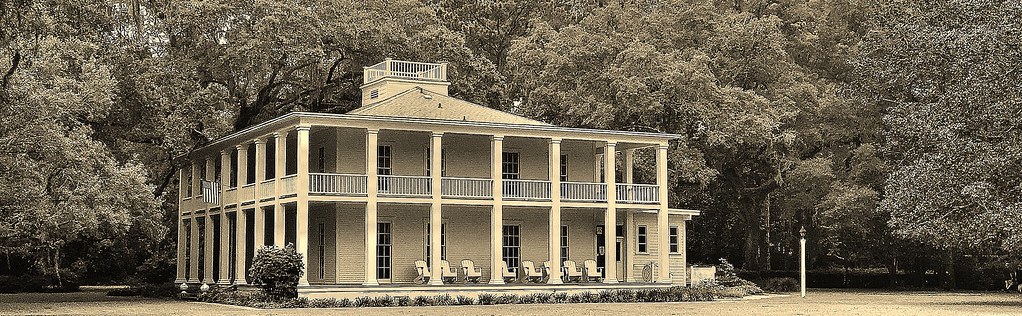
Henry Mason Cutting, a wealthy New Englander, purchased the property in 1886 with a specific vision: a private sporting retreat remote enough from northern society to feel exclusive, warm enough to use in winter, and substantial enough to justify the journey. He renamed it Cherokee Grove and commissioned a lodge completed by 1887-1888. What took shape was not a simple hunting cabin.
The Cherokee Grove complex included:
- The main Adirondack Camp Style lodge with wraparound porch
- Servants' quarters and a dedicated caretaker's house
- Tennis courts and stables
- A bathhouse and a pool house
- The first in-ground concrete swimming pool built in Florida, fed continuously by a natural artesian well
That pool deserves particular attention. Cutting's engineers tapped into the underlying aquifer, which delivers water at a constant moderate temperature year-round without any mechanical heating or cooling. The continuous flow from deep underground kept the pool usable in January without technology that 1880s-era equipment could not have provided. It was a genuine geological advantage that money could not replicate in northern climates - and nothing comparable existed anywhere in Florida before it.
Henry Cutting died in 1892, leaving the estate to his widow Angela Mills Cutting and their two young children. Angela would remain connected to the property for more than sixty years and give it an entirely new identity.
Architecture Deep-Dive: What Makes the Lodge Irreplaceable
The Princess Place lodge holds a distinction no other building in Florida can claim: it is the only surviving period example of Adirondack Camp Style architecture in the state, and it is Flagler County's oldest intact structure. Understanding the style helps explain why preservationists fought for it.
Adirondack Camp Style Explained
Adirondack Camp Style emerged in the 1870s and 1880s as wealthy industrialists built private retreats in New York's Adirondack wilderness. The aesthetic emphasized unfinished natural materials - rough-hewn logs, bark-on timber, native stone - deliberately arranged to suggest closeness to nature rather than the formal symmetry of Victorian architecture. Great camps in the Adirondack Mountains used this approach to build sprawling compounds that felt rustic while delivering every comfort. Cutting transported the aesthetic south, and it did not survive him anywhere else in Florida.
Materials and Methods
Cutting's craftsmen built the exterior using two materials almost no other Florida structure combines. The walls incorporate pink coquina - a sedimentary rock formed from compressed shell fragments - quarried from the Atlantic beach a few miles away. That warm color distinguishes it immediately from the bright white coquina of St. Augustine's Spanish-era construction. The technique used is tabby: coquina shells mixed with cement to form a durable, textured mortar and fill. Tabby was a standard building material in Spanish colonial Florida but had long fallen out of use by 1887; Cutting's builders revived it as much for its texture as its strength.
The wraparound porch - the defining gesture of camp-style architecture - is supported by posts cut from cabbage palm and cedar trunks. These are not milled lumber. They are actual tree trunks, bark stripped but shape preserved, embedded to hold the porch roof. That intentional roughness, combined with a building solid enough to stand nearly 140 years later, is precisely the paradox Adirondack Camp Style was designed to produce.
The Artesian Pool in Historical Context
The pool remains filled and functional today. Water flows continuously from the artesian well, maintaining the same stable temperature it has held since Cutting's engineers completed it - cool in summer, mild in winter, never stagnant. The constant throughflow keeps it clear without the chemical treatment a closed pool would require. Standing beside it, it is easy to underestimate what a strange luxury it represented in 1887, when most Floridians had no indoor plumbing at all.
The Princess Story: Angela, Three Marriages, and a Russian Exile
In 1923, at the age of 54, Angela Mills Cutting married her third husband: Prince Boris Scherbatoff, a Russian nobleman who had fled Russia after the Bolshevik Revolution ended the world that produced him. The marriage made Angela - an American woman - a Russian princess by title, an incongruous distinction for the owner of a subtropical hunting lodge on a Florida tidal creek.
Prince Boris was a man in genuine danger. Fearing assassination by Bolshevik agents operating abroad - a concern well founded in the 1920s and 1930s given documented Soviet operations against exiles - he changed the family's spelling from Scherbatoff to Scherbatow to obscure their movements. The lodge took a new name to match: Princess Place, or the Princess Estate. Local usage adopted it immediately and never let it go.
Prince Boris Scherbatow died in 1949. Angela continued living at Princess Place as her primary residence. The lodge Henry Cutting had built as a northern sportsman's retreat became, in its final private decades, the home of an American woman who was technically Russian royalty - in a county that had no other royalty, on a creek still named for a Spanish colonial farmer. The layers were already accumulating before any historian thought to count them.
The site's full title history - Spanish crown grant, Yankee sporting camp, royal exile residence, county preserve - makes it the most compressed illustration of Florida's colonial and territorial identity shifts anywhere along the Heritage Crossroads corridor.
From Private Estate to County Preserve: The 1993 Acquisition
Flagler County purchased the property in 1993 and converted it into a public preserve with free daytime admission. The transaction preserved things that private development or neglect would likely have erased.
What the county acquired and has continued to maintain:
- The main lodge and its original Adirondack Camp Style exterior
- The artesian swimming pool, still functional and historically documented
- The servants' quarters and supporting estate outbuildings
- Intact tidal marsh and coastal hammock habitat along Pellicer Creek
- Trail corridors for hikers, equestrians, and mountain bikers
Formal recognition followed. The Princess Place Estate was added to the U.S. National Register of Historic Places on May 2, 1997. A state historical marker was erected in 2004, giving the property the dual documentation typical of Florida's most significant heritage sites. The county maintained free daytime admission throughout - a policy that separates Princess Place from comparable historic properties that charge entry fees.
On the Trails: Hiking, Biking, and the Accessible Loop
The preserve's trail network runs through hammock, marsh edge, and upland forest. The system accommodates hikers, mountain bikers on designated segments, and horses - a combination that reflects the property's equestrian history as much as modern recreational demand.
The Oak Trail - formerly called the Blue Trail - is the preserve's signature accessible route. It is paved and suitable for wheelchairs and strollers. The loop passes through mature live oak canopy and connects to the historic lodge area, making it the most efficient way to combine natural and architectural highlights in a single short walk.
Beyond the Oak Trail, the unpaved network covers several distinct habitat zones:
- Coastal hammock trails best suited for birding during spring and fall migration
- Marsh-edge routes with open views across Pellicer Creek's tidal grass flats
- Equestrian routes in the preserve's outer areas, with enough width for horses and mountain bikes on designated segments
Paddling Pellicer Creek: Launching from the Preserve
The preserve's waterfront access to Pellicer Creek is one of its least-publicized assets. Because the creek carries Florida Aquatic Preserve designation, development along its banks has been limited, and the tidal marsh remains ecologically intact - a genuine rarity on Florida's Atlantic coast.
Tidal timing shapes the paddle experience. Pellicer Creek is a tidal estuary: water flows in from the Matanzas River at high tide and drains back out at low. Paddling upstream on an incoming tide is easy; the return trip benefits from the ebb. A mid-incoming tide provides the best water depth in the creek's upper reaches while leaving enough current to make the return manageable. Check a tide chart for the Matanzas River inlet before launching - Pellicer Creek follows the same cycle with a short lag.
Wildlife along the paddle route reflects the creek's protected status. Year-round residents include great blue herons, tricolored herons, snowy and great egrets, wood storks, and bald eagles, which nest in the preserve itself and appear regularly from the water. During fall migration, merlins and American kestrels hunt the marsh edges at eye level - an experience paddlers on open water rarely get. The preserve is a certified stop on the Great Florida Birding Trail; more than a hundred species have been recorded during spring and fall migration peaks. The creek connects southward toward the Matanzas River and the Intracoastal Waterway, but the marsh interior holds far more wildlife than the open waterway, and most paddlers find the creek itself the destination rather than the route to one.
Plan Your Visit: Camping, Access, and the Best Seasons
Daytime access to the preserve is free. Camping requires advance reservation. Non-county residents pay a per-site fee - check the Flagler County Parks website for the current rate, as fees are updated. The preserve accepts reservations up to one year ahead, which matters for peak migration weekends when sites fill early.
| Campsite Type | Tent Only | Equestrian Access | Group Use | Reservation Required |
|---|---|---|---|---|
| Family primitive sites | Yes | No | No | Yes |
| Equestrian campsite | Yes | Yes | No | Yes |
| Group campsite | Yes | No | Yes | Yes |
All sites are primitive - no electric hookups, no water at individual sites. The preserve has restroom facilities, but the camping experience is intentionally minimal. Summer visits are possible but come with Florida's full heat and mosquito season; early morning starts and a midday departure make summer manageable. Winter is reliably good for hiking and paddling, with cooler temperatures, fewer insects, and resident raptors active on clear days. Spring and fall bring the highest bird diversity.
Arriving and Getting Oriented
The preserve entrance is off Princess Place Road in Palm Coast; any navigation app finds it. The entry road is unpaved for a stretch - most passenger vehicles handle it in dry conditions, but higher clearance helps after heavy rain. There is no fee booth; parking and daytime access are open. Cell signal inside the preserve is unreliable, so download a trail map before leaving home.
- Check the Flagler County Parks website for current trail conditions, lodge access dates, and camping availability.
- Download or print a trail map - do not count on cell signal inside the preserve.
- If paddling, look up a tide chart for the Matanzas River inlet before launching.
- Arrive early - hammock trails are substantially cooler in the first two hours after sunrise, and bird activity peaks then.
- Build in time near the lodge; the exterior rewards a slow circuit to find the coquina textures, the porch posts, and the artesian pool.
Frequently Asked Questions
Is Princess Place Preserve really free to enter?
Daytime admission is free for all visitors. The fee applies only to overnight camping, and non-Flagler County residents pay more than county residents. Confirm the current rate on the Flagler County Parks website before booking, as the figure changes.
Can I swim in the historic artesian pool?
The pool is preserved as part of the historic lodge complex and is generally not open for public swimming. Special event access has occurred in the past, so contact Flagler County Parks directly for the current policy - it is worth asking.
How much time should I plan for a first visit?
Two to three hours covers the lodge area and the accessible Oak Trail comfortably. Adding one of the longer hammock routes extends the visit to a half-day. A full day works well if you include a creek paddle - factor in driving to a kayak rental outfitter if you do not bring your own boat.
Do I need to bring a kayak, or can I rent one nearby?
The preserve does not offer on-site boat rentals. Several outfitters in Palm Coast and the greater St. Augustine area rent kayaks and canoes and can advise on Pellicer Creek launch logistics. Confirm current rental availability with local outfitters directly, as operators change seasonally.
What makes the lodge architecture worth seeing if I am not an architecture fan?
The lodge is Florida's oldest intact structure of its kind and looks genuinely unlike any other building in the state - the pink coquina, tree-trunk porch posts, and tabby walls are immediately distinct from standard Florida vernacular construction. The artesian pool beside it adds the engineering curiosity: a pool built in 1887 that still flows and holds temperature without any mechanical system. That combination is concrete enough to be interesting without needing any architectural background.
How does Princess Place connect to the broader Heritage Crossroads Highway?
The Heritage Crossroads Highway follows the old settlement corridor through Flagler, St. Johns, and Volusia counties along routes established under Spanish colonial rule. Princess Place sits near the byway's alignment and represents every major period of that history in a single property - the Spanish grant, the American industrial era, the 20th-century exile story, and the modern conservation response. For travelers driving the full corridor, it is the stop that gives the surrounding region a narrative framework.