Follow the Heritage Crossroads Corridor south through Volusia County and it ends at a county park on a barrier island where South Atlantic Avenue runs close to the dunes. A 2017 Florida Heritage Site marker stands near the parking area. Most travelers who stop here read it and drive on. What the marker cannot hold is the full weight of what this strip of coastline meant - that it was purchased outright during wartime, owned and operated by Black Americans, and visited by large crowds of people who had nowhere else along this coast to go. And that the movement those owners helped build would eventually end it.
The Locked-Out Coast
To understand what Bethune accomplished here, start with the baseline. By 1935, the entire Atlantic shoreline of Volusia County offered Black residents exactly two points of beach access, and neither was available year-round. Both opened during summer months and on specific holidays only. For a Black family living in Daytona Beach - one of the larger Black communities on Florida's east coast - the Atlantic was a theoretical presence. You could see it from bridges you crossed daily. Using it was a different matter.
Daytona Beach had built its identity as a resort town since the 1890s. Its beaches were a commercial product being actively marketed, and the infrastructure around them - hotels, boardwalks, car culture on packed sand - was constructed around the assumption that its customers were white. The message to Black residents was precise: this economy exists partly because of your labor, and its recreation is not for you.
The two limited access points that did exist came with conditions that made sustained use difficult. You could not plan a summer around a location that might be closed when you arrived. You could not build the social rhythms of a beach-going culture - gathering on the sand, teaching children to swim in saltwater, the seasonal rituals that define a coastal community - around two restricted sites operating on a conditional calendar. What Black Floridians faced in Volusia County was not a diminished version of what white residents had. It was a fundamentally different category of experience.

Mary McLeod Bethune's Daytona Roots
Bethune had been working against these conditions from the moment she arrived in Daytona Beach. She founded her school there in 1904 with less than two dollars in hand and five students. The school grew steadily, began merging with Cookman Institute in 1923 - a process finalized in 1925 - and became what is now Bethune-Cookman University. By the mid-1930s she had built an institution from almost nothing and was recognized nationally as one of the most effective Black educators in the country.
That reputation opened doors in Washington. Bethune founded the National Council of Negro Women in 1935 and the following year was appointed Director of the Division of Negro Affairs within FDR's National Youth Administration, making her the first Black woman to head a federal agency. She held that post from 1936 until the NYA was terminated in 1943. She also organized and led the Federal Council on Negro Affairs - FDR's so-called Black Cabinet - and worked through it on anti-lynching legislation, poll-tax reform, and New Deal employment access for Black workers.
None of this is incidental to the beach project. Bethune's seat at Roosevelt's advisory table gave her direct contact with some of the wealthiest and most influential Black Americans of the era. When she moved toward a major wartime land acquisition, she could reach people with both the capital and the will to participate. The political connections she had spent a decade building were the mechanism that made it possible. Without the Black Cabinet, there is no beach deal.
The 1943 Purchase
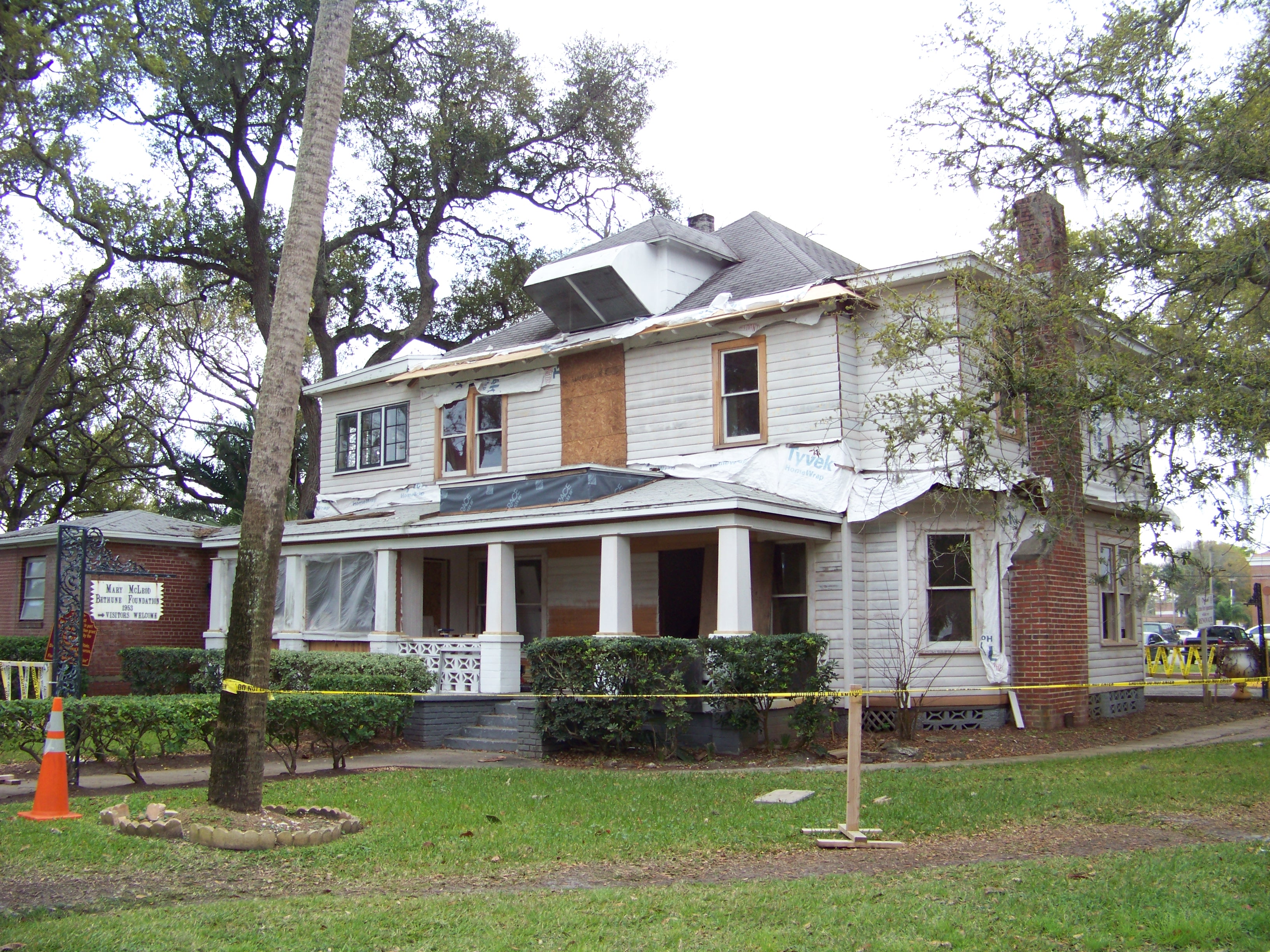
Two years before any formal corporation existed, Bethune and a group of Black investors - including George Engram Sr., owner of Engram Electric of Daytona Beach - purchased a multi-mile strip of oceanfront land from a developer named Dana F. Fuquay. This was a wartime transaction assembled without the support of white-controlled financial institutions. The parcel sat south of Daytona, straddling the Volusia and Flagler county line along the Intracoastal Waterway.
The specific location was not accidental. Far enough from Daytona's existing resort infrastructure to be within reach financially, the land had waterfront character on both sides - Atlantic ocean to the east, Intracoastal to the west. Straddling two county lines connected the project geographically to both Volusia and Flagler, which today form two of the three counties the Heritage Crossroads Corridor spans. That Intracoastal boundary would later define the western edge of the county park that stands here now.
That Bethune could assemble this investor coalition at all - during wartime, across state lines, in the absence of any established Black-owned coastal resort precedent in the region - was a direct consequence of the network she had built through the Black Cabinet and the National Council of Negro Women. She knew who had capital and she knew how to connect an investment to something larger than a financial return.
Building the Corporation
The formal structure came two years after the purchase. On December 9, 1945, Bethune convened a meeting at the Rogers Hotel in Tampa with some of the wealthiest African Americans in Florida, and the Bethune-Volusia Beach Corporation was chartered that day. The board reflected deliberate institutional grounding:
- G.D. Rogers - president
- George W. Powell - executive vice president
- Dr. W.H. Gray - vice president
- James A. Colston - secretary
- Mary McLeod Bethune - treasurer
The enterprise had a deliberate internal structure too. The beach was open to visitors of all races - Bethune had no interest in building a mirror image of segregation. What was not open to all races was ownership. Lots for vacation homes and parcels for restaurants, lodges, and other commercial development were sold and leased exclusively to Black buyers and merchants. The beach would welcome anyone who arrived. The economy it generated would stay in Black hands.
This was the same economic philosophy Bethune had applied to Bethune-Cookman: not just access but ownership, not just the right to be present but the capacity to build wealth from that presence. The beach was, in structural terms, an extension of everything she had argued for across her career.
The Resort at Its Peak
By the early 1950s, Bethune-Volusia Beach had grown into one of the principal Black resort destinations in the Southeast, drawing visitors from across the region and from much farther - New York, California, cities where word had traveled about a stretch of Florida coast where Black Americans could arrive without calculating what reception awaited them. Specific annual attendance figures cited in popular accounts vary and are not firmly documented; for verified numbers check with the Volusia County Division of Historical Resources or the Bethune Foundation.
The Welricha Hotel, which opened in 1951 and in which Bethune held a partial interest, advertised itself as offering 'recreation and relaxation without humiliation.'Welricha Hotel advertising, circa 1951
That phrase described exactly what the rest of the Florida coast could not offer. The Welricha was not marketing luxury in any abstract sense. It was marketing dignity, which was something money could not reliably buy anywhere else on this shoreline in 1951.
What drew people back was the full range of what the beach offered:
- Swimming and wading in the Atlantic, on a beach the community owned outright
- Fishing from the shore and along the Intracoastal waterfront
- Car racing on the packed sand - a Florida beach tradition that carried a distinct Black beach culture at this location
- Live music and dancing, giving the resort a nightlife dimension that drew younger visitors in particular
- Picnicking and family gatherings that could be planned without uncertainty about whether the site would be open or welcoming
- A social scene built around dressing up and being seen - a form of community investment in the experience itself that distinguished Bethune Beach from a merely functional alternative
On July 4, 1950, more than five thousand people attended the Independence Day celebration. The date was pointed. A Fourth of July on a beach your community owned outright, in a state where your community had been barred from most of the coast, was not a routine holiday outing.
The Wade-In Years
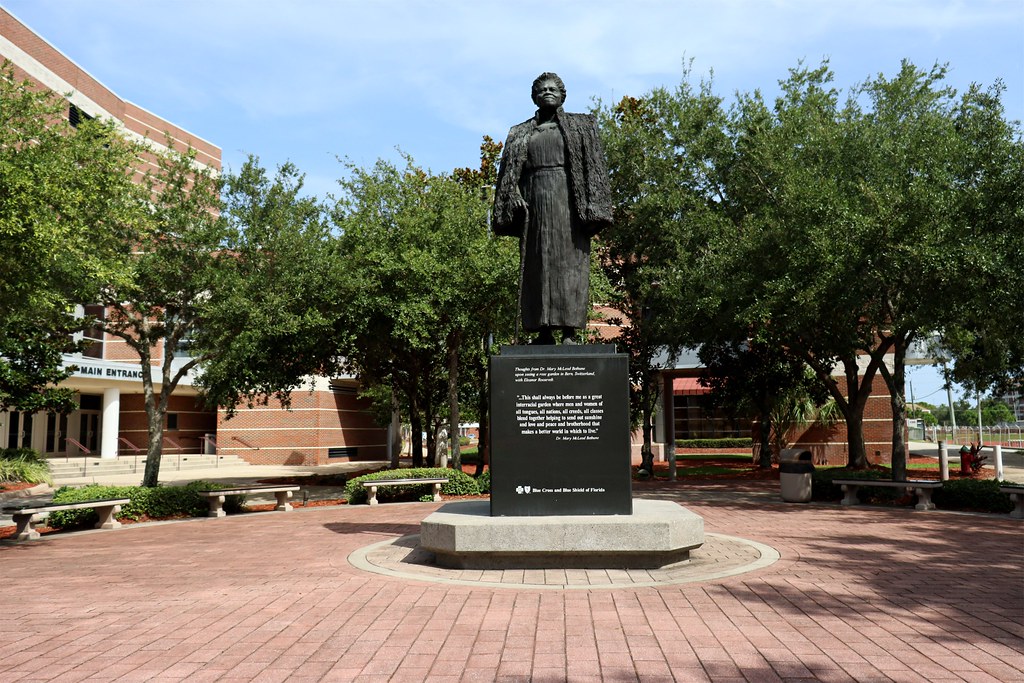
Having built her own beach, Bethune did not stop fighting for access to the ones that remained closed. She helped organize wade-in demonstrations in Volusia County, where participants waded into the ocean at still-segregated beaches, facing arrest and sometimes violence, to contest restrictions that remained legally in place even as national pressure against them grew.
The Florida wade-in movement of the late 1950s and early 1960s paralleled the lunch counter sit-ins in its strategic logic. Wade-ins were deliberately exposed - you cannot quietly integrate a beach the way you might quietly sit at a library table. The confrontations were visible, often photographed, and the violence of enforcement became impossible to ignore when it happened in open water in daylight.
Bethune's involvement on both fronts was not contradictory. The resort demonstrated what was possible when Black ownership was secured. The wade-ins made visible what was still being denied. Both actions pointed at the same underlying argument: that Black Floridians were entitled to the full coastline, not a compensatory portion of it.
The Integration Paradox
When legal beach segregation collapsed following the Civil Rights Act of 1964, the entire Atlantic coast of Florida became accessible. Beaches that had been formally or informally closed to Black Americans opened. This was an unambiguous moral and legal victory.
For Bethune-Volusia Beach, it was the end.
The resort had thrived because it was the only place on this coast where Black visitors could arrive without humiliation or exclusion. That was its core offer. When alternatives opened - not comparable in terms of Black ownership or community character, but open in the most basic sense - the primary reason to travel specifically to this beach disappeared. Out-of-state visitors stopped making the trip. The large crowds the resort had attracted collapsed.
There is no villain in this final chapter. The Civil Rights Act was right. Desegregating public beaches was right. And the direct consequence, for a Black-owned economy that had been built precisely to compensate for that exclusion, was economic collapse. The market the resort served had been created entirely by injustice. When the injustice was addressed, the market dissolved. The wealth-building structure Bethune had designed so carefully - Black ownership open to all visitors, merchant lots, a hotel, a corporation chartered in Tampa with Florida's most powerful Black investors - had nowhere to go when the conditions that necessitated it changed.
This dimension of the story is almost entirely absent from existing travel writing about Bethune Beach, which tends to describe a heroic founding and then a vague decline. The integration paradox is not a footnote. It is the most instructive part of what happened here, and leaving it out leaves readers with an incomplete picture of how desegregation actually worked in practice for communities that had built self-sufficient economies inside segregation's walls.
| Period | Beach access for Black visitors | Ownership and economy | Visitor pattern |
|---|---|---|---|
| Before 1943 | Two restricted points in Volusia County, seasonal and holiday access only | No Black-owned oceanfront in the region | Minimal - legal and physical barriers kept most away |
| 1943-1951 | Bethune Beach open and Black-owned; other beaches still restricted | Lots and commercial parcels sold to Black buyers | Growing steadily as word spread regionally |
| 1951-1964 | Bethune Beach at peak; segregation holds elsewhere in county | Welricha Hotel operating; full merchant economy established | Visitors from across the Southeast and beyond, including New York and California; exact annual totals are not firmly documented |
| After 1964 | All Florida beaches legally open to everyone | Resort loses its primary draw as alternatives open | Sharp decline - out-of-state visitors stop making the trip |
Visiting Mary McLeod Bethune Beach Park Today
The land is now Mary McLeod Bethune Beach Park, a free Volusia County facility open daily from sunrise to sunset. It sits on South Atlantic Avenue - County Road A1A - in New Smyrna Beach, south of downtown, and approximately one mile north of the Apollo Beach entrance of Canaveral National Seashore. For Heritage Crossroads travelers, this is a natural endpoint: the corridor ends here, and the national seashore begins just south, placing two distinct chapters of barrier island history within a short drive of each other.
The park divides across both sides of South Atlantic Avenue, and both sides are worth the time:
- Oceanfront side: a paved beachfront walkway along the dune line, public restrooms, shaded pavilions, and outdoor showers - functional facilities for a beach visit, on a strip that runs shorter than wider county parks farther north
- Riverside side: tennis courts, pickleball courts, a basketball court, volleyball, a children's playground, and a fishing pier extending into the Intracoastal Waterway - the same waterway that defined the western boundary of Bethune's 1943 purchase
The 2017 Florida Heritage Site marker is near the oceanfront parking area. Read it as a starting point, not a summary. To connect this stop to the full Heritage Crossroads drive, here is a practical sequence for the southern end of the route:
- Approach from the north on A1A through southern Volusia County, noting where the commercial beachfront gives way to the quieter barrier island sections where Bethune's original purchase began
- Stop at the oceanfront side first - walk the beachfront path, find the historical marker, and take time with it before summer crowds arrive
- Cross South Atlantic Avenue to the riverside side and walk to the fishing pier - the view across the Intracoastal gives a physical sense of the waterway boundary that defined the original land parcel
- Drive south to the Apollo Beach entrance of Canaveral National Seashore - the contrast between this managed county park with its layered civil rights history and the undeveloped national seashore is worth the short distance
Frequently Asked Questions
Who actually owned Bethune-Volusia Beach - was it just Mary McLeod Bethune?
No. The original 1943 land purchase involved Bethune alongside a group of investors including George Engram Sr. of Daytona Beach. The Bethune-Volusia Beach Corporation chartered in 1945 had a five-person board, with Bethune serving as treasurer rather than president. Individual lots and commercial parcels were then sold outward to other Black buyers and merchants, spreading ownership further. Bethune was the project's driving force and public face, but it was built as a collective enterprise from the first transaction.
Why did the beach decline after civil rights legislation passed?
The resort's core draw was that it offered the only unrestricted oceanfront access for Black visitors in the region - a condition created entirely by the segregation of every other beach nearby. Once Florida beaches opened legally in 1964, out-of-state visitors in particular had no reason to travel specifically to this location when alternatives closer to home were now accessible. The economy Bethune built was structurally dependent on the exclusion it was created to fight, and when that exclusion ended, the market it served dissolved with it.
Is anything left of the original resort structures?
The Welricha Hotel and most of the commercial buildings from the resort's peak no longer stand. What remains is the land itself, now operating as a Volusia County public park, along with the 2017 Florida Heritage Site marker near the oceanfront parking area. A visit today engages with the historical record and the landscape rather than intact architecture from the era.
Was the beach restricted to Black visitors only?
No - and that was a deliberate choice. The resort welcomed visitors of all races. What was restricted to Black Americans was land and business ownership. Bethune wanted to build Black economic infrastructure while explicitly rejecting the mirror-image segregation that would have excluded white visitors the way Black visitors were excluded everywhere else on the coast. The distinction mattered to her philosophically and practically.
How does this stop connect to the Heritage Crossroads Corridor?
The park sits at the corridor's southern terminus, where Volusia County meets the northern edge of Canaveral National Seashore. The land Bethune purchased straddled the Volusia-Flagler county line - two of the three counties the corridor runs through - and the Intracoastal Waterway that defined the purchase boundary runs alongside the park today. For a route that covers civil rights history alongside colonial and natural heritage, Bethune Beach fills what was previously a complete gap in African American economic history along the shore.
Is there any fee to visit, and where is the park exactly?
Mary McLeod Bethune Beach Park is a free Volusia County facility on South Atlantic Avenue (County Road A1A) in New Smyrna Beach, south of downtown, between the developed beachfront corridor and the Canaveral National Seashore boundary. Hours run daily from sunrise to sunset. For current seasonal schedules, parking details, and any facility updates, check the Volusia County parks website before your visit - the park details are straightforward but hours can shift around holidays.