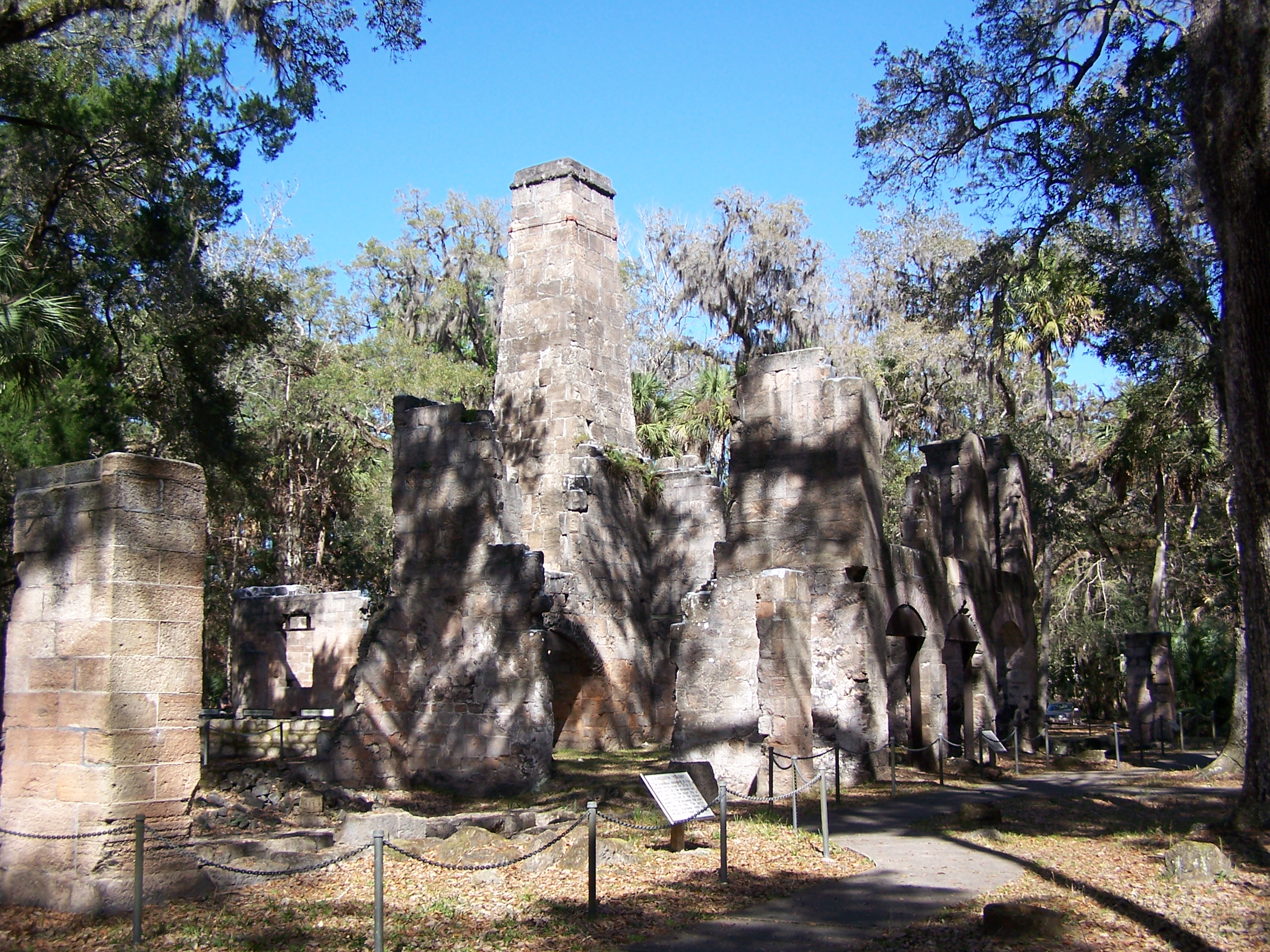
Walk the path at Dunlawton Sugar Mill Gardens in Port Orange and you step over coquina foundations that have not held a roof since the winter of 1836. The iron kettles still sit where enslaved workers boiled cane juice into sugar. The walls stand because no one rebuilt - the plantation economy collapsed so completely that the land stayed quiet for generations. These ruins are not isolated curiosities. They are the physical residue of seven weeks in which Seminole warriors and hundreds of freedom-seeking enslaved people dismantled every sugar operation along the Heritage Crossroads corridor in a single, coordinated campaign. Understanding what happened here between December 1835 and February 1836 changes how you read every landscape the highway crosses.
The Sugar Empire Along the Halifax
By 1830, the Atlantic coast of present-day Volusia County held the densest concentration of sugar plantations in East Florida - roughly 20 operations worked by an enslaved labor force of approximately 500 people along the Halifax River and Pellicer Creek systems. This was industrial-scale manufacturing, not subsistence farming. Running it required:
- Steam-driven cane mills that had to process cut cane within hours of harvest to prevent spoilage
- Iron boiling trains, furnace buildings, and coquina warehouses built to last decades, not seasons
- Water transport infrastructure - wharves and shallow-draft boats - to move barreled product north to Charleston and Savannah markets
- Permanent enslaved workforces numbering in the dozens per plantation, maintained year-round through planting, harvest, and processing cycles
The largest single operation was Bulowville, John Joachim Bulow's estate in present-day Flagler County. Bulow had been educated in Paris, hosted naturalist John James Audubon there in 1831, and ran the biggest sugar mill complex in all of East Florida - on land cleared and worked by people he owned. South along the corridor, Joseph M. Hernandez, Florida's first territorial delegate to Congress, held St. Joseph's Plantation, also in Flagler County. These estates pressed steadily westward, and the Seminole communities remaining in the interior understood exactly what the Indian Removal Act of 1830 meant for what little land they still held.
December 28, 1835: The War Opens on Two Fronts
The Second Seminole War did not open with a raid. It opened with a coordinated military operation, two targets, two commanders, the same morning. On December 28, 1835, Chief Micanopy led approximately 180 warriors in an ambush of Major Francis Dade's column of 110 soldiers on the Ocala road northwest of the corridor. One hundred and eight of the 110 men died. At the same hour, Osceola's fighters killed U.S. Indian agent Wiley Thompson at Fort King. Both strikes succeeded.
News reached St. Augustine within days. The city sat roughly 35 miles north of Bulow's plantation and considerably farther from the southernmost corridor estates. General Joseph Hernandez - the same planter who owned St. Joseph's - commanded Florida militia forces in the region. Major Benjamin Putnam organized troops and marched south almost immediately. On December 28 itself, while the Dade column was being destroyed on the Ocala road, Putnam's militia arrived at Bulowville - and found John Joachim Bulow waiting with a four-pound cannon.
The Corridor Burns: January and February 1836
Bulow fired the cannon at his own troops in protest of the forced occupation - he opposed Seminole removal - and was briefly arrested. The militia occupied his estate anyway. The Seminoles burned it regardless of his sympathies. The destruction spread north along the corridor in a sequence visitors can still trace today:
- Around January 11 - Bulowville, Flagler County: Seminole warriors burned the mill complex. The glow was visible from St. Augustine, 35 miles north. The largest sugar operation in East Florida was reduced to coquina walls and ash in a single night.
- January 18 - Dunlawton Plantation, Volusia County: Putnam's militia attempted to hold the line at this Halifax River estate and was routed - three dead, 13 wounded, two soldiers stranded on Pelican Island during the retreat. One was eventually rescued. The other was never found.
- February 1836 - St. Joseph's Plantation, Flagler County: The U.S. military had already commandeered the Hernandez estate, converting its first floor to a storehouse and its second floor to a hospital and renaming it Camp Brisbane. The Seminoles burned it anyway.
By early February, Seminole raids had forced virtually every white settler to abandon the territory south of St. Augustine. Of the roughly 16 sugar plantations that had operated along the east coast corridor, not one survived the winter campaign.
The Battle of Dunlawton
The January 18 engagement at Dunlawton was the first significant military battle of the corridor campaign, and it went badly for the militia. Putnam's force arrived at the Halifax River plantation expecting to secure a position; Seminole fighters were already in place. Three men died, 13 were wounded, and the withdrawal across the river turned into a rout. Two soldiers were cut off on Pelican Island. One made it back. The other did not - no record of his fate survives in the official accounts.
The battle exposed a structural weakness the corridor's geography had always contained: the same waterways that made sugar transport efficient channeled military movement into predictable routes. Seminole commanders read the terrain in ways that militia officers - most of them planters or political appointees with no combat training - could not match.
The Dunlawton site was listed on the National Register of Historic Places in 1973. What remains today at Dunlawton Sugar Mill Gardens in Port Orange:
- Surviving coquina and brick perimeter walls of the mill complex
- A rolling iron sugar press
- Steam furnace foundations
- An original iron kettle train used in the boiling process
The park is publicly accessible - check Port Orange's parks department for current hours before visiting, as schedules change seasonally.
John Joachim Bulow: Everything Lost at 26
Bulow's story is almost entirely absent from tourist literature along the corridor, which is remarkable given how precisely it captures the collapse of the planter class in a single life. He was in his mid-twenties, Paris-educated, the owner of East Florida's largest sugar mill, and genuinely opposed to forcing the Seminoles from their territory - a position that put him at odds with every neighboring planter. When the militia arrived on December 28, he did not hide his opposition. He fired a cannon at the troops and was arrested on the spot.
The militia occupied his estate. Two weeks later, the Seminoles burned it. Three months after the burning, in the spring of 1836, Bulow died. He was 26. He was buried in St. Augustine - the city whose lights he could have seen across the water from his plantation on a clear night. The coquina walls of his mill still stand at Bulow Plantation Ruins Historic State Park in Flagler County: the grinding mill walls, the spring house, the carriage house, all preserved. They are a more complete record of him than anything written about him has managed to be.
The Black Seminole Dimension
Local travel pages along the corridor describe the Second Seminole War as a conflict between the U.S. government and the Seminole people. That framing is accurate as far as it goes, and it does not go far enough. General Thomas Jesup, who took command of U.S. forces in 1836, named the actual dynamic in a dispatch to Washington:
This, you may be assured, is a Negro, not an Indian War.General Thomas Jesup, dispatch to the War Department, 1836
An estimated 400 enslaved people fled the corridor plantations to join the Seminoles in early 1836. They brought exactly what the Seminole military needed:
- Knowledge of plantation layouts, water routes, and the locations of militia supply points - gathered over years of forced labor on the land
- English fluency that made them indispensable as interpreters and intelligence sources
- Familiarity with the corridor's rivers, swamps, and hammocks that no recently arrived militia officer could match
Black Seminoles had lived within Seminole communities for decades before the war, often in semi-autonomous villages with negotiated arrangements closer to a tenant relationship than chattel slavery. When the corridor campaign began, the people who had built these estates had both the knowledge and the incentive to help dismantle them. Many historians now call the Second Seminole War the most successful sustained slave rebellion in U.S. history. The plantation system of the corridor was not simply outfought by Seminole warriors. It was dismantled from the inside by people who had every reason to burn it down. That story is absent from every existing travel page along the route. It is the most historically significant part of what happened here.
Forts Across the Corridor
The corridor required active U.S. military presence for seven years after the January 1836 campaign. The placement of forts shows where the army judged the territory most exposed - and how long it stayed that way.
| Site | County | Active Period | Function | Visitor Access |
|---|---|---|---|---|
| Bulow Plantation Ruins | Flagler | Burned Jan 1836; ruins preserved | Largest sugar mill; briefly held as militia base | State park, open to public |
| St. Joseph's / Camp Brisbane | Flagler | Late 1835 - Feb 1836 | Militia storehouse and field hospital | No standing remains |
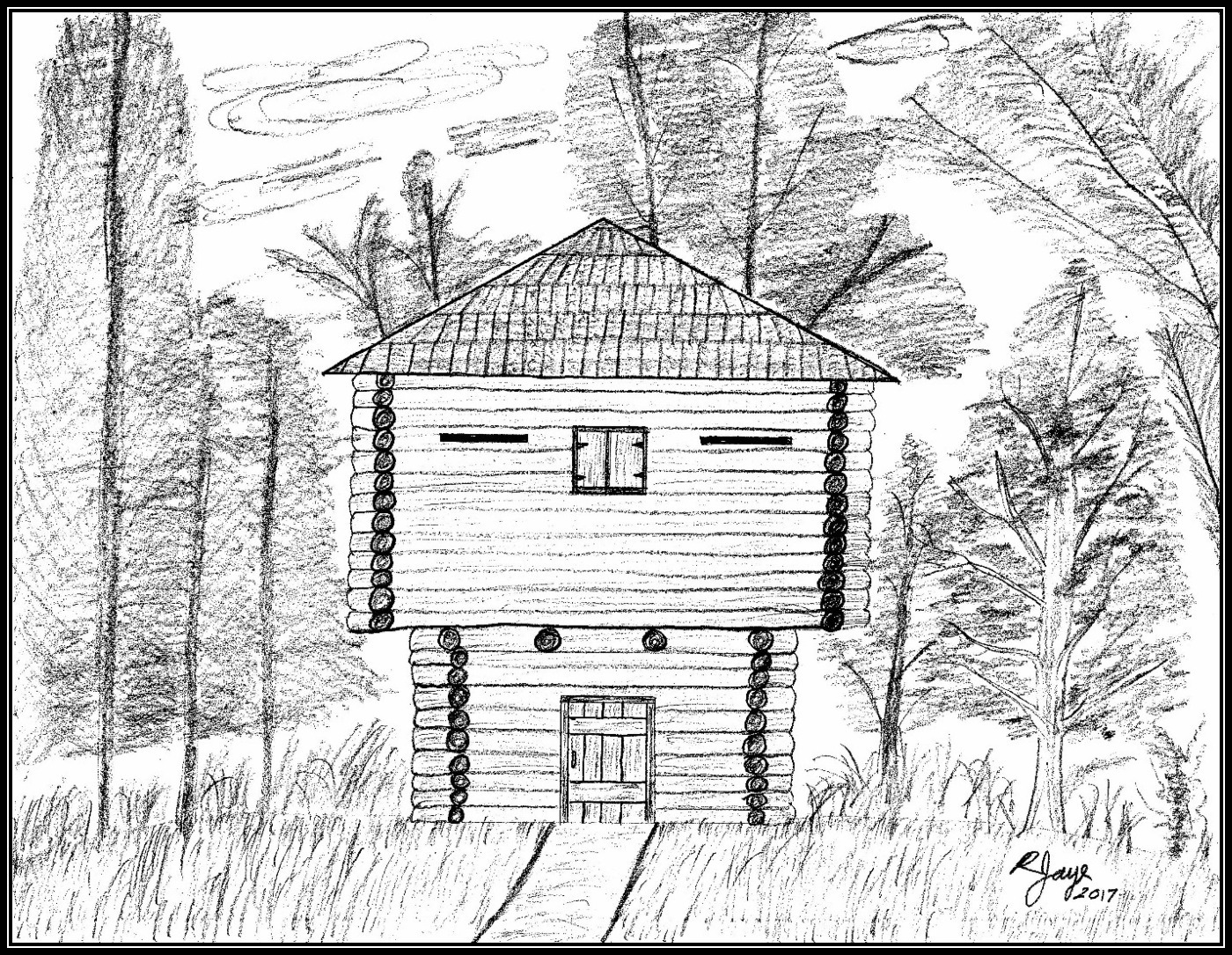
| Fort Caben | Flagler | 1834 - 1839 | Log blockhouse guarding Old Kings Road | No standing remains |
| Fort Fulton | Flagler | Feb 1840 - 1842 | Held position between Old Kings Road and Pellicer Creek | No standing remains |
| Fort Peyton | St. Johns | Active from 1837 | Staging point; site of Osceola's capture under white flag | Historical marker; private land |
| Dunlawton Sugar Mill Gardens | Volusia | Burned Jan 1836; ruins preserved | Site of first major corridor battle | Public park |
Fort Caben's completion in 1834 - a full year before the war began - shows the army already anticipated trouble along the Old Kings Road corridor. The gap between its demolition in 1839 and Fort Fulton's establishment in February 1840 reflects the army's shifting defensive calculus through the long inconclusive middle years: no decisive engagement came, so the static positions kept moving.
The White Flag at Fort Peyton
On October 21, 1837, General Joseph Hernandez rode to meet a delegation near Fort Peyton, roughly seven miles south of St. Augustine. Osceola and 81 followers had arrived under a white flag of truce to negotiate. Hernandez was acting on orders from General Jesup. He had no intention of negotiating. His soldiers surrounded the delegation and seized everyone present.
Osceola was imprisoned at Fort Marion - the Castillo de San Marcos in St. Augustine, now a National Monument at the corridor's northern end. Several followers escaped through a drain in the fort. Osceola was transferred to Fort Moultrie, South Carolina, where he died on January 30, 1838, at approximately 34. Portraits painted of him in his final weeks became among the most reproduced images of any Native American leader of the nineteenth century. The man the U.S. government could not defeat in the field became, in captivity, one of its most damaging public symbols.
The War That Never Ended, and the Landscape It Left
The Second Seminole War ran for seven years. It was the most expensive Indian war in American history at that time. It killed an estimated 1,500 to 2,000 U.S. soldiers. It was never formally concluded: on August 14, 1842, Colonel William Worth declared a cessation of hostilities without a treaty, without a surrender, without any agreement signed by Seminole leaders. The Seminole Tribe of Florida today describes itself as the only American Indian nation that never signed a peace treaty with the United States - a distinction that carries the full weight of the corridor's history in a single sentence.
Fewer than 500 Seminoles remained in Florida at war's end. They retreated into the Everglades and were never removed. The plantation economy of the east coast corridor never recovered. Planters who survived did not rebuild. The land that had held 16 sugar operations sat quiet, crossed by the Old Kings Road and the slow return of scrub and hammock.
That emptiness is why the Heritage Crossroads Highway looks the way it does. The unbroken palmetto flats, the live-oak canopies over the road cuts, the undeveloped stretches of river and swamp visible from A1A and Old Kings Road - these survived because no second wave of development came. The war's economic destruction kept the corridor thinly settled long enough for the land to pass into public ownership and conservation status. The heritage highway's natural character is not despite the Second Seminole War. It is a direct consequence of it.
Two sites give you physical contact with that history. Dunlawton Sugar Mill Gardens in Port Orange preserves mill walls, a kettle train, and a rolling press from one of the 16 destroyed plantations - publicly accessible, no charge to visit, verify current hours before going. Bulow Plantation Ruins Historic State Park in Flagler County preserves the largest of all of them: the mill walls, the spring house, the carriage house of the man who fired a cannon at his own militia and died before that summer ended. Stand at either site and you are standing on the ground where the corridor's natural landscape was accidentally saved.
Frequently Asked Questions
Can I walk through the Dunlawton Plantation ruins today?
Yes. The ruins are part of Dunlawton Sugar Mill Gardens in Port Orange, Volusia County. Surviving elements you can walk among include coquina walls, an iron rolling press, furnace foundations, and the original kettle train. The park is publicly accessible - check Port Orange's parks department website for current hours before visiting, as seasonal schedules apply.
Why did Bulow fire a cannon at his own militia?
Bulow opposed the forced removal of the Seminoles, putting him at odds with virtually every other planter in the corridor. When Major Putnam's militia marched into Bulowville on December 28, 1835, Bulow's protest was not verbal - he fired a four-pound cannon at the troops and was arrested on the spot. The gesture was politically futile; the militia occupied his estate anyway, and the Seminoles burned it two weeks later regardless of his sympathies.
Who were Black Seminoles, and what happened to them after the war?
Black Seminoles were people of African descent - freedom-seekers and their descendants - who had lived within Seminole communities for decades before the war, often in semi-autonomous villages with active military roles. After the war, their fates split: some were seized and re-enslaved despite promises of freedom; others were relocated west to Indian Territory with Seminole groups; a smaller number remained in Florida. Descendants of those relocated west maintain distinct communities in Oklahoma and Texas today, and their history is documented by both the Seminole Nation and the Freedmen's Bureau records.
Why is the seizure of Osceola under a white flag significant beyond the corridor?
A white flag signaled protected parley under military convention broadly recognized on the frontier. Seizing 82 people who arrived under one was publicly indefensible, and both American and European press condemned it immediately. The practical consequence extended the war: no Seminole leader could trust a U.S. promise of safe conduct after Fort Peyton, which made any negotiated settlement effectively impossible for the remaining five years of fighting.
Why did the corridor's natural landscape survive when the rest of Florida's Atlantic coast was developed?
The 16 sugar plantations destroyed in the winter of 1836 were never rebuilt, and the corridor remained thinly settled through the late nineteenth and early twentieth centuries - long enough for significant land parcels to pass into conservation ownership before development pressure arrived. The war's economic devastation was so complete and so sudden that no second agricultural wave followed. The heritage highway's rivers, scrub, and hammocks exist because the plantation system that cleared this land was dismantled in seven weeks and never reconstituted.