Drive north out of Ormond Beach on US-1 and within a few miles the landscape shifts in a way that is hard to name at first. The road widens. The street signs follow the same font. The ditches run straight and deep, draining into concrete-lined canals that disappear behind identical privacy fences. You have crossed into Palm Coast - the largest city on the Heritage Crossroads corridor and, in terms of formal incorporation, one of the youngest cities in Florida. Most of the people who live here arrived after the turn of the millennium. The forests and swamps that occupied this land for centuries are gone, replaced by a grid that was laid out by a corporation, not a community. That corporation - ITT - assembled the land in secret, made promises it could not keep, faced federal fraud charges, and eventually handed the whole project over to the people who had bought into its vision. The 69 miles of canals that define this landscape are the most visible monument to that history. Understanding how they got there says as much about 20th-century America as it does about Florida.
The Land That Stood Still
In 1950, Flagler County held a total population of roughly 3,400 people. That number had barely moved in decades, and the reason was not neglect or isolation. It was the land itself.
The dominant landscape was longleaf pine flatwoods sitting over a shallow water table. What was not pine was palmetto scrub, black-water swamp, or the salt marsh edge of the Intracoastal Waterway. The soil chemistry suited turpentine production far better than it suited row crops. A network of distilling camps worked the pine resin trade for decades, with operations recorded at places like Bulow Still, Deen Still, and St. Joseph Still - names that survive in Flagler County Historical Society records but appear on no modern road sign.
The county's economic base going into mid-century rested on a narrow set of activities that required space but not people:
- Turpentine distilling, which followed the pine harvest and moved on when a stand was exhausted
- Cattle ranching on open wire-grass range, dependent on wide spacing between operations and access to water
- Small-scale vegetable farming in the few pockets of higher, better-drained ground near the coast
- Timber and lumber operations that had already cut over most of the original forest by the 1930s
When the longleaf pine was gone and the turpentine camps closed, they left behind cutover land that was too wet to farm easily and too remote for most industry. Cattle ranchers held large acreages at low density. The population stagnated. That is precisely the land ITT would buy.
The Silent Assembly
In 1968, the phrase "Palm Coast" did not exist. The land it would occupy was divided among 35 different owners - heirs of the timber era, cattle operations, industrial hopefuls, and the former Lehigh Portland Cement Company, which had once mapped its own industrial town on part of the tract.
ITT Corporation wanted all of it. The company also knew that if a single large corporation began buying up Flagler County, word would spread, prices would climb, and the project would become either unaffordable or publicly known before planning was complete. The solution was methodical. ITT formed ten separate subsidiary shell companies, each acquiring parcels independently, with nothing in the public record to connect one purchase to another.
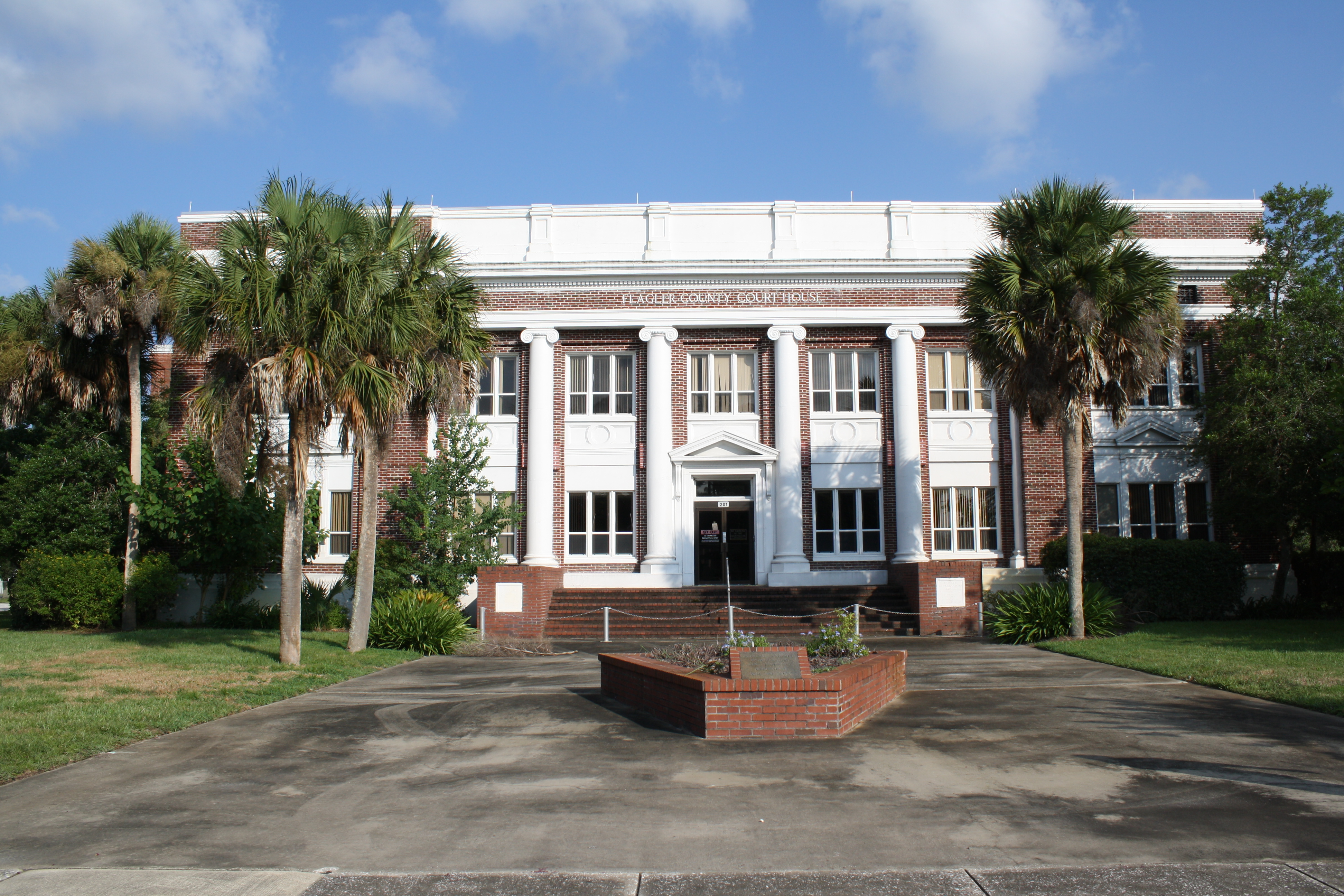
The first deed recorded was for the former Lehigh Portland Cement Company property, signed over at the Flagler County courthouse on December 23, 1968. The acquisitions continued through 1969. By the time ITT was ready to announce the project publicly, it had assembled roughly 68,000 acres - about 106 square miles - at prices reflecting the land's pre-announcement value, not the inflated worth of a future planned city.
Levitt Comes South
To assemble land is one thing. To build a city on it is another. ITT brought a specific expertise to that problem when, in 1968, it acquired Levitt and Sons - the homebuilding firm whose founder William Levitt is widely credited as the father of modern American suburbia.
Levittown, New York, built between 1947 and 1951, had proved that a developer could mass-produce entire communities using assembly-line construction methods, standardized house plans, and the automobile-centered logic of the suburb taken to its outer limit. Levitt's approach treated a residential development the way a manufacturer treats a product: reduce the variables, build fast, and price the result within reach of the working middle class.
That model - infrastructure-first, centrally planned, built around the detached single-family home on a leveled and drained lot - was exactly what ITT intended to deploy in Florida, at a scale that would dwarf anything Levittown had attempted. The Levitt acquisition gave ITT both the master-planning methodology and the credibility of an established name in large-scale residential development.
The community was platted with 48,000 home sites across more than 42,000 acres, making it at the time the largest planned unit development in Florida history.Flagler County plat records, ITT Community Development Corporation filings
The Announcement at Princess Place
ITT chose its announcement venue carefully. On June 16, 1969, the company brought press and officials to Princess Place Preserve - the historic estate on Pellicer Creek that is one of the most storied properties on the Heritage Crossroads corridor. The preserve had hosted Florida governors and foreign visitors; its main lodge dates to the late 19th century - the property was the private estate of New York businessman Henry Cutting, built with artisans connected to Henry Flagler's nearby St. Augustine developments, though never itself a Flagler property. Using it as the backdrop for a corporate press event lent the project an air of inherited legitimacy that bare palmetto scrub could not supply on its own.
Readers of a heritage corridor guide who have already visited Princess Place - its canopied live oaks, its tidal creek, its late-19th-century hunting lodge built in Adirondack camp style - may find it jarring to learn that this is where ITT staged the launch of a corporate land development. It is a connection no published history of Palm Coast has made explicit, yet it is directly documented.
What followed the June 1969 announcement was 16 months of infrastructure work before the public was invited in. ITT dredged canals, graded roads, and built the Welcome Center complex that would serve as the development's front door. It commissioned a collection of Mid-Century Modern model homes - concrete-block construction with names drawn from Florida's colonial and explorer past - to show buyers not just a house but a way of life: Floridian, modern, within reach of a salary.
Founders Day, October 29, 1970
The grand opening brought Florida Governor Claude Kirk to deliver the keynote. The physical centerpiece of the Welcome Center complex was a 64-foot observation tower, constructed so that prospective buyers standing at its top could survey palmetto flats in every direction and project their future onto the land below.
The model village surrounding the tower offered buyers specific choices across the same basic vocabulary of concrete-block construction:
- Models named Santa Rosa, DeSoto, and Delmar, among others, tying the project to Florida's longer history
- Gabled roofs at various pitches across the different plans
- Exterior treatments ranging from board-and-batten siding to faux brick accents
- Floor plans scaled to the middle-income buyer ITT was targeting nationally through direct mail and telephone sales
- A campus atmosphere that made the surrounding wilderness feel managed and the project feel permanent
October 29, 1970 is still observed annually as Founders Day in Palm Coast. Hold that date alongside what follows: most buyers who toured those model homes that day would wait more than a year before the first permanent residents moved in, and several years more before the legal reckoning arrived.
Dredging a City
The canal system is what most visitors notice first. ITT dredged 46 miles of freshwater canals and 23 miles of saltwater canals - 69 total miles - through the palmetto flats and pine flatwoods. The dredge spoil raised lot elevations on either side of each canal, solving the drainage problem that had made this land so difficult to build on while simultaneously creating the waterfront addresses that gave lots their principal selling point.
The sequence of site development followed a logic that was industrial before it was residential:
- Dredge the canal system to drain the water table and generate raised spoil berms for lot pads
- Grade the road grid across the drained flats, connecting the canal corridors to the highway
- Build the Welcome Center complex, the observation tower, and the model home village
- Open to the public for lot sales, beginning with the grand opening on October 29, 1970
- Extend utilities and prepare the C Section - the first residential phase - for occupancy
- Welcome the first permanent residents, who moved in during January 1972
Those first residents settled at the corner of Club House Drive and Casper Drive, in what ITT's marketing materials called the C Section. They arrived into a landscape of enormous promise and conspicuous incompleteness. The roads were real. The canals were real. The community amenities ITT's sales force had described were considerably more theoretical.
The FTC Case
The Federal Trade Commission brought charges against ITT Corporation and its subsidiary ITT Community Development Corporation that went directly to how Palm Coast had been sold. The specific allegations were not vague:
- Misrepresenting the investment value of lots - presenting them as appreciating assets when the evidence did not support those claims
- Misrepresenting what amenities were available or would become available within stated time frames
- Failing to disclose buyers' cancellation and refund rights under their land contracts
ITT signed a consent order with the FTC in 1975. Consent orders do not constitute a finding of guilt, but their requirements are a direct response to the conduct alleged. ITT had to change its disclosure practices and address the cancellation rights that buyers had not been told they held.
This episode is nearly absent from the promotional histories of Palm Coast that circulate today. It matters for two reasons. First, it explains the genuine frustration of early lot buyers who had purchased based on representations about value and amenities that the company could not or did not deliver on the original timeline. Second, it sits within a national pattern of land-sale consumer fraud in Florida during this period - one serious enough that Congress later strengthened the Interstate Land Sales Full Disclosure Act in direct response to abuses in this industry. Palm Coast was a large-scale, publicly visible case, not an outlier.
Three Decades Without City Hall
The first Palm Coast residents moved in during January 1972. For the next 27 years, the community grew without a city government of its own. Basic municipal services came from Flagler County, from special districts, and from ITT's own infrastructure arm. Roads were maintained, utilities were managed, and the canal system was operated as a functioning drainage network - but there was no mayor, no city council, no municipal budget accountable to Palm Coast voters.
The population grew steadily through the 1970s, 1980s, and 1990s. So did the argument for cityhood: a dedicated tax base, local zoning authority, and a government that answered specifically to Palm Coast residents rather than to a countywide commission whose other constituents had very different priorities.
An incorporation vote was finally scheduled for September 14, 1999. Then Hurricane Floyd arrived. The storm forced a coastal evacuation across Flagler County, and the vote was postponed one week. On September 21, 1999, nearly 12,000 residents voted. About 60 percent approved cityhood.
The Last City of the Millennium
Palm Coast was officially incorporated on December 31, 1999 - the final day of the 20th century. Jim Canfield was elected its first mayor. Dick Kelton was hired as its first city manager on April 17, 2000.
The timing gave Palm Coast a ready-made historical footnote. The Census numbers told the more substantive story:
| Period | Primary land character | Population scale | Economic base |
|---|---|---|---|
| Pre-1968 Flagler County | Pine flatwoods, turpentine camps, cattle range | Sparse; roughly 3,400 countywide in 1950 | Turpentine, cattle, timber |
| ITT development phase, 1969-1999 | Platted lots, canal corridors, expanding road grid | Growing; over 32,000 in Palm Coast by 2000 | Real estate sales, construction, services |
| Incorporated city, 2000-present | Suburban residential, commercial corridors | 89,258 by 2020 Census | Residential growth, medical, retail |
The US Census Bureau designated the Palm Coast area the fastest-growing in the United States during the mid-2000s - verify the current designation with the Census Bureau, as rankings shift with each new estimate cycle. Between the 2000 and 2020 Censuses, the city's population grew by roughly 170 percent - a rate that ranked at or near the national top for much of that period and transformed a company-built grid into one of the most rapidly expanding cities in the Southeast.
What the Heritage Corridor Holds
The span from ITT's first shell company deed in late 1968 to the cityhood vote in 1999 is roughly 31 years. In that time a corporation assembled a county's worth of land without public notice, built the infrastructure to drain and grid it, sold lots on representations the FTC would later call unsupportable, and then gradually withdrew as the population it had attracted kept growing. By the time residents voted on incorporation, most of what ITT had built still stood - the roads, the canals, the model home vocabulary that shaped every block - but ITT itself had become irrelevant to the daily life of the place.
That transition is unusual in American city history. The more common pattern for corporate-built communities is either continued corporate control or gradual abandonment. Palm Coast followed a third path: the company receded, the population stayed, and residents eventually demanded the formal institutions that living together at scale requires. Incorporation was not a rescue from ITT - it was a recognition that ITT was already gone in any meaningful sense, and that the people who remained needed a government of their own.
The Heritage Crossroads corridor holds many places where ambition ran ahead of reality - plantation operations, industrial towns that never materialized, resort projects that collapsed before completion. What separates Palm Coast from that category is not that ITT succeeded on its own terms, but that the people who moved there built something the company never planned for: a city that chose itself. The canal water still moves toward the tidal creeks. The grid still fills. The company that drew it has been gone for decades, and the place it left behind shows no sign of stopping.