State Road A1A runs the full length of Florida's northeast coast, and for most of its passage through Flagler and Volusia counties it travels between densely built beachfront neighborhoods. North Peninsula State Park is the exception. For nearly three miles, the highway cuts through an undeveloped wedge of barrier island where there is nothing on either side but salt marsh and coastal scrub to the west, open Atlantic surf to the east. That gap is the park - more than 550 acres of some of the rarest coastal habitat left on Florida's east coast, sitting free and open to anyone who turns off A1A. It anchors the southern end of the Heritage Crossroads Highway corridor, and it is almost universally underestimated.
Most visitors who stop here walk to the beach, swim, and leave. That is a real waste. The park protects five distinct natural communities, supports a federally threatened bird species and two state-protected reptiles, runs an active sea-turtle science program tied to Florida's statewide monitoring network, and offers a completely separate fishing and crabbing experience on the Intracoastal Waterway side that the average beachgoer never discovers. In winter, endangered great whales migrate past offshore. In fall, the Atlantic Flyway migration peaks overhead. A full visit takes half a day minimum.
Park Overview and Logistics
North Peninsula State Park occupies a barrier island between the Atlantic Ocean and the Intracoastal Waterway in Ormond-by-the-Sea, roughly four miles south of Flagler Beach on A1A. The park covers more than 550 acres and runs along approximately 2.75 miles of unspoiled Atlantic shoreline - one of the longest undeveloped barrier-island beach segments between Flagler Beach and Ormond Beach.
The park is open daily from 8 AM to sunset and charges no entry fee. It is day use only; there is no camping on-site. Two separate parking areas serve the park. The Highbridge Road entrance off A1A on the west side leads to Smith Creek Landing on the Intracoastal, where picnic tables, grills, an accessible fishing overlook, and the Coastal Strand Trail trailhead are located. A separate ocean-side parking area provides direct beach access. Interpretive exhibits are installed at both. Current contact information and hours are available through the Florida State Parks website.
Five Habitats, One Barrier Island
What makes North Peninsula unusual is not any single feature but the density and variety of natural communities compressed into a narrow strip of land. Five distinct habitat types exist within the park's boundaries, each with its own plant and animal assemblages, each within easy walking distance of the others.
- Salt marsh: The park's western edge grades into brackish marsh along Smith Creek and the Intracoastal Waterway. This is productive foraging habitat for wading birds and a nursery ground for juvenile fish and blue crab. Crabbers and anglers work its edges from Smith Creek Landing year-round.
- Coastal scrub: The interior west of A1A is dominated by low, open scrub - a fire-dependent community of scrubby oaks, saw palmetto, and sand pine on ancient dune sand. This is the park's ecologically rarest community and home to its highest-profile species: the federally threatened Florida scrub-jay, the gopher tortoise, and the Eastern indigo snake.
- Maritime hammock: Where fresh water accumulates and fire is excluded by proximity to the shore, a dense hardwood forest develops. In North Peninsula it is characterized by magnolia, red cedar, and sand live oak, with sparkleberry and cabbage palm in the understory. American holly and garberia appear in the dune thickets. On the windward side, myrtle oak limbs angle away from the sea in unmistakable salt-pruned arcs - a visible record of decades of onshore wind.
- Coastal strand: A narrow transitional zone between maritime hammock and open beach dune, exposed to salt spray and shifting sand, supporting low-growing shrubs and salt-tolerant plants that stabilize the ground between the two communities.
- Beach dune: The Atlantic face of the island, where sea oats and beach morning glory anchor foredunes that shelter everything behind them. Loggerhead, green, and leatherback sea turtles crawl up from the surf here from May through October to nest.
The five communities function as an integrated system. Scrub-jays forage in open scrub but use hammock edges for cover. Sea turtles need stable dunes, which depend on intact coastal strand vegetation behind them. The salt marsh feeds the same wading birds that roost in the hammock canopy. Managing one piece requires understanding all of them.
The Coastal Strand Trail
The park's one developed trail is a 2.3-mile interpretive route that begins at the Smith Creek Landing parking area, runs through coastal scrub and maritime hammock with a short loop at its northern end, and exits at the Atlantic beach. The terrain is flat and sandy throughout - manageable for most visitors, though loose dry sand in the scrub section slows the pace. The trail carries a strong rating from several hundred reviews on AllTrails.
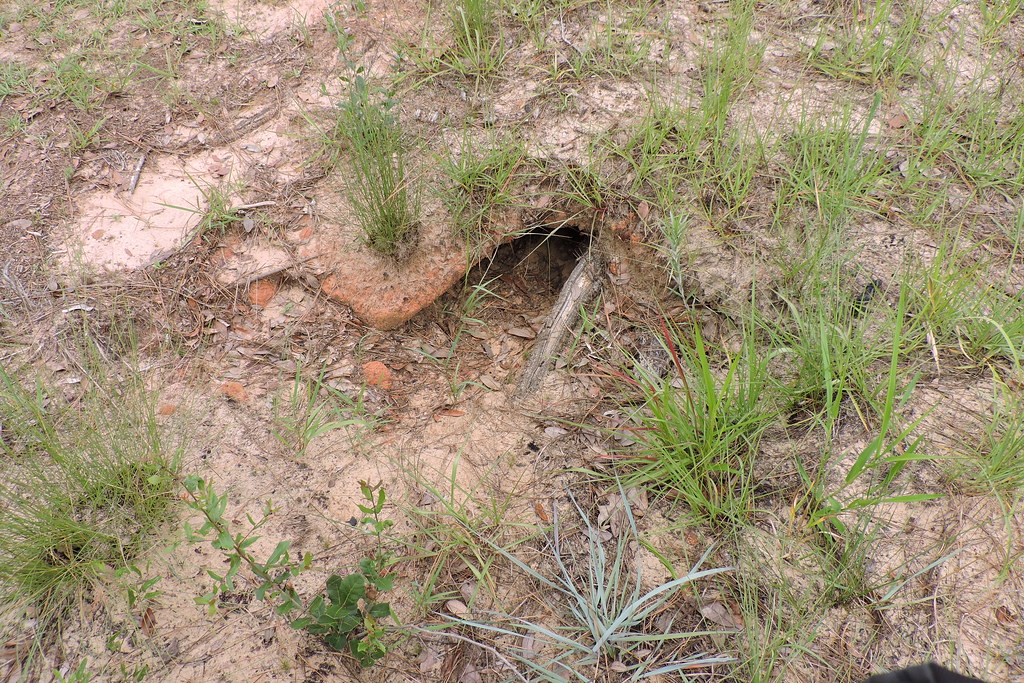
Interpretive panels at the Smith Creek trailhead set the ecological context before you take a step. Signs along the route identify gopher tortoise burrows - the round-mouthed excavations at ground level in open sandy areas, typically framed by a mound of pale sand at the entrance. Gopher tortoise burrows shelter more than 350 other species, including the Eastern indigo snake: a long, glossy blue-black constrictor that is state-protected and non-venomous, rarely seen and worth noting in any nature log if encountered.
In the maritime hammock section, the canopy closes overhead and the temperature drops noticeably. The transition from open scrub to sheltered forest is immediate and readable in the plants around you. Look for the salt-pruned myrtle oaks near the hammock's seaward edge - their limbs grow west, away from the ocean, shaped by years of salt-laden airflow into forms that work as a compass. The trail exits at the beach where a second set of interpretive exhibits at the Highbridge parking area continues the story from the dune side.
Sea Turtle Nesting Season: May Through October
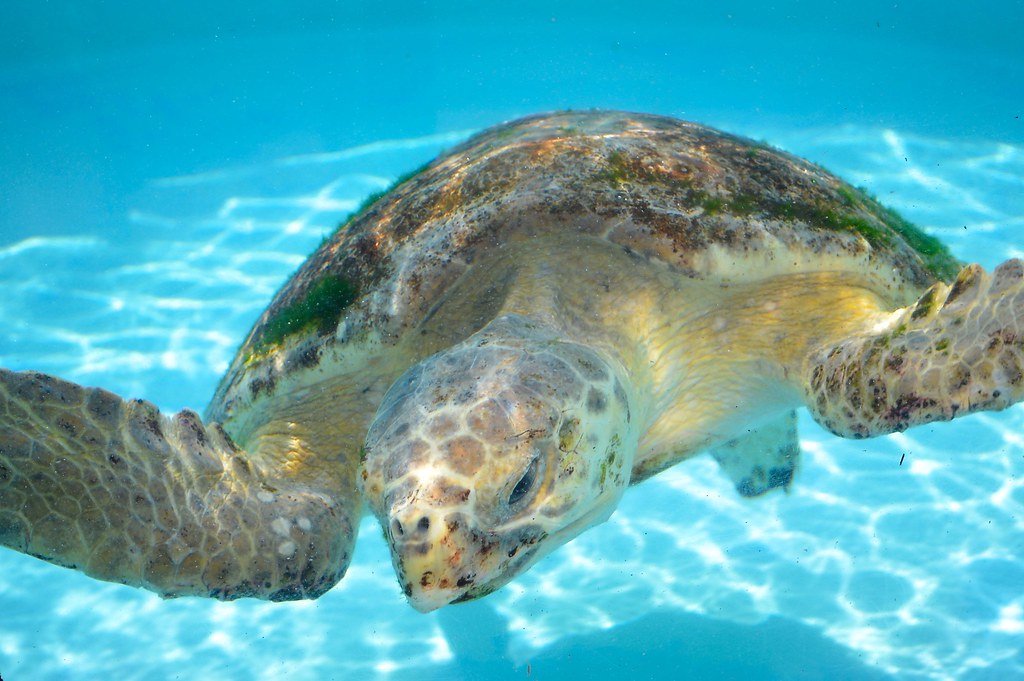
Three sea turtle species use the park's beach. Loggerheads are by far the most common. Green turtles nest here in smaller numbers. Leatherbacks - the largest sea turtles on earth - are documented but rare on this stretch. All three are protected under both state and federal law.
Park staff and trained volunteers run daily dawn surveys throughout the nesting season as part of Florida's statewide marine turtle monitoring program. Each morning before most visitors arrive, the team walks the full beach recording every crawl track: species identification based on track width and flipper-sweep pattern, direction of travel, whether a nest was successfully deposited or the turtle turned back without nesting - called a false crawl - and exact nest location for tagging and monitoring through incubation.
If you want to observe turtle nesting evidence responsibly, follow this sequence:
- Arrive at the beach-side parking area at or just after sunrise, before foot traffic disturbs fresh tracks in the sand.
- Look for wide, double-track crawl marks - alternating flipper sweeps left and right of a central body drag - running from the waterline toward the dunes.
- Do not touch, approach, or disturb any orange-tape enclosures or nest-marker stakes placed by the survey team.
- If you find a turtle still on the beach in daylight - an unusual situation - stay back at a significant distance and observe without making noise or using lights; any harassment is a federal violation.
- Keep lights off or pointed at the ground if you are on the beach at dusk or in early darkness during the season; disorienting artificial light is a documented cause of hatchling mortality on nesting beaches statewide.
Volunteer opportunities with the dawn survey program are coordinated through the park. Contact the park directly via the Florida State Parks website to ask about the current season's volunteer schedule and training requirements.
Smith Creek Landing and the Intracoastal Side
Most visitors who park at Highbridge Road walk straight to the beach. The Smith Creek Landing turn is almost always overlooked, which means the Intracoastal half of the park - a completely different ecosystem - goes unseen by the majority of people who stop here.
Smith Creek Landing sits at the western end of Highbridge Road on the bank of Smith Creek where it meets the Intracoastal Waterway. The landing has picnic tables with grills, accessible bank fishing, and an elevated overlook above the creek - which puts you at eye level with the herons working the shallows below. Blue crab are the primary target for crabbers running drop lines or collapsible traps off the bank, productive from spring through fall when water temperatures climb. Bank fishing turns up flounder, sheepshead, and snook in the creek channel. The Intracoastal itself draws redfish and speckled trout.
On the Atlantic side, surf fishing along the unguarded beach is popular year-round. Pompano, whiting, and bluefish are the main targets along the open shore. Because there is no lifeguard and limited facilities on the beach, the surf-fishing crowd here tends to be self-sufficient and regular.
Two completely different fisheries, two completely different ecosystems, free to access, and separated by a five-minute walk across the park. Smith Creek Landing is one of the most overlooked half-days on the entire Heritage Corridor.
Birding, Wildlife, and What Happens Offshore in Winter
North Peninsula is listed on the Great Florida Birding and Wildlife Trail (East section) for good reason. The park sits directly on the Atlantic Flyway, a primary north-south migration corridor for hundreds of species. September through November is peak migration timing, when the beach, marsh edge, and hammock canopy can each hold different migrant assemblages on the same morning.
Species by Season
- Year-round waders at Smith Creek: Great blue heron, tricolored heron, great egret, and yellow-crowned night heron work the marsh edge in all seasons.
- Shorebirds and gulls on the beach: Least tern, royal tern, laughing gull, and ring-billed gull are regular along the surf zone.
- Fall migration window (September - November): Peak Atlantic Flyway passage. Variety across all habitat zones; dedicated birders time multi-day visits to this window specifically.
- Winter offshore: Northern gannets - large white seabirds with black wingtips and yellow-washed heads - dive-bomb baitfish schools just beyond the breakers from roughly November through March. They are spectacular to watch from shore and immediately identifiable by their aerial plunge-dives from height.
The offshore winter period carries a second and rarer attraction. North Atlantic right whales migrate through nearshore waters off this coastline from December through March. Fewer than 400 individuals remain in the entire North Atlantic population. This stretch of Florida coast is one of the few places where confirmed right whale sightings from shore have been recorded. Scan the water in the morning from the beach with binoculars, watching for a wide, bushy, V-shaped blow and the absence of a dorsal fin - right whales have none.
The Florida Scrub-Jay: A Significant but Elusive Presence
The Florida scrub-jay is the only bird species endemic to Florida and is federally listed as threatened. North Peninsula protects mapped scrub-jay habitat in the coastal scrub west of A1A. Confirmed sightings have been infrequent in recent years, making any observation here scientifically meaningful. If you spot a blue-and-gray, crestless bird larger than a blue jay foraging on the ground in open scrub, report it through the Florida State Parks contact system. Those records contribute to the species' regional population tracking program.
Other documented mammals in the park include bobcats and spotted skunks - rarely seen in daylight. Gopher tortoises are the most reliably observed wildlife on the Coastal Strand Trail, most active in morning hours near the scrub edges.
Practical Planning
| Season | Primary Draw | Trail and Beach Conditions | Parking Pressure |
|---|---|---|---|
| May - August | Sea turtle nesting; swimming | Hot, humid; afternoon storms frequent | High on weekends |
| September - November | Atlantic Flyway migration; cooler hiking | Mild; best conditions for the trail | Moderate |
| December - March | Gannet watching; right whales offshore; uncrowded beach | Cool, low humidity; ideal beach walking | Low |
| April | Shorebirds; early turtle season begins | Warm; pleasant before summer heat builds | Increasing toward season |
What to Bring
- Water: no fountain on the Coastal Strand Trail or beach access areas; in summer, bring more than you think you will need
- Sun protection and insect repellent: the hammock section provides shade, but the scrub and beach have none
- Binoculars: essential for birding, the offshore whale window, and spotting gopher tortoise burrows from the trail edge
- Crabbing gear if you plan to work Smith Creek Landing - drop lines and collapsible traps are the standard approach from the bank
- A valid Florida fishing license if you plan to fish; verify current requirements through the Florida Fish and Wildlife Conservation Commission before your visit
Pairing North Peninsula on a Heritage Corridor Drive
The park is the southernmost major natural stop on the Heritage Crossroads Highway. Bulow Plantation Ruins Historic State Park lies about five miles inland - a half-day stop with a sugar mill ruin from the early nineteenth century, paddling access on Bulow Creek, and extensive hardwood swamp. Gamble Rogers Memorial State Recreation Area sits to the north in Flagler Beach with camping and additional beach access. A single-day Heritage Corridor run might sequence Bulow Plantation in the morning, North Peninsula through midday, and Flagler Beach for the late afternoon - covering historical, ecological, and coastal character in one continuous drive. Nearest fuel, food, and supplies are in Flagler Beach to the north and Ormond Beach to the south. The park itself has no services beyond the Smith Creek Landing picnic area.
Frequently Asked Questions
Is there a fee to enter North Peninsula State Park?
The park currently charges no entry fee, which makes it one of the few Florida State Parks with free public access. Verify current status on the Florida State Parks website before your visit, as fee structures can change at any time.
Can I camp at North Peninsula State Park?
No. North Peninsula is day use only, open from 8 AM to sunset. There is no camping of any kind. The nearest camping with beach access is at Gamble Rogers Memorial State Recreation Area in Flagler Beach to the north.
When is the best time of day to see sea turtle crawl tracks?
Sunrise or just after gives you the best chance - before foot traffic obscures fresh tracks in the sand and before the heat builds in summer months. The park's morning survey team is already on the beach at dawn during the nesting season, so early arrivals often get a quiet, undisturbed read on the previous night's activity.
Is the Coastal Strand Trail suitable for young children or visitors with limited mobility?
The trail is flat throughout but runs on loose, sandy terrain that can tire younger children and slow anyone using a mobility aid. The Smith Creek Landing overlook and picnic area are accessible without entering the trail and offer good wildlife views on their own. The full 2.3-mile route is manageable for most adults and older children in reasonable condition.
How likely am I to spot a Florida scrub-jay at North Peninsula?
Honest answer: not very likely in any given visit. Confirmed sightings have been infrequent in recent years despite the park protecting documented scrub-jay habitat. If you do see one - crestless, blue-and-gray, larger than a blue jay, working the ground in open scrub - report it to the park through the Florida State Parks website. It is a genuinely useful scientific record.
Can I really see a North Atlantic right whale from the beach here?
Sightings are uncommon but documented from this stretch of coastline during the December through March migration window. Your best conditions are a calm-sea morning with good low-angle light, binoculars or a spotting scope, and patience scanning the offshore water. The V-shaped blow of a large baleen whale is visible at considerable distance when the sea is flat - and right whales have no dorsal fin, which distinguishes them from humpbacks at range.