Walk the pine-ridge trails at Bulow Creek State Park on a quiet morning and you will find, if you look at the right trees, a wound that has been healing for seventy years. It runs up the lower trunk in a V-shape, the wood inside smooth and darkened with old resin, the scar climbed three or four feet off the ground in a way no storm or falling branch ever made. This is a cat-face. A turpentine worker put it there, reopening it every ten days through seasons that stretched into years, draining the tree of its sap for a global industrial supply chain that most visitors have never heard of. The pine conservation lands along the Heritage Crossroads corridor - Bulow Creek, Graham Swamp, the scrub ridges between them - look the way they do because of that industry. Understanding it means understanding everything about Flagler County from its 1917 founding through the decade when it finally collapsed.
Tar, Pitch, and the World That Needed Pine
The products extracted from pine trees were called naval stores, a name that came directly from their first major customer. The British Royal Navy consumed pine tar and pitch by the ton to caulk and waterproof wooden hulls, coat rigging lines, and treat rope. Without naval stores, wooden ships rotted at the waterline within a few seasons. That dependency built an entire industry.
By the nineteenth century the customer base had expanded far past navies. Paint manufacturers needed turpentine as a solvent and drying agent - it was the standard medium for oil-based paints before petroleum chemistry offered alternatives. Pharmaceutical firms used turpentine compounds in liniments and medicinal preparations. Rosin, the solid residue left after the turpentine vapor was cooked out of raw pine sap, went into soap, printing ink, varnish, linoleum, sealing wax, and paper sizing. The raw material was pine oleoresin - the sticky sap that pines produce when their bark is wounded - and the finished products flowed into almost every corner of industrial manufacturing.
Florida's longleaf and slash pines were particularly productive sources of that resin. The same species that covered most of Flagler County also happened to produce high-yield, high-quality gum. The world needed naval stores. Florida had the trees. What it still needed was a labor force willing - or forced - to work them.
The Southward March Into Northeast Florida
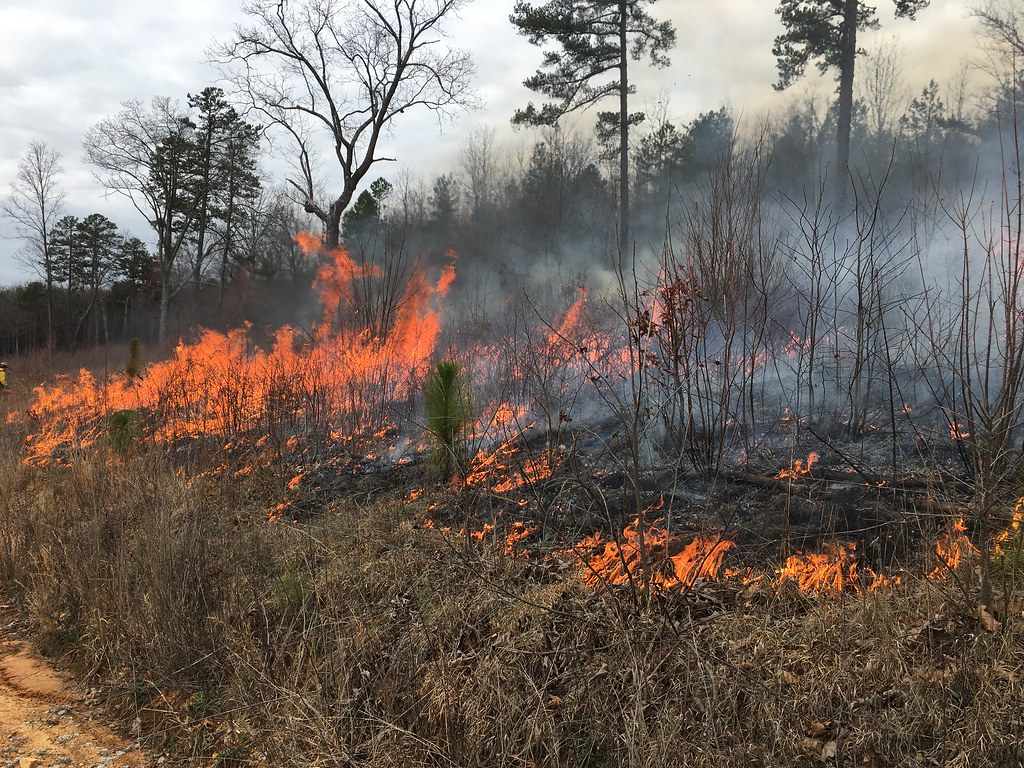
The American naval stores industry started in the longleaf pine belt of North Carolina, then moved south as operators cut out each region's forests and followed the timber. By the 1850s, Georgia's forests were the center. By 1880, Florida's virgin stands were drawing operators who had exhausted timber elsewhere. The economics were straightforward: longleaf and slash pine grew in dense stands across millions of northeast Florida acres, the land was cheap, and rivers gave access to coastal ports for shipping barrels north.
The scale of what followed is worth holding in mind. By 1900, Florida was producing nearly a third of the nation's total naval stores output. The national peak came in 1909, when American pine forests yielded roughly 750,000 barrels of turpentine and 2.5 million barrels of rosin in a single year, and Florida dominated that production. Between 1905 and 1923, the state held first place in total U.S. naval stores output. Operators kept pushing into new territory - north-central Florida, then the river corridors of the northeast - because each region's trees could only be tapped for so many seasons before declining yields made the camp uneconomical to maintain.
Flagler County sat directly in that path. When the county was created in 1917, carved out of portions of St. Johns and Volusia counties, turpentine was already one of its primary economic engines. The landscape was dominated by exactly the two pine species operators needed, and there was almost no competing industry to drive up land prices or labor costs.
From Tree to Still - The Full Process
The oldest extraction method was called boxing. Workers used an adze to carve a large hollow into the base of a pine trunk and let the sap pool there. Boxing required no specialized equipment but killed the tree outright by destroying too much of the cambium layer. It also wasted large volumes of sap to evaporation and contamination. Some old-growth trees in parts of Florida still carry the deep rectangular hollows that boxing left - evidence of pre-Civil War production that pre-dates anything in Flagler County.
The chipping-and-cup method that replaced boxing was more systematic and somewhat less wasteful of the trees, though it still permanently scarred every trunk it touched. A full production cycle ran like this:
- A tree chipper used a shaped blade called a hack to cut a V-shaped wound into the pine bark, angling two channels downward to meet at a point - the cat face. Metal gutters were fixed at that point to direct sap flow.
- A clay or metal collection cup was nailed just below the gutter to catch the draining resin. On a working crop, thousands of these cups hung from thousands of trees across a broad section of forest.
- Every 7 to 12 days, a dipper walked the rows with buckets, emptying the cups of accumulated raw sap - called gum - into a mule-drawn barrel wagon running the forest tracks.
- The chipper returned on the same cycle to cut a fresh horizontal streak just above the previous wound, extending the cat face upward and reopening the flow. Each streak represented roughly one working period, so a tree worked for five years carries a scar that climbs several feet up the trunk.
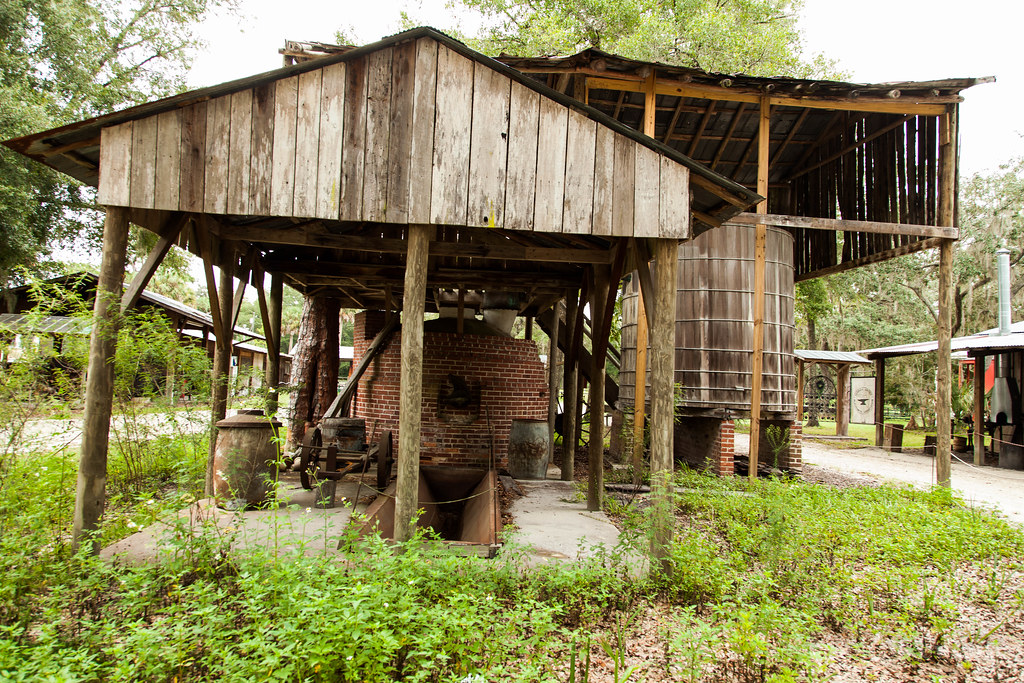
- Barrel wagons hauled gum to the still site, where it was loaded into a copper still, heated over a wood fire, and distilled. Turpentine vapor rose through a condenser and was collected as liquid. The residue left in the still became rosin, graded by color and poured into barrels for shipment.
A 50-gallon batch of raw pine sap distilled down to roughly 325 pounds of rosin and about 10 gallons of turpentine. Stills ran continuously during the working season.
The Camps Along the Corridor - Named Places, Named Families
By the time Flagler County existed as a legal entity, several turpentine operations were already running within what would become its borders. Early county maps record four named stills: Bulow Still, Deen Still, St. Joseph Still, and the Green Bay Turpentine operation, which opened in October 1919 just across the Volusia County line and worked forests extending into Flagler territory.
The Deen family came from Baxley, Georgia - a town in Appling County that sent several turpentine families south into Florida around 1902 to 1905. The Deens ran multiple operations within the county: at Orange Hammock, near Espanola, and at Dinner Island. Their surname survived on early county maps at "Deen Still," one of the rare cases where the family behind an operation left a geographic trace. The Lamberts and McKnights worked the same forests - family names that surface in county records but that left no equivalent place names on the landscape.
Each named still was not just a distillation point. It was the center of a small settlement: the still and boiler, workers' cabins, a company store that handled all transactions, and a road network connecting the camp to the timber it was working. Some of those road traces are still the basis of the county road network. The camps had no civic government, no incorporation, no services beyond what the operator chose to provide - they existed entirely at the discretion of whoever held the timber lease, and they disappeared when the timber played out.
Convict Leasing and Martin Tabert
The labor problem in turpentine camps was constant. The work was physically demanding, the camps were remote, the pay was low, and workers who arrived voluntarily often left as soon as conditions became clear. Florida's answer, formalized in 1877, was convict leasing: county jails rented inmates to private operators. The arrangement gave operators a captive workforce and gave counties a revenue stream from their jail populations.
Workers were arrested for offenses that would not rate serious punishment anywhere else - vagrancy, petty theft, failing to have a work contract in force. Black men in particular were targeted under laws designed to keep agricultural and extractive labor cheap and available. Once leased, they were transported to camps that were remote enough to make escape difficult and rarely visited by state inspectors.
- Workers were housed in locked barracks, often chained at night
- Physical punishment was routine - whipping bosses were a standard camp position with little external oversight
- Medical care was minimal; men too sick to work sometimes simply waited without treatment
- State inspection records, where they existed, were cursory and infrequent
- Workers had no legal mechanism to challenge their conditions or contest the terms of their lease
The largest northeast Florida operator, Knabb Turpentine, eventually controlled over 200,000 acres of pine forest. By 1938 Knabb was actively working 125 operations - what the industry called "crops," each consisting of 10,000 trees, meaning 1.25 million pine trees under production simultaneously. Twenty-one laborers died in a single year at Knabb's camps, triggering a Florida legislative investigation in the early 1920s and the cancellation of Alachua County's inmate leasing contract with the firm.
Martin Tabert and the 1923 Turning Point
On February 2, 1922, a 22-year-old farm boy from North Dakota named Martin Tabert died at the Putnam Lumber Company's turpentine camp in Dixie County. He had been arrested in Leon County for hopping a freight train - a vagrancy charge carrying a fine he could not pay. Rather than serve the sentence in the county jail, he was leased to the lumber and turpentine operation. At the camp, a whipping boss beat him to death.
Tabert's case had three things that prior documented abuses lacked: a victim who was white, from out of state, and whose family in the North could generate national press coverage. The New York World's sustained reporting made it a national story rather than a Florida labor dispute - and in 1923 the legislature abolished the system entirely.
Florida's legislature abolished convict leasing in 1923. The Flagler County camps operating at that moment - Bulow Still, Deen Still, St. Joseph Still - were part of the same system Tabert died inside. The same legal structure that leased him to Putnam Lumber was leasing workers to northeast Florida turpentine operators. The 1923 abolition did not arrive as an abstract policy change; it arrived because one young man's death became too public to manage.

Debt Peonage After 1923 - The System That Replaced Leasing
Abolishing convict leasing did not free turpentine workers. The industry shifted to a different form of control: debt peonage through the company store. The mechanism was straightforward and effective.
- Workers were paid not in cash but in company scrip - tokens or paper redeemable only at the camp store
- The camp store sold all necessities: grits, salt pork, cloth, shoes, tools - everything a worker and their family needed to survive
- Prices at company stores were set high enough that annual purchases reliably exceeded annual wages
- Workers who left while in debt could be arrested under vagrancy or contract-violation statutes - the same legal infrastructure used before 1923
- Guards patrolled the roads out of camp to prevent workers from walking away before debts were settled
Federal investigators were still documenting debt peonage in Florida turpentine camps throughout the 1930s and 1940s. The legal category had changed in 1923; the living conditions had not changed enough to matter to the people inside the camps. The Flagler County operations that ran through the Depression and into the postwar years operated under this system.
The 1950s Fadeout and What the Land Became
Turpentine production in Flagler County remained economically significant into the late 1950s. What ended it was not regulation but chemistry. Cheap synthetic solvents produced as petroleum byproducts undercut gum turpentine's price advantage. Steam-extraction methods for recovering turpentine from pine stumps - using wood waste rather than living trees - offered industrial suppliers a lower-cost alternative to maintaining thousands of acres of tapped forest and a camp workforce to tend them. The last Flagler-area operations closed during that decade.
When they did, they left behind cutover and turpentined-out pine lands that had little immediate commercial value. The understory had been cleared across large areas, the best timber was gone, and the land was cheap. That economic marginal quality was part of what made large-scale conservation acquisition possible in the decades that followed. Graham Swamp Conservation Area, now covering more than 3,000 acres, and Bulow Creek State Park both sit on land shaped by the turpentine era and later acquired precisely because it was not worth developing.
| Method | Tree outcome | Scar type | Era of use |
|---|---|---|---|
| Boxing | Tree killed outright | Deep rectangular hollow at base | Pre-Civil War |
| Chipping and cup | Tree survives, permanently scarred | V-shaped cat face, climbs trunk by season | Late 1800s through 1950s |
| Stump steam extraction | No living trees tapped | No scar on standing trees | Mid-20th century onward |
Reading the Trees Today - What the Landscape Is Still Telling You
The cat-face scar is the most direct physical evidence of the turpentine era that corridor visitors can find. Bulow Creek State Park's older pine stands carry the clearest visible scars. Graham Swamp Conservation Area is less intensively managed for visitor access, but the pine ridges within it were actively tapped, and trees along the interior trails carry the same evidence. Here is what to look for:
- Focus on the lower three to five feet of old longleaf and slash pines - trees that appear significantly older than surrounding growth
- Cat faces are angled V-shaped wounds that have healed over but remain distinct from surrounding bark - the wood inside is smooth rather than furrowed, and the edges of the scar are clearly defined
- Dark resin staining runs down from the wound and may persist decades after the last chipping, typically dark brown to near-black against the gray bark
- Trees worked for multiple seasons carry scars that extend higher up the trunk - each horizontal streak represents roughly one working season
- Trees near old camp sites or along former camp roads are more likely to carry scars than trees in areas that were logged without tapping
The still sites themselves left no standing structures. Stills were portable installations moved when a forest area played out, and the workers' quarters were too crude to survive long after operations closed. What remains is the landscape shape: the ridge roads that connected camps, the creek crossings that mule wagons used, and the trees themselves. When you find a cat-face in the pine woods along the Heritage Crossroads corridor, you are reading a record of a specific laborer who stood at that tree every ten days for years - and of the system built to keep that laborer from leaving.
Frequently Asked Questions
Why did it take a death in Dixie County to end convict leasing if northeast Florida camps were also documented as dangerous?
Twenty-one workers dying in a single year at Knabb Turpentine's camps had triggered a legislative investigation - but that investigation did not abolish the system. Tabert's case was different because he was white, from out of state, and his North Dakota family could generate sustained national newspaper coverage. The New York World ran the story in a way that made it impossible to manage locally. Prior abuses had been documented; Tabert's death was publicized at a scale that forced a legislative response.
Can I find cat-face trees on a day visit, or do I need a guided tour?
No guide is needed, but go slowly and look low on the trunk. The scars are most visible in low-angle morning or late-afternoon light, which throws the smooth concave wounds into relief against the rough surrounding bark. Older pines away from the main trailheads - trees that have not been near recent management activity - are the most likely candidates. Check Bulow Creek's trail maps at the park entrance for the locations of the oldest pine stands; rangers can point you toward areas with documented old-growth trees.