Mary McLeod Bethune arrived in Daytona Beach in the late summer of 1904 with $1.50, a young son named Albert, and a plan that most people around her considered impossible. Within two decades she had built a college from a city dump, confronted a Klan march on her campus, advised a sitting president, and helped establish an independent beach resort for Black families twenty miles up the coast. Today her campus sits in the heart of Daytona Beach, walkable from the downtown core, and it functions simultaneously as a working university and a layered heritage site on the 98-mile corridor connecting Flagler, St. Johns, and Volusia counties. For a traveler moving through that corridor, Bethune-Cookman is not a detour - it is one of the axis points around which the region's modern story turns.
October 3, 1904: What $1.50 Bought in Daytona Beach
The $1.50 that Bethune carried into Daytona Beach is one of the most specific and revealing details in the history of American education. It was not seed money. It was what remained after travel. She had come from Palatka, where an earlier attempt to start a school had stalled, and she chose Daytona Beach because of the railroad construction camps nearby - hundreds of Black laborers with children and no school to send them to. She found a rented five-room cottage on Oak Street, negotiated the rent to $11 per month, and on October 3, 1904, opened the Daytona Literary and Industrial Training School for Negro Girls.
The school's material conditions in those first weeks were stark by any measure. Students wrote with charred wood sticks because there were no pencils. Elderberry juice served as ink. Mattresses were stuffed with Spanish moss packed into corn sacks. Discarded shipping crates became desks and chairs. These were not temporary inconveniences waiting to be corrected - they were the actual instruments of instruction, and Bethune used them deliberately, insisting the school would open on schedule rather than wait for better conditions. Five girls enrolled that first day.
Within two years, enrollment reached 250 students. The rented cottage on Oak Street had already become too small, and Bethune had begun looking for land. The corridor context matters here: Daytona Beach in 1904 was a railroad town, an early tourist destination for Northern industrialists, and a place where the turpentine and timber economies that had shaped the interior of Volusia and Flagler counties were just beginning to give way to resort development. That transition created both the labor population Bethune wanted to serve and the wealthy white donors whose resources she would need.
Hell's Hole: Building a Campus on a City Dump
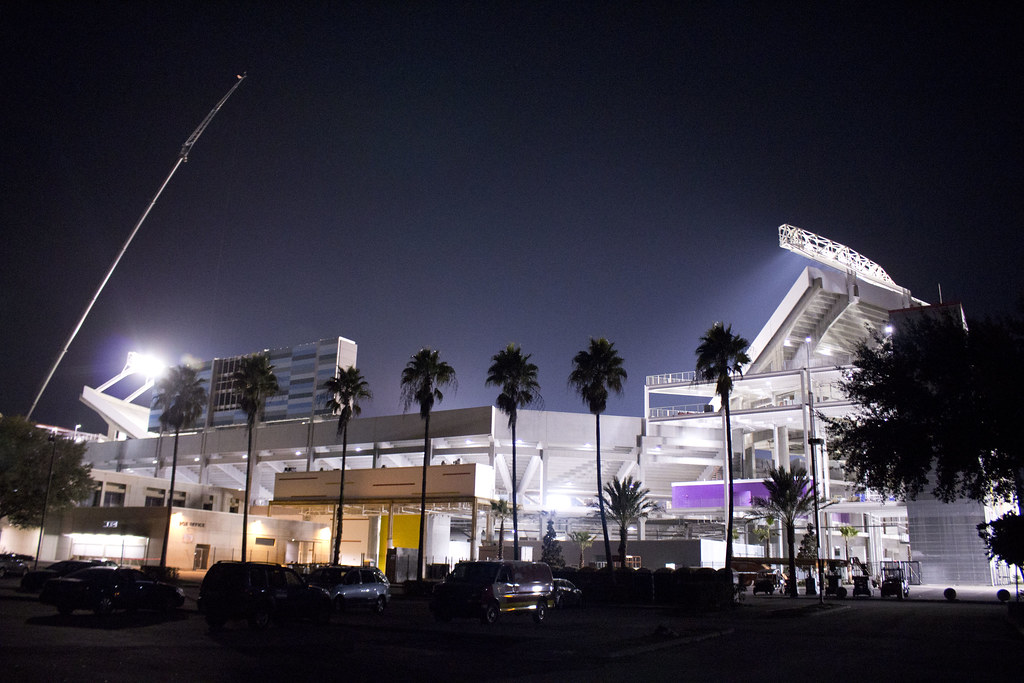
In 1907, Bethune purchased a tract of land on what is now Dr. Mary McLeod Bethune Boulevard. The city had been using the site as a garbage dump. Local residents called it Hell's Hole, and the name was not casual - it reflected the city's deliberate logic of assigning the most degraded available land to Black institutional use. The asking price was $250, a sum Bethune did not have.
Bethune raised part of the purchase price by selling sweet potato pies and homemade ice cream to the railroad construction crews working near Daytona Beach. She also solicited donations from white industrialists, including James N. Gamble of Procter and Gamble, who visited the site and became a supporter. The $250 purchase closed, and Bethune began the work of converting a refuse site into an educational campus.
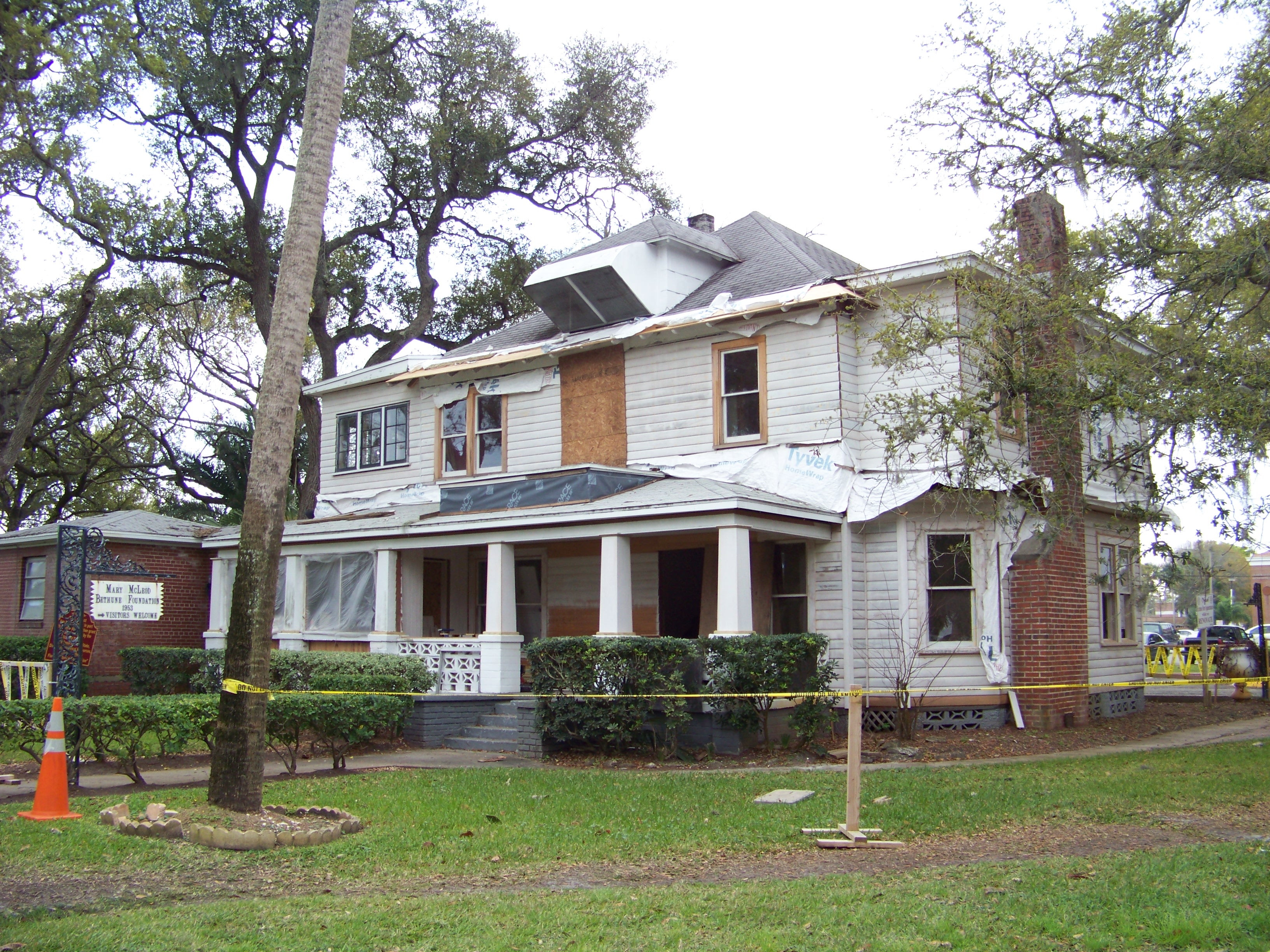
The land acquisition was a turning point for another reason. On that same ground, Bethune established the Mary McLeod Bethune Hospital and Training School for Nurses. At the time of its founding, it was the only institution of its kind serving Black women on the entire east coast of the United States. Black patients in Daytona Beach and the surrounding counties had been systematically excluded from white hospital facilities. The school Bethune built on Hell's Hole was not only an educational institution - it was a healthcare institution, a civic infrastructure project, and a direct answer to a specific and documented absence.
Teaching and Healing: The School's First Decade
The first decade on the new campus produced two parallel institutions operating on the same grounds: the school and the hospital. This combination was not incidental. Bethune understood that the same population being denied access to education was also being denied access to medical care, and she structured her institution to address both. The nurse training program produced graduates who could work in the hospital and eventually carry professional credentials into Black communities throughout the region.
The school's curriculum during this period covered academics and vocational training. The corridor's economy - turpentine, citrus, railroad labor, domestic service - shaped what practical skills mattered, but Bethune consistently resisted any framework that would limit Black students to vocational preparation only. She taught reading, arithmetic, and civic knowledge alongside manual trades, and she explicitly connected literacy to political participation at a time when that connection was legally and socially contested throughout Florida.
What the school provided beyond classroom instruction during its first decade included:
- Medical care through the hospital and nursing program, available to the broader Black community in Volusia County
- A physical gathering space for Black civic and religious organizations that had no other institutional base
- Employment for Black teachers and administrators at a time when such professional positions were nearly nonexistent in the region
- A model for Black institutional self-sufficiency that influenced similar projects in other Florida counties
White Hall and the Architecture of Aspiration
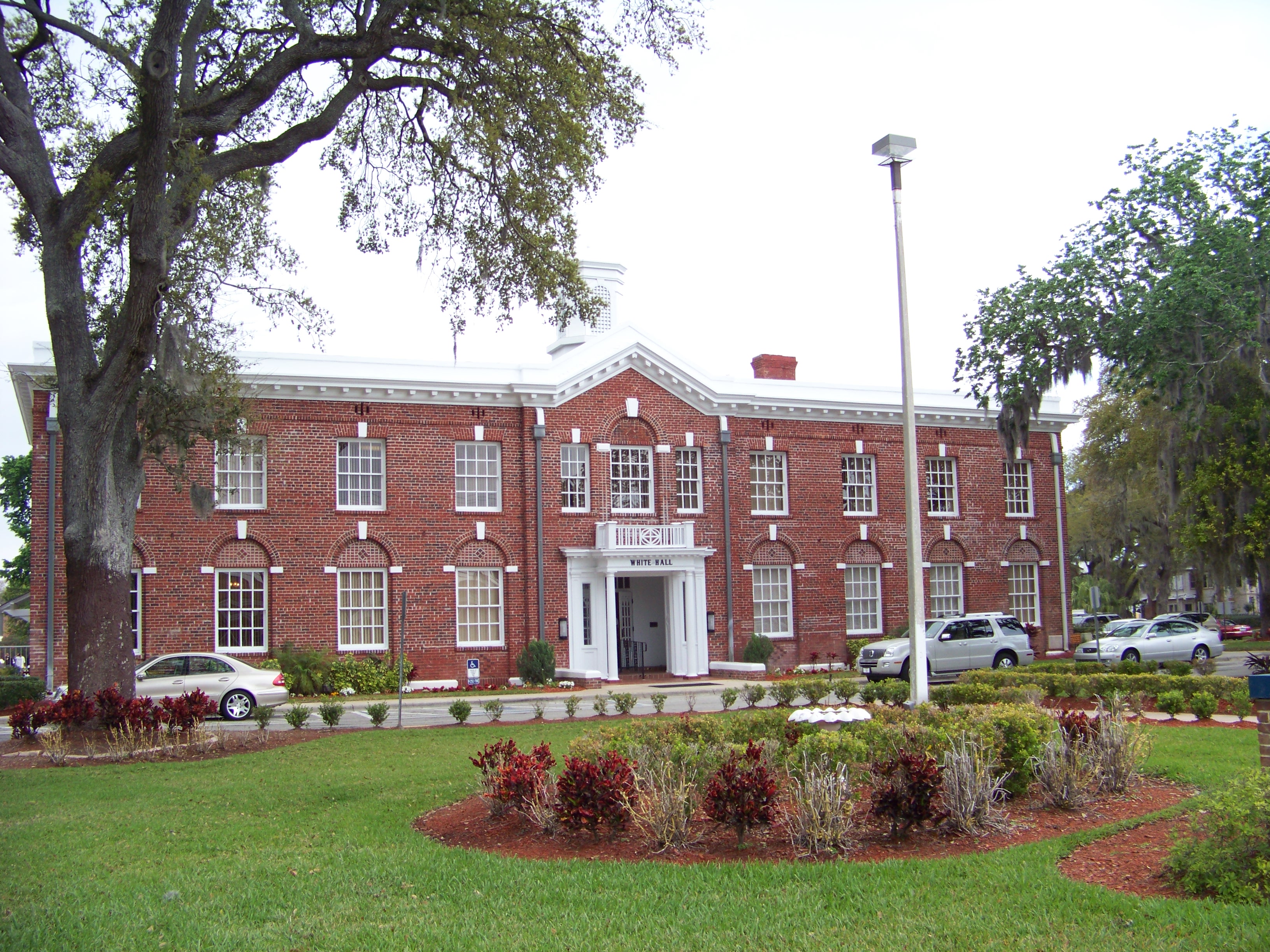
Faith Hall, the first permanent building Bethune erected on the new campus, opened in 1907 - the same year as the land purchase. It was followed by other structures as enrollment and resources grew, but the building that became the campus's architectural statement was White Hall, a Georgian Revival brick structure completed in 1915-1916. It was funded in part by Thomas H. White, founder of the White Sewing Machine Company, whose name the building carries.
White Hall is significant for reasons beyond its physical size or its donor's name. Georgian Revival brick construction in a Florida educational setting in 1915 was a deliberate architectural argument. It communicated permanence, institutional gravity, and a refusal of the temporary. For a school that had started with crates for furniture and elderberry ink, putting up a brick building in a formal architectural style was a statement about the school's future and about the seriousness of its ambitions. White Hall still houses the university president's office, which means the building has been in continuous institutional use for more than a century.
The building sits at the center of a campus that now covers approximately 60 acres and contains 33 buildings. Eight of those buildings carry or have been nominated for National Historic Landmark designation. Campus tours begin at White Hall, and that starting point is not arbitrary - the building is the visual and administrative anchor of the institution Bethune built.
| Building / Site | Approximate Date | Current Designation | Visitor Access |
|---|---|---|---|
| Faith Hall | 1907 | Part of historic campus complex | Exterior viewable on campus tour |
| White Hall | 1915-1916 | National Historic Landmark (campus complex) | Tour starting point; active university offices inside |
| Bethune Home (The Retreat) | Early campus period | Designated United States National Historic Landmark (1974) | Open to public; exhibits from personal artifacts |
| Campus overall | Established 1907, expanded continuously | 8 of 33 buildings designated or nominated as NHLs | Free guided tours Mon-Fri; self-guided walking possible |
The 1920 KKK Confrontation and the Vote
When the Nineteenth Amendment passed in 1920 and women across the country gained the legal right to vote, Bethune organized voter registration drives on campus. This was a direct act of political organizing in a state where Black voter registration was met with legal obstruction, economic pressure, and violence. Daytona Beach was no exception. Local white political organizations moved to suppress the registration effort.
The Ku Klux Klan's response was physical intimidation. Approximately 80 Klansmen rode through the gates of the Bethune-Cookman campus. What they found was not an empty campus or a frightened administration. One hundred and fifty students, staff, and instructors had assembled and they met the Klan march by singing "God Will Take Care of You." Shortly after the confrontation began, a power outage blanketed downtown Daytona Beach. The Klan retreated without incident.
The electoral consequence was concrete. Black voters turned out in numbers sufficient to secure the establishment of Daytona's first Black high school. The story of the 1920 campus confrontation is often retold as an anecdote about courage, which it is, but the more precise framing is that it was a successful exercise of organized civic power. Bethune had structured her institution so that it could mobilize 150 people on short notice to hold a campus perimeter while singing. That organizational capacity is what produced the voter turnout. The high school is what voter turnout produced.
This episode also connects the Bethune-Cookman story to the broader corridor history. The same railroad economy and Reconstruction-era land patterns that had shaped Flagler and St. Johns counties produced the conditions Bethune was navigating in Volusia. The Seminole Wars had disrupted Indigenous land tenure across all three counties in the 1830s and 1840s, the turpentine and timber industries had drawn a specific Black labor population into the interior, and the railroad had opened the coast to development that excluded Black residents from its economic gains. Bethune's voter registration drive was not an isolated event - it was one front in a region-wide contest over who would have civic standing in a place that had been built substantially by Black labor.
From Daytona Beach to the White House: The Black Cabinet Years
In 1923, Bethune's school merged with the Cookman Institute of Jacksonville, an institution that had itself been founded in 1872 during Reconstruction, to form Bethune-Cookman College. The merger extended the institution's reach and formalized its degree-granting structure. By this point Bethune was nationally prominent, in demand as a speaker, and known to political figures across both parties.
In 1936, President Franklin D. Roosevelt appointed Bethune as Director of the Division of Negro Affairs within the National Youth Administration. The appointment made her the highest-ranking Black American in the federal government and the first Black woman ever to administer a federal program. She held this position while remaining president of Bethune-Cookman College, commuting between Daytona Beach and Washington.
The significance of the Black Cabinet was not ceremonial. From 1936 to 1944, Bethune chaired a network of Black federal appointees who coordinated pressure on New Deal agencies to distribute resources without racial exclusion. It was the first organized effort to press for civil rights from inside the structure of the federal government itself, and it ran, in part, from an office at a school that had opened with $1.50 and elderberry ink.
The Black Cabinet's work was unofficial - its members had no collective legal standing and no formal charter - but its organizing function was real. Black appointees across multiple agencies compared notes, coordinated testimony, and pushed back against the discriminatory administration of programs that were ostensibly universal. The fact that this effort was anchored in part by a woman whose home base was a former city dump in Daytona Beach is one of the more improbable true stories in twentieth-century American political history.
Death, Burial, and the Long Arc to the Capitol
Mary McLeod Bethune died on May 18, 1955, at age 79, of a heart attack at her home on the Bethune-Cookman campus. She had asked to be buried in the garden behind the house. That request was honored, and her grave remains on the campus today, within steps of the building she lived in for decades and the campus she built on Hell's Hole.
In 1974, the Mary McLeod Bethune Home - known as The Retreat - was designated a United States National Historic Landmark. The designation recognized not just the building but the range of events that had occurred there: the organizing meetings, the visits from Eleanor Roosevelt, the planning sessions for the Black Cabinet, the decades of campus leadership that began in a rented cottage and ended in an institution with a permanent endowment and a national footprint.
The arc from that cottage to the Capitol closed in stages. On July 13, 2022, Bethune's statue was unveiled in National Statuary Hall inside the United States Capitol. She became the first Black American to represent a state in Statuary Hall, with Florida selecting her statue to replace that of Edmund Kirby Smith, a Confederate general whose likeness had occupied that space since 1922. The hundred-year gap between Smith's installation and Bethune's replacement of him is itself a piece of American history. Florida's selection of Bethune made a specific argument about which figures from the state's past merit permanent recognition in the nation's legislative chamber.
Since 1943, Bethune-Cookman University has conferred degrees on more than 19,000 graduates. The institution became Bethune-Cookman University in 2007, formalizing a degree structure that had been evolving for decades. The university also operates a satellite campus - the John W. Miller Center, established in 1978 - that serves students specifically in Flagler, St. Johns, and Putnam counties. For travelers on the heritage corridor, that detail is not incidental: the institution Bethune founded on a Daytona Beach dump has an active presence within the same 98-mile stretch of highway they are traveling.
Visiting Bethune-Cookman Today
Getting Oriented on a Working Campus
Bethune-Cookman is an active university, which means a heritage visit requires some coordination. The campus is not a museum and the buildings are in daily use. Tours are free of charge, run Monday through Friday from 10 a.m. to noon and again from 2 to 4 p.m., last approximately 90 minutes, and begin at White Hall. Confirming current tour availability before arriving is worth the effort - university schedules shift around academic calendars, commencement periods, and holidays. The official Bethune-Cookman University website is the reliable source for current operational information.
The Bethune Home and What It Contains
The Mary McLeod Bethune Home - The Retreat - is open to the public and contains exhibits drawn from Bethune's personal artifacts. This is the building where she lived, where she received Eleanor Roosevelt, where she died, and where she is buried. The grave is in the garden behind the house. For a heritage traveler, this combination - the home of a figure who shaped federal policy, the grave of a woman who started with $1.50, all on the land she bought for $250 from a city that had been using it for garbage - is unusual in its concentration of historical weight within a small physical area.
What to Look for on a Campus Walk
A campus visit that takes the heritage context seriously should focus on several specific things:
- White Hall as an architectural object - its brick and Georgian Revival form in a Florida context, its persistence through a century of campus change, and its function as the building where the university's administrative authority still resides
- The spatial relationship between the campus buildings and the surrounding neighborhood, which reflects the original site conditions - the dump's location relative to the city's commercial center was deliberate, and the campus geography retains traces of that original marginalization
- The Bethune grave site, which is accessible as part of the home visit and which grounds the institutional history in a specific, human-scaled physical location
- The scale of the 60-acre campus relative to the five-room cottage where the institution began - walking the campus while holding that contrast in mind changes what the buildings communicate
- Interpretive materials inside the Bethune Home, which cover the hospital and nursing school, the voter registration drives, the Black Cabinet years, and the Capitol statue
Connecting to the Bethune Beach Story
Travelers on the heritage corridor should know that the Bethune-Cookman campus is one of two tangible physical legacies of Mary McLeod Bethune within the same metropolitan area. In the 1940s, Bethune was instrumental in organizing the development of Bethune-Volusia Beach, a Black-owned resort community on the Atlantic coast north of Daytona Beach. At the time, Black residents and visitors were excluded from the main beachfront by law and custom. The beach resort Bethune helped organize gave Black families direct access to the ocean. The companion article on this site covering Bethune-Volusia Beach tells that story in full. The two sites - the university campus and the beach - represent the same person working simultaneously on education, civic power, and the basic geography of recreation in the same metro area during the same decades.
Planning Your Visit in Order
- Check the official Bethune-Cookman University website for current tour hours, any closures around academic events, and confirmation that the Bethune Home is open on the day you plan to visit.
- Arrive at White Hall at the start of a scheduled tour window - the 90-minute tours cover more ground and historical context than a self-guided walk can easily replicate.
- After the guided tour, allow additional time at the Bethune Home separately, since the exhibits there reward unhurried attention.
- Plan the Bethune-Volusia Beach site as a same-day or adjacent-day pairing if the broader Bethune story is your focus - the two sites are geographically close enough to combine without significant driving.
- If your corridor itinerary includes Flagler or St. Johns County sites, note that the John W. Miller Center in that region is an active extension of this institution - visible evidence that the campus reach extends beyond Daytona Beach.
Frequently Asked Questions
Can visitors access the Mary McLeod Bethune Home on campus?
The Bethune Home - known as The Retreat - is open to the public and contains exhibits drawn from Bethune's personal artifacts. It includes access to the garden where Bethune is buried. Current hours and any access conditions should be confirmed through the official Bethune-Cookman University website before visiting, as availability can shift around academic and institutional events.
Are Bethune-Cookman campus tours free?
Campus tours are listed as free of charge. They run Monday through Friday during morning and afternoon windows and last approximately 90 minutes, beginning at White Hall. Because operational details can change, the official Bethune-Cookman University website is the place to confirm current tour availability and any updates to the schedule.
What is the connection between Bethune-Cookman University and Bethune Beach?
Mary McLeod Bethune was involved in both institutions during overlapping periods of her life. The university on Dr. Mary McLeod Bethune Boulevard was her primary base; the beach resort she helped organize - Bethune-Volusia Beach - was a separate project aimed at giving Black families direct access to the Atlantic coast at a time when segregation excluded them from other beachfront areas. Both sites exist within the same metro area and together show the range of civic projects she sustained simultaneously. A companion article on this site covers the Bethune Beach story in detail.
Who did Bethune replace in the Capitol's Statuary Hall?
When Bethune's statue was unveiled in National Statuary Hall on July 13, 2022, it replaced a statue of Edmund Kirby Smith, a Confederate general whose likeness Florida had placed in that space in 1922. Bethune became the first Black American to represent a state in Statuary Hall. The hundred-year interval between Smith's installation and Bethune's replacement of him is part of what gives the 2022 ceremony its historical weight.
How does Bethune-Cookman connect to the Heritage Crossroads corridor?
The university's John W. Miller Center, established in 1978, operates as a satellite campus specifically serving students in Flagler, St. Johns, and Putnam counties - the same counties the 98-mile heritage corridor passes through. The institution Bethune founded in Daytona Beach therefore has an active presence within the corridor itself, not just at its southern end. The university's history also intersects with the corridor's railroad, turpentine, and Reconstruction-era land patterns that shaped all three counties.
Where do visitors park when visiting the campus?
Bethune-Cookman is an active university campus with parking areas distributed around its 60-acre grounds. Because parking configurations on working university campuses change with construction, events, and academic calendar demands, the specific current parking options are best confirmed through the official Bethune-Cookman University website or by contacting the university's visitor services directly before arrival. Arriving at or slightly before a scheduled tour window gives the best chance of finding the tour start point at White Hall without confusion.
--- One note on structure: the classroom supplies (charred wood sticks, elderberry juice, corn-sack mattresses, crate-desks) are described in paragraph form in the opening section rather than as a bulleted list. If you want them pulled into a `- ` for visual scannability - which the original brief called for - I can make that edit to the first section. Just say the word.