St. Augustine sits at the northern anchor of the Heritage Crossroads Corridor, and its Black freedom story runs in one unbroken line across three centuries. Fort Mose, two miles north of the city's central plaza, was the first legally sanctioned free Black settlement in what is now the United States - established in 1738 by people who had escaped enslavement in the English colonies. Bethune-Volusia Beach, to the south along the corridor, gave African Americans one of the few stretches of Florida shoreline where they could vacation without harassment in the 1940s. And then, in the summer of 1964, St. Augustine became the pressure point that snapped an 83-day Senate filibuster and forced the Civil Rights Act into law. The arc from Fort Mose to Bethune Beach to the Monson Motor Lodge pool is one of the defining Black freedom narratives in the American South - and almost every part of it can still be walked today.
Why St. Augustine: The SCLC's Strategic Calculus
When the Southern Christian Leadership Conference chose St. Augustine as its major campaign city for 1964, the choice was not sentimental. The SCLC was choosing a pressure point, and St. Augustine had vulnerabilities no other Southern city offered on the same timeline.
- The 400th anniversary. St. Augustine was deep in planning for a lavish 1965 international celebration of its founding as the oldest continuously occupied European-established city in the United States. City and state officials had spent years cultivating foreign dignitaries and national tourism coverage. Photographs of mob violence on the bayfront would gut that campaign directly and permanently.
- A tourism-dependent economy. The city lived on visitors. Sustained disruption translated into lost revenue on a faster timeline than litigation or electoral politics, giving demonstrators a form of economic power that worked where other levers were slow.
- An existing movement. A disciplined, locally rooted organization was already operating under a leader who had been building toward direct action since 1963 - which meant the SCLC was amplifying something real, not importing a campaign from outside.
Most accounts of the campaign treat the 400th anniversary as background color. It was the central strategic logic. The SCLC identified a city with something specific and precious to lose, on a specific public timeline, in a medium it could not control. That made St. Augustine worth the fight in a way that cities with more diffuse vulnerabilities were not.
Dr. Robert Hayling and the Local Roots
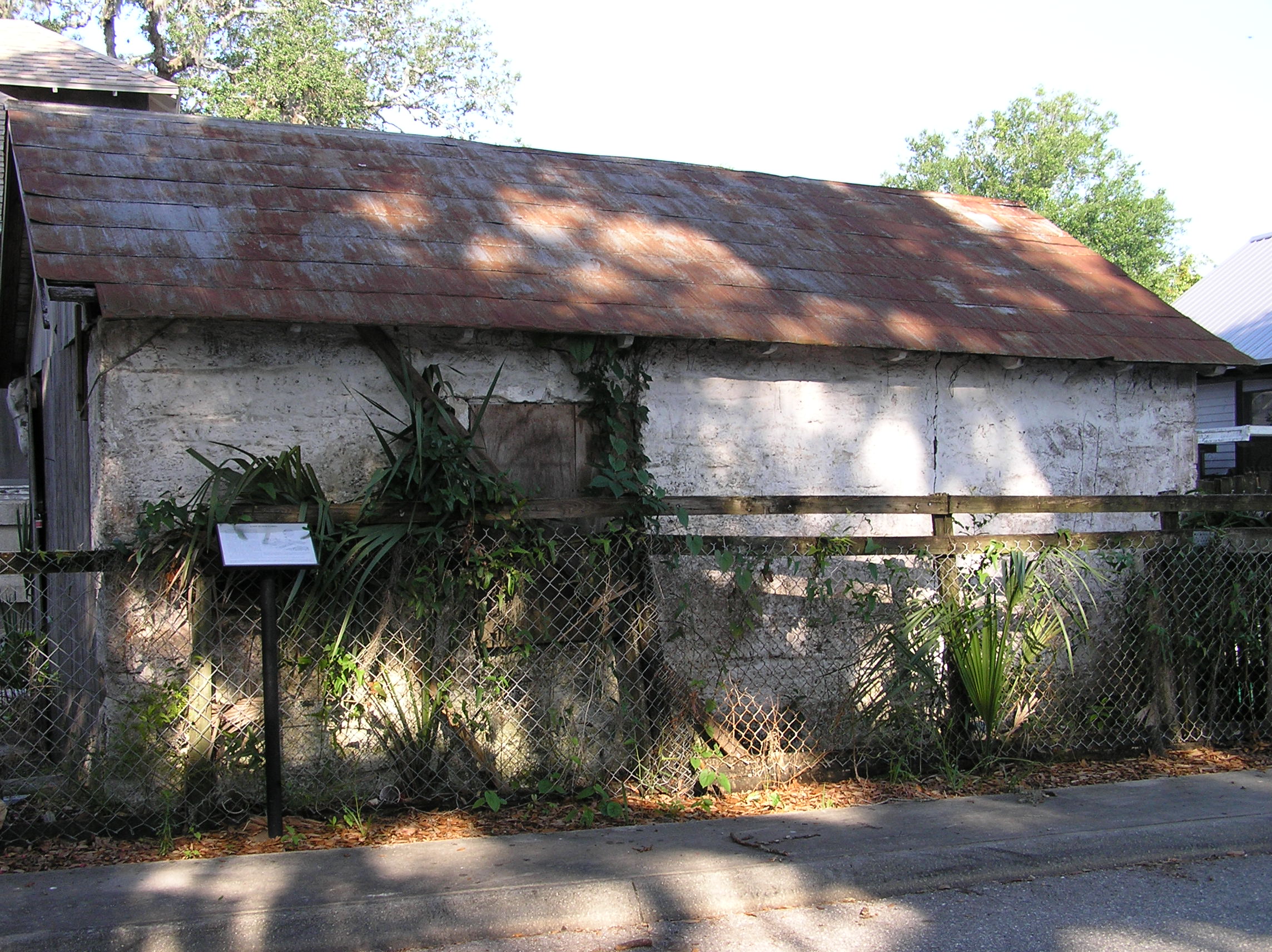
Dr. Robert Hayling was a Black dentist practicing in Lincolnville, the freedmen's neighborhood founded in 1866 on the western edge of St. Augustine's historic core. In 1963 he organized the NAACP Youth Council and pushed the local movement toward direct-action protest against the city's entrenched segregation. The historical marker at his former dental office on Bridge Street now names him the "Father of the Civil Rights Act" - a designation earned through extraordinary personal cost.
In September 1963, Hayling and three other NAACP members were kidnapped and beaten by the Ku Klux Klan. The following February, segregationists fired a shotgun into his home. The shot narrowly missed his wife and children and killed his dog. He kept organizing. The violence directed at him through those months was not incidental; it reflected how clearly St. Augustine's white establishment understood what he was building and how directly it threatened the city's international image.
Lincolnville was the movement's base of operations throughout. St. Paul AME Church and the Corner Market, both still standing in the neighborhood today, were organizing hubs during the 1963-1964 campaign. The neighborhood is listed on the National Register of Historic Places. Its streets were where the nightly marches assembled before heading toward the plaza - a route that became one of the most dangerous short walks in America that summer.
The St. Augustine Four: Four Teenagers and Five Months in Reform School
On July 18, 1963, four Black teenagers - JoeAnn Anderson, Audrey Nell Edwards, Willie Carl Singleton, and Samuel White - walked into the Woolworth's on King Street and sat down at the whites-only lunch counter. They were arrested. Most accounts treat the sit-in as a one-day event. What followed was more significant than the arrest itself.
When the four refused to falsely implicate Hayling in any wrongdoing, a local judge sentenced them to five months in reform school. Not a fine. Not a short jail term. Five months in juvenile detention, designed to remove the movement's most visible young faces from the streets and to break them under prolonged institutional pressure. They held. Florida Governor Farris Bryant helped free them in January 1964 after national coverage of the sentences spread. Their refusal to betray Hayling under judicial coercion stabilized the entire local movement at a moment when it could easily have collapsed - and it demonstrated that St. Augustine's establishment was willing to use the courts against children to protect segregation.
The only surviving section of that Woolworth's lunch counter - with original stools and footrests intact - is now preserved at the Lincolnville Museum and Cultural Center, housed in a former all-Black high school. It is one of the few remaining intact physical artifacts of a 1963 civil rights sit-in in the South, and it receives a fraction of the historical attention it deserves.
Mrs. Peabody Goes to Jail
By early 1964, the St. Augustine campaign had national attention but had not broken through to the white Northern audiences whose political weight could actually move Senate votes. That changed on March 31.
Mary Parkman Peabody was 72 years old - the wife of Episcopal Bishop Malcolm Peabody and the mother of Massachusetts Governor Endicott Peabody. She came to St. Augustine as part of an integrated lunch group at the Ponce de Leon Motor Lodge and was arrested. Front pages ran it the next morning and kept running it for days.
The strategic effect was immediate. Mrs. Peabody was elderly, deeply connected to the Protestant establishment, and her son governed a Northern state. Her arrest made it impossible for white Northern readers to treat St. Augustine as a distant regional problem belonging to other people. It placed a figure from that audience's own social world into the story, in a Florida jail, for the act of having lunch with Black Americans. The national conversation shifted in ways that weeks of Klan beatings had not managed to shift for that particular audience.
MLK Comes to St. Augustine: The 1964 Escalation
Martin Luther King Jr. arrived in St. Augustine in the spring of 1964 as the SCLC moved the campaign into its decisive phase. The city's 400th anniversary planning was well advanced. The Senate had been filibustering the Civil Rights Act for weeks and showed no sign of ending.
On June 11, 1964, King attempted to be served at the Monson Motor Lodge restaurant on the St. Augustine bayfront. He was arrested. The arrest put St. Augustine on international wires and drew attention to the specifics of the city's segregation at the moment when Senate debate was approaching its climax. It also set the stage for the week that followed - the most photographed and most consequential stretch of the entire campaign.
June 18, 1964: The Pool, the Acid, and the Rabbis
Two events on June 18 put St. Augustine on front pages around the world and supplied the final concentrated pressure on the Senate:
- Black and white protesters dove into the whites-only pool at the Monson Motor Lodge; manager Jimmy Brock poured muriatic acid into the water while they swam; a police officer leaped in to make arrests; photographs ran worldwide, including in Russia's Izvestia, where they were used in Cold War coverage of American racial contradictions.
- Seventeen rabbis answered King's call to come to St. Augustine; fifteen were arrested while praying in an integrated group outside the Monson Motor Lodge.
- From the St. Johns County Jail, the rabbis wrote "Why We Went" - a statement on their particular obligation as Jewish leaders to stand against racial segregation, preserved today by the Religious Action Center of Reform Judaism.
The Pool Photographs
The image of Jimmy Brock pouring acid into a pool full of people while a police officer jumped in to drag them out became one of the defining visual documents of the civil rights era. It was not ambiguous. It did not require explanation. Cold War audiences in Moscow read it the same way American audiences did - a government complicit in violence against peaceful people. That global reach mattered. The photographs made the Senate's continued filibuster look indefensible to audiences who had not been reached by months of nightly beatings in Lincolnville.
The Rabbis' Letter
"Why We Went" is a primary source that most coverage of St. Augustine cites and then sets aside. It deserves more than a footnote. The rabbis did not wander into a Southern confrontation; they came specifically because King called them. They wrote specifically to explain a tradition of obligation rooted in Jewish history and mailed the document from a Florida jail. The letter represents a broadening of the coalition that made the act's passage politically possible - evidence that the summer of 1964 in St. Augustine was not only a Black protest movement but a multi-faith, national crisis of conscience. The Religious Action Center of Reform Judaism maintains the document; it is worth reading in full alongside the pool photographs as a pair of documents that capture the same day from two angles.
The St. Augustine campaign succeeded not by persuading people who were already committed to change, but by forcing the country to watch what segregation actually looked like - in a pool, on a bayfront, in photographs that ran the next morning in Moscow.
The final Senate vote on the Civil Rights Act came the following day, June 19, 1964.
Night Marches and Beach Wade-Ins: Six Weeks That Broke the Filibuster
The pool photographs were the culminating image, but the sustained pressure behind them had been building every night since spring. The campaign used several forms of direct action simultaneously across the city:
- Nightly marches from Lincolnville to the Old Slave Market pavilion in Plaza de la Constitucion, walking through Klan lines that beat demonstrators with clubs, chains, and fists while police largely watched
- Wade-ins at the whites-only beach at St. Augustine Beach, targeting the coastal tourism economy the city depended on as directly as the nightly bayfront marches
- Sit-ins and integrated demonstrations at segregated restaurants and lodges across the city, sustained over weeks rather than as one-off events
- Interracial prayer services at targeted businesses, drawing in faith communities from outside Florida and broadening the coalition visible to national media
The Old Slave Market pavilion in Plaza de la Constitucion was the nightly march terminus - a 19th-century structure built on a site where enslaved people had been sold. The Foot Soldiers Monument in the plaza today honors those who walked that route. The pavilion still stands beside it. The juxtaposition of the two - memorial and original structure - captures something that no photograph can: the precise geography of what the marchers were reclaiming.
At St. Augustine Beach on June 25, 1964, a mob of roughly 500 whites attacked 75 demonstrators during a wade-in, sending 19 people to the hospital. The images from the beach ran alongside the pool photographs in the same news cycle. Together they documented a city not containing disruption but responding to peaceful swimmers and marchers with mass organized violence - which was exactly the exposure the SCLC had come to produce.
July 2, 1964: How St. Augustine's Summer Became the Civil Rights Act
The Senate had filibustered the Civil Rights Act for 83 days. The St. Augustine campaign supplied the sustained visibility - in photographs, in the arrest of an Episcopal bishop's elderly wife, in jailed rabbis writing from a Florida cell, in nightly beatings in a city preparing an international anniversary - that made the filibuster politically indefensible. Congress passed the act on June 19, 1964. Lyndon Johnson signed it on July 2 - one day after the SCLC departed the city.
The question most accounts do not ask is what actually happened next in St. Augustine. The city's hotels and restaurants did not desegregate immediately or enthusiastically. The Monson Motor Lodge continued operating. The 400th anniversary in 1965 went forward with the city working hard to move past the previous summer under a veneer of international pageantry. The Spanish government sent representatives; there were ceremonies and celebrations; the bad summer was not discussed publicly. For Black residents in Lincolnville and West Augustine, the act marked a legal change that required years of ongoing enforcement and community pressure to become a lived daily reality. The summer of 1964 was the beginning of that work, not its resolution.
Walking the Movement Today
The ACCORD Civil Rights Museum occupies Hayling's former dental office on Bridge Street in Lincolnville. It opened on July 2, 2014 - the act's 50th anniversary - and the historical marker at the entrance carries the "Father of the Civil Rights Act" designation. The museum anchors the ACCORD Freedom Trail, which runs historic markers across five neighborhoods: Lincolnville, Historic Downtown, Uptown, West Augustine, and St. Augustine Beach. A free 24/7 audio tour of the trail is available by phone; the dial-in number is listed on the ACCORD website and on trail signage, making the route fully self-guided without museum hours as a constraint.
| Site | What Happened Here | What Survives | Neighborhood |
|---|---|---|---|
| ACCORD Museum, Bridge Street | Hayling's dental office and campaign organizing hub | Full museum; "Father of the Civil Rights Act" marker | Lincolnville |
| Lincolnville Museum (former Excelsior High School) | Black community anchor; campaign support space | Woolworth's lunch counter with original stools and footrests | Lincolnville |
| Plaza de la Constitucion / Old Slave Market | Nightly march terminus; Klan beatings of demonstrators | Old Slave Market pavilion; Foot Soldiers Monument | Historic Downtown |
| Monson Motor Lodge site, bayfront | MLK arrest June 11; pool acid incident June 18 | ACCORD Freedom Trail marker; original building demolished | Historic Downtown |
| St. Augustine Beach | Wade-in campaign; June 25 mob attack; 19 hospitalized | Public beach; ACCORD Freedom Trail marker | St. Augustine Beach |
A suggested walking sequence, starting in Lincolnville and moving toward the bayfront and beach:
- Start at the ACCORD Museum on Bridge Street. This is Hayling's former dental office and the named origin of the campaign. The museum provides the full context that makes every subsequent stop legible rather than just a labeled location.
- Walk to the Lincolnville Museum to see the Woolworth's lunch counter. The stools, footrests, and counter section are original to the 1963 sit-in. This is the rarest physical artifact on the entire trail - one of the few intact sit-in objects from that era remaining anywhere in the South.
- Follow the march route east toward Plaza de la Constitucion. The distance is short; the historical weight is not. The Old Slave Market pavilion and the Foot Soldiers Monument are both in the plaza, and the contrast between them rewards a slow look.
- Continue to the bayfront to find the ACCORD marker at the Monson Motor Lodge site. The building is gone, but the marker and audio tour explain what stood there and what happened in the pool on June 18, 1964.
- Drive or take a rideshare to St. Augustine Beach for the wade-in site. The ACCORD marker at the beach completes the geographic arc of the summer's campaign and places the June 25 attack in its physical context.
St. Paul AME Church and the Corner Market in Lincolnville are both worth noting as you pass through the neighborhood. Neither is a museum, but both are original structures from the campaign era that served as organizing hubs. Their presence on streets that were the movement's daily geography is itself part of the historical record.
Frequently Asked Questions
Who was Robert Hayling and why does the marker call him the "Father of the Civil Rights Act"?
Robert Hayling was a Black dentist who organized the NAACP Youth Council in St. Augustine's Lincolnville neighborhood in 1963 and built the local movement that brought the SCLC to the city. He sustained that work through kidnapping by the Klan and a shotgun attack on his home. The "Father of the Civil Rights Act" designation at his Bridge Street office reflects the judgment that the pressure campaign he built - sustained, locally rooted, and strategically aimed at the city's 400th anniversary vulnerability - directly supplied the final push that sent the act to a vote.
What happened to the St. Augustine Four after their sit-in arrest?
JoeAnn Anderson, Audrey Nell Edwards, Willie Carl Singleton, and Samuel White were sentenced to five months in reform school after they refused to falsely implicate Hayling in any wrongdoing. Florida Governor Farris Bryant helped free them in January 1964 following national media coverage of the sentences. Their refusal to betray Hayling under sustained judicial pressure is one of the most undercovered acts of courage in the entire campaign - the sentences were specifically designed to break them, and they did not break.
Can visitors still see the pool where the June 18, 1964 incident happened?
The original Monson Motor Lodge building was demolished after the campaign years; the pool no longer exists. The bayfront site carries an ACCORD Freedom Trail marker describing what happened there. The marker and the audio tour available through the ACCORD website are the most practical resources for understanding the location today - check the ACCORD website for current museum hours and trail information before making the trip.
Where is the original Woolworth's lunch counter from the 1963 sit-in?
The only surviving section of the counter, with original stools and footrests intact, is preserved at the Lincolnville Museum and Cultural Center in the former Excelsior High School building in Lincolnville. It is one of the few intact sit-in artifacts from 1963 remaining anywhere in the South, and the Woolworth's store on King Street where the sit-in took place no longer operates. The museum is the place to see this object - nothing comparable survives at the original King Street site.
What is "Why We Went" and where can it be found?
It is the statement written by fifteen rabbis from the St. Johns County Jail after their arrest on June 18, 1964, outside the Monson Motor Lodge. The rabbis explained their particular obligation as Jewish leaders to stand with the civil rights movement, drawing on Jewish historical memory. The document is preserved by the Religious Action Center of Reform Judaism. It is a primary source that most coverage of the St. Augustine campaign mentions briefly but rarely examines - reading it alongside the pool photographs gives a fuller picture of what June 18 actually produced.
How does the St. Augustine campaign fit into the broader Black history arc of the Heritage Crossroads Corridor?
The corridor runs from St. Augustine south through Flagler County to Volusia County, and its Black freedom arc spans more than two centuries. Fort Mose, north of St. Augustine, was the first legally sanctioned free Black settlement in what is now the United States, established in 1738 by people who had escaped enslavement. Bethune-Volusia Beach, to the south, was a Black-owned resort community that gave African Americans access to the Florida coast during an era of strict segregation - a private solution to a public exclusion. The 1963-1964 campaign in St. Augustine completes the arc: the moment when the same community that had been building, surviving, and self-organizing for over two centuries forced a legal reckoning that changed the country.