Thirty miles south of St. Augustine and thirty miles north of Daytona Beach, Flagler Beach holds the geographic center of the Heritage Crossroads Corridor with six miles of uninterrupted Atlantic shoreline and something rare on Florida's north-central coast: an Old Florida beach town that survived a century of development pressure intact. The 2020 census counted 5,160 residents, making it the smallest incorporated municipality in Flagler County. The town has no McDonald's, no metered street parking, and no oceanfront high-rise condominiums within city limits. Those absences are not accidents. They are the product of a community that watched what happened to its neighbors and chose a different path. For anyone driving the Heritage Corridor, Flagler Beach is the logical base camp - walkable, affordable, and within a twenty-minute drive of a half-dozen significant Heritage Corridor sites in every direction.
Why Flagler Beach Stayed Small
Florida's north-central Atlantic coast was developed in waves, and Flagler Beach sat in the path of several of them. The 1920s land boom brought speculative buyers and hotel investors. Postwar decades brought highway traffic and chain-restaurant scouting. The condo boom of the 1980s and 1990s pushed construction projects up and down A1A. At each wave, Flagler Beach largely held.
Part of the explanation is geographic. The town sits on a narrow barrier island where the Intracoastal Waterway runs close behind downtown, limiting the deep inland expansion that enabled large resort developments elsewhere. Part is deliberate community policy - zoning height limits, sustained resistance to franchise proposals, and a consistent local preference for what the town already was over what developers imagined it could become.
Compare this to Daytona Beach, thirty miles south, where high-rise hotels and chain restaurants crowd the shoreline for miles. Or to the southern edges of Flagler County, where development pressure from Volusia County pushed construction closer to the county line. Flagler Beach sits in a different tradition, and that tradition has real practical consequences for visitors: free parking, independent restaurants, and lodging that runs cheaper than resort-priced alternatives on either side.
Its midpoint position on State Road A1A matters as much as its character. Gamble Rogers Memorial State Recreation Area is a few minutes south. Washington Oaks Gardens State Park is twenty minutes north. The Bulow plantation ruins and Princess Place Preserve are within twenty minutes inland. No other town on the Heritage Corridor puts a visitor this close to this many sites at once.

Founding: The Ocean City Problem and the 1925 Boom
The town's origin begins in 1909 with George Moody, who subdivided 169 acres of Atlantic oceanfront and named the parcel Ocean City Beach. Moody and J.F. Lambert co-founded the Bunnell Development Company to market the parcels - the first organized effort to develop the oceanfront site. The name worked well enough for fifteen years. Then the Florida land boom arrived, and postal confusion stopped being theoretical.
When the town moved toward formal incorporation in 1925, there was already an Ocean City in New Jersey and another in Maryland. The name was changed to Flagler Beach, honoring Henry Flagler, the railroad developer whose Florida East Coast Railway had opened Florida's east coast to settlement and commerce decades earlier. The incorporation was finalized April 16, 1925 - a date the town marked with a centennial celebration in 2025.
The Flagler Beach Hotel opened on July 4, 1925, the same year as incorporation. Three floors of guest rooms, a coquina rock fireplace in the lobby, a formal ballroom, and a long screened porch with rocking chairs facing the street - the hotel announced the town's ambitions during the most speculative real estate moment in Florida history. The land boom collapsed before the decade ended. The town survived it, smaller and more durable than boom-era projections had imagined.
The Pier: A Century at the Water's End
In 1927-1928, the Weir and Benson Company of Jacksonville built the first Flagler Beach Pier, completing it for a Fourth of July opening - the same date that marked the hotel's debut and that continues to anchor the town's annual calendar. The original pier stretched 656 feet into the Atlantic, long enough to reach serious fishing water and serve as the social and practical center of a small oceanfront town.
The pier has been rebuilt and repaired through decades of Atlantic weather, most significantly after Hurricane Matthew struck in 2016 and tore away 160 feet of the structure. The rebuilt pier remains what it has been since 1928: a fishing platform, a walking destination over open ocean, and the first landmark most visitors see when they reach the beach end of Central Avenue. Florida saltwater fishing from the pier does not require a separate fishing license, keeping it accessible to casual anglers.
Surf City: Frieda Zamba and Four World Titles
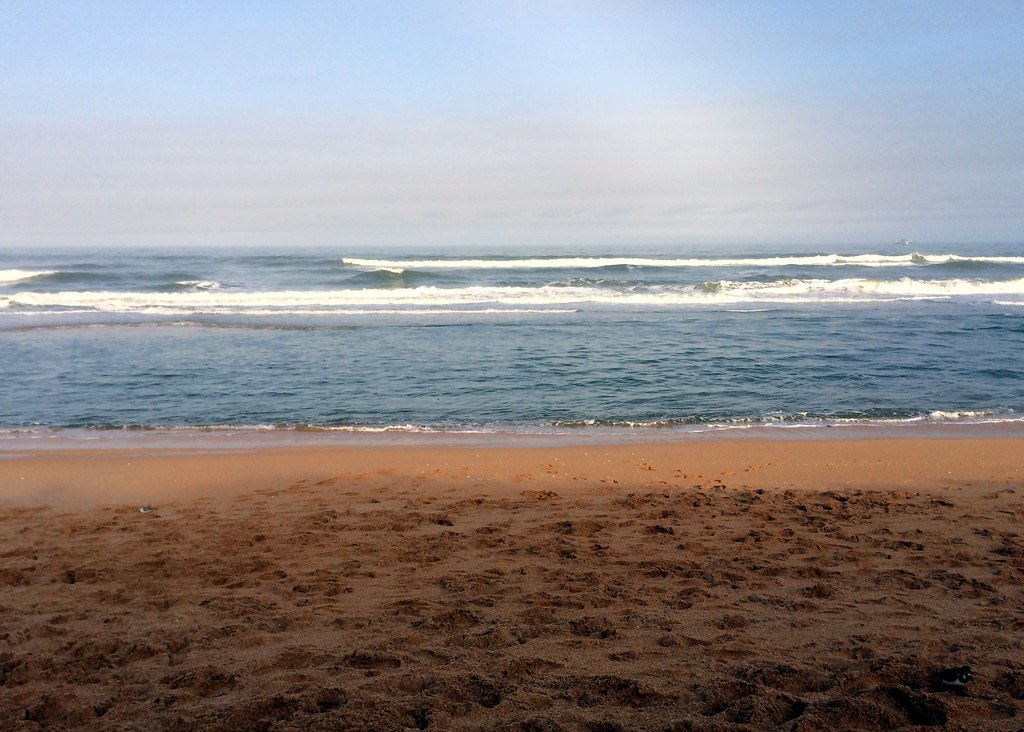
Flagler Beach is a surf town, and the proof is not a lifestyle brand. Frieda Zamba was born here on October 25, 1965, grew up surfing these beach breaks, and won four ASP World Surfing Championship titles: 1984, 1985, 1986, and 1988. At the time of her first title, she was the youngest female world champion in the sport's history.
What that record means requires context. Women's professional surfing in the mid-1980s was still fighting for prize money parity, serious media coverage, and the basic institutional legitimacy the men's tour had long received. Zamba won four times in that environment, training out of a town of roughly 5,000 people with no formal surf academy, no major sponsor infrastructure, and no particular structural advantage except good beach breaks and serious competitive drive. She holds the ASP women's tour record for finishing in the top three for six consecutive years - a mark that stood for decades after her retirement.
Generic travel guides give Zamba a single sentence. That undersells what her career represents. For a town this size to produce one dominant athlete in any competitive sport is unusual. To produce four world championships in a sport where women were simultaneously building the institutional case for their own tour gives Flagler Beach's surf identity a depth that sets it apart from every other beach town on the Heritage Corridor. Z Wave Surf Shop on Central Avenue is the living expression of that identity - the local hub where surf culture and the town's daily life overlap.
The Tommy Tant Memorial Surf Classic
In 1998, Flagler Beach surfer Tommy Tant died at 24 from an undiagnosed aortic aneurysm. The following year, the surf community launched the Tommy Tant Memorial Surf Classic in his memory. By 2026, the contest had reached its 24th consecutive year, making it one of the longest-running surf contests on the East Coast.
The event draws competitors from across Florida and the broader East Coast, filling Flagler Beach for a full weekend each year. It is a community memorial that became a sporting institution - which is exactly the kind of origin story that explains why locals protect the town's character so fiercely. Contest scheduling shifts slightly year to year; local surf shops and the event's social media channels carry the most current dates.
The Flagler Beach Historical Museum
The Flagler Beach Historical Museum on South Central Avenue is free and open seven days a week - verify current hours before visiting, as they adjust seasonally. That combination of no cost and no closed days makes it one of the most accessible small-town history collections on the entire 98-mile Heritage Corridor. The collection covers more ground than the building's modest exterior suggests.
- Orange Period pottery dated to roughly 2000 B.C. through 500 A.D., among the oldest artifacts recovered from the Flagler County area
- Seminole artifacts tracing Indigenous presence on the coastal ridge centuries before European settlement
- Tools and equipment from the turpentine era, when pine forests across the county were systematically tapped for naval stores
- Documentation of World War II encounters with German submarines offshore - when the Atlantic approaches to Florida were active combat zones and merchant ships were sunk within sight of the beach
- The official Flagler Beach city flag that flew aboard Space Shuttle Endeavour, local history that traveled to orbit and returned
The museum provides context that transforms the rest of the Heritage Corridor drive. Visitors who understand the Indigenous history, the settlement patterns, and the wartime vulnerability of this coast see Washington Oaks, Bulow Plantation, and Princess Place Preserve differently when they reach them.
Betty Steflik Memorial Preserve: The Wetland Most Guides Skip
Betty Steflik Memorial Preserve is accessible on foot from Central Avenue, covers 320 acres of mangrove marsh, mud flats, and coastal uplands behind downtown, and is almost universally skipped by travel guides. That is a significant omission. Established in 1995 through a Flagler County voter-approved program that taxed residents to purchase environmentally sensitive lands, the preserve was an early example of community-funded conservation in Florida. The voters who approved it chose wetland protection over development potential on parcels directly adjacent to the town core.
The boardwalk trail leads through salt marsh and mangrove stands to the edge of the Intracoastal Waterway, with flat walking suitable for most visitors. No permit or reservation is required - this is public land, funded by the people who live across the street. The wildlife using the preserve justifies building at least ninety minutes into any visit:
- Osprey nest on platforms throughout the preserve year-round and are nearly always visible from the boardwalk
- Bottlenose dolphin work the Intracoastal channel and can be seen from the boardwalk terminus on most visits
- West Indian manatee use the warm-water shallows along the Intracoastal seasonally, most reliably in cooler months when they concentrate near warmer water sources
- Wading birds - great blue herons, great egrets, tricolored herons, and roseate spoonbills in season - feed the mud flats at low tide
Carry insect repellent in spring and summer. Sunrise combined with low tide gives the best wildlife viewing conditions. The preserve asks nothing of a visitor except the willingness to walk across the street.
Hurricane Matthew and the Road That Washed Away
On October 7, 2016, Hurricane Matthew passed Flagler County approximately 30 miles offshore as a Category 3 storm before making landfall further north in South Carolina the following day. The offshore track did not protect the coast. Matthew destroyed a 1.3-mile section of State Road A1A in south Flagler Beach - with portions of the roadway physically washing into the Atlantic Ocean. It also tore away 160 feet of the Flagler Beach Pier. Total damage across Flagler County ran into the tens of millions of dollars, funded through federal FEMA assistance and Florida state disaster recovery programs.
Recovery took years and left the town with a question that has no clean answer: a barrier island road is a barrier island road. No engineering permanently stabilizes infrastructure built on a narrow sand strip exposed to Atlantic storm surge. Flagler Beach chose to rebuild A1A rather than retreat from the shoreline - a decision rooted in both economic necessity and community resolve. The rebuilt section incorporates higher engineered dunes and sand placement systems designed to absorb future surge before it reaches the pavement.
For visitors, Matthew's aftermath explains why the southern end of the beach looks the way it does. The well-engineered shoreline there is reconstruction, not overdevelopment. Understanding that distinction is part of understanding Flagler Beach.
Downtown, Getting Here, and Using Flagler Beach as a Base
The Central Avenue Core
Flagler Beach's commercial district runs along Central Avenue for roughly six walkable blocks, from the highway intersection down to the pier. Z Wave Surf Shop anchors the strip as the town's surf culture hub. GOLA - Gallery of Local Art - shows work by regional artists a few doors away. Seafood restaurants, coffee shops, and boutiques fill the remaining storefronts. Nothing here is a chain. The absence is not an aesthetic preference - it is an active community stance backed by decades of consistent local planning decisions.
Events and the Annual Calendar
The First Friday event runs on the first Friday of each month at Veterans Park, with live music, food vendors, and local artisans within walking distance of the ocean. It is a low-key community gathering and a good introduction to the town's social fabric. Larger annual events include Daytona Bike Week spillover in March, Turtle Fest in June aligned with the opening of sea turtle nesting season, and the Fourth of July parade and fireworks - a tradition running back to the pier's 1928 opening celebration.
A Day-Visit Sequence
- Arrive from the north via A1A through Washington Oaks Gardens State Park, using the drive itself as the first Heritage Corridor stop before you reach town
- Park on Central Avenue or in public lots near Veterans Park - the entire downtown core is walkable from anywhere within a few blocks of the pier
- Begin at the Flagler Beach Historical Museum on South Central Avenue for the foundational context: Indigenous pottery, the land-boom founding story, the wartime coast, the Space Shuttle flag
- Cross to the west side of A1A for the Betty Steflik Memorial Preserve boardwalk - allow at least ninety minutes to reach the Intracoastal and return, more if wildlife is active
- Return to Central Avenue, walk the pier for the offshore perspective, then work the downtown strip for dinner before heading south toward Gamble Rogers or continuing the full corridor drive
Day Trips Along the Heritage Corridor
| Destination | Direction from Flagler Beach | Approximate drive | What it adds |
|---|---|---|---|
| Gamble Rogers Memorial State Recreation Area | South on A1A | Under 10 minutes | Oceanfront camping; tribute to Florida folk musician |
| Bulow Plantation Ruins Historic State Park | West and south, inland from A1A | Under 20 minutes | Antebellum sugar mill ruins; Seminole Wars history along the creek |
| Washington Oaks Gardens State Park | North on A1A | Under 20 minutes | Formal gardens; distinctive coquina rock shoreline; birding |
| Princess Place Preserve | Northwest, inland | Under 20 minutes | Florida's oldest surviving hunting lodge; horse trails and creek paddling |
| St. Augustine historic district | North on A1A or US-1 | About 30 minutes | Nation's oldest city; Castillo de San Marcos; Spanish colonial streetscape |
Frequently Asked Questions
When is the best time to visit Flagler Beach?
Spring and fall offer the most comfortable combination of manageable crowds, mild temperatures, and active wildlife. Sea turtle nesting runs roughly May through October, and fall months bring migratory birds through Betty Steflik Preserve. Summer is busy and hot but delivers the full beach-town atmosphere and the clearest ocean swimming conditions. The town stays active year-round because the downtown strip, the pier, and recurring events like First Fridays draw locals as consistently as they do visitors.
Do visitors need a fishing license to fish from the Flagler Beach Pier?
Florida exempts saltwater fishing from licensed piers from the standard saltwater fishing license requirement, making the pier accessible to casual anglers who do not carry a license. The pier charges its own access fee for anglers, separate from any state licensing question - check the posted rates at the gate before fishing. For current Florida saltwater fishing regulations and any updates to pier license exemptions, the Florida Fish and Wildlife Conservation Commission website is the authoritative source.
What should first-time visitors know about practical access in Flagler Beach?
The downtown core is compact enough that parking once and walking covers nearly everything - the Historical Museum, Central Avenue shops and restaurants, the pier, and the Betty Steflik Preserve boardwalk entrance are all within a few blocks of each other. Street parking along Central Avenue and near Veterans Park is free, with no meters. Neither the pier nor Steflik Preserve requires advance reservations, though the pier charges access fees at the gate. Plan for tighter parking availability during peak summer weekends and around major events such as the Fourth of July; for current event-related parking guidance, the city of Flagler Beach's official channels are the most reliable source.