Drive north on Old Kings Road through Palm Coast toward St. Augustine and you are moving through one of the oldest cattle corridors in North America. The wiregrass flatwoods on either side, the occasional live oak hammock, the low horizon broken by palmetto scrub - this is not scenic backdrop. It is the working landscape that shaped five centuries of cattle culture, the same terrain where Spanish ranchos ran thousands of head before Massachusetts had a printing press, where British planter Denys Rolle built a ranch empire on the St. Johns River, and where leather-whip cowboys pushed herds north toward Jacksonville, Savannah, and beyond long before the Texas cattle drives became the country's founding ranch mythology. Almost every popular account of the Florida Cracker tradition fixes its gaze on the Central Florida trail. The corridor through Flagler, St. Johns, and Volusia counties is where the story actually began.
What "Cracker" Actually Means and Why the Answer Starts in Northeast Florida
Three competing etymologies get debated whenever the word appears. The corn-cracker theory holds that poor settlers cracked open dried corn with a homemade mill or stone. The Elizabethan braggart theory traces the word to 16th-century English slang for a loudmouth. The whip-crack theory - the one with the most direct physical evidence on Florida soil - argues that the distinctive sound of a long braided leather whip, used daily to drive cattle through dense palmetto scrub, is what gave the Florida cowboy his name.
In northeast Florida, the whip-crack explanation carries particular weight. The palmetto country along Old Kings Road is exactly the kind of terrain where a rope lasso becomes useless. Cattle disappear into head-high scrub; a thrown loop catches on vegetation before it reaches the animal. The long whip, cracked to startle and steer, was the tool that worked. When Spanish and later British ranchers established operations along the St. Johns corridor, the whip went with them. The sound of a working cattle drive was the crack of leather in the morning air.
Florida Crackers today - both the cattle-ranching families and the broader community who claim the name as cultural identity - wear the term as a point of regional pride. It signals deep roots: not money, not politics, but time in the land. Northeast Florida, as the zone where Spanish cattle ranching first took hold in North America, is by any geographic logic the origin corridor for that identity. The Central Florida narrative came later, geographically downstream from where these animals were first shaped.
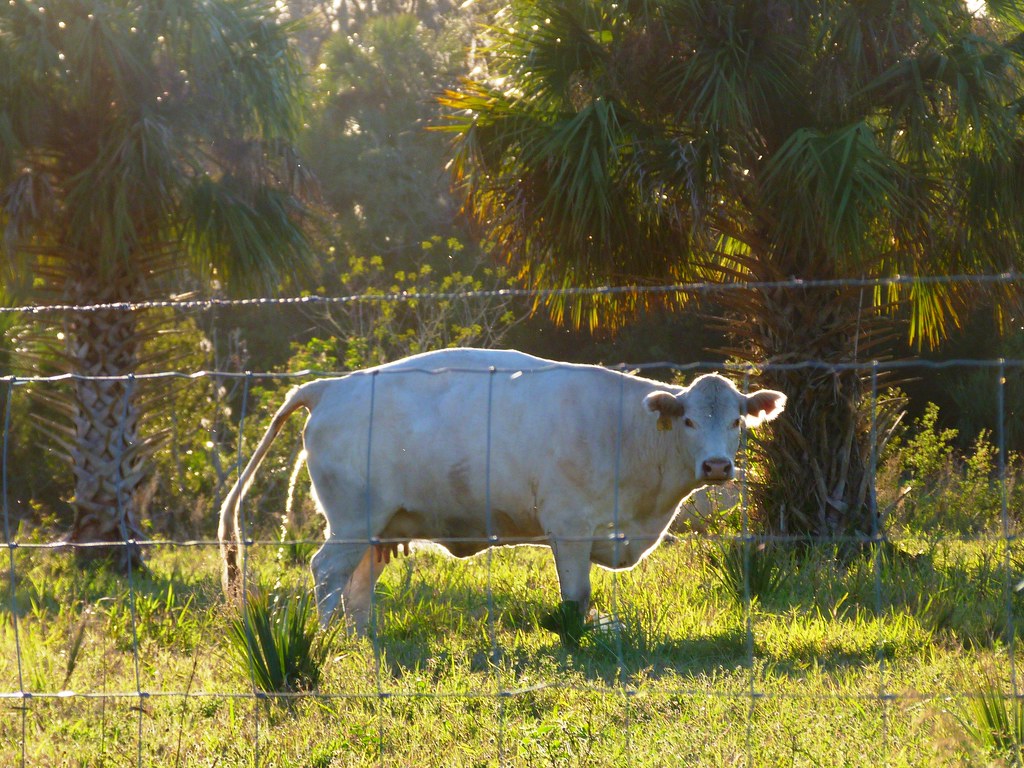
The Spanish Foundation (1521-1763): From Seven Andalusian Cattle to 20,000 Head
The founding moment for all of this is precise and verifiable. In 1521, Ponce de Leon returned to Florida on his second voyage, landing near what is now Charlotte Harbor on the southwest coast. With him came seven Andalusian cattle - the original nucleus of a breed that would spend the next 500 years adapting to Florida's subtropical conditions. Those animals were Criollo stock, the same Spanish landrace that spread through Central and South America. In Florida, they found something that would test them hard: summer heat that rarely broke, protein-poor wiregrass range, standing water through the wet season, and an insect load that could kill unacclimated European breeds in a single season.
They survived. And then they spread. By 1700, Spanish Florida held more than 20,000 head across approximately 34 privately owned ranchos - more than a century of head start on Texas. The ranchos were concentrated in the mission belt across north Florida, and the animals grazing the pine flatwoods of what are now Flagler and St. Johns counties were direct descendants of those original Andalusian animals.
How the Criollo Became the Florida Cracker Breed
The physiological transformation that turned Andalusian stock into the Florida Cracker cattle breed took generations of natural selection. The animals that survived and reproduced were the ones best suited to low-nutrition range: smaller framed, more heat-tolerant, more resistant to tick-borne illness. Adult Florida Cracker cattle average around 600 pounds at maturity - roughly half the weight of modern commercial beef breeds. That small frame is not a deficiency. It is the direct result of centuries of selection for efficiency on Florida's sparse grass, and it makes the breed far better suited to the corridor's native landscape than any Angus or Hereford ever would be.
| Characteristic | Florida Cracker Cattle | Modern Commercial Breeds |
|---|---|---|
| Mature weight | Around 600 lbs - compact by design | Roughly double, selected for market yield |
| Native Florida range suitability | High - adapted to wiregrass and palmetto scrub | Low without improved pasture and feed input |
| Heat and tick tolerance | High - centuries of natural selection | Moderate to low, requires management |
| Conservation status | Threatened (The Livestock Conservancy) | Not applicable - populations are stable |
| State recognition | Official heritage breed since 2018 | None |
The northeast Florida landscape of the Spanish period would have looked familiar to anyone driving Old Kings Road today. Longleaf pine uplands, saw palmetto understory, wet prairie sloughs, and tidal marsh along the St. Johns - exactly the patchwork that defined the Spanish rancho geography. The cattle learned to move between dry pine ridge and wet marsh as the seasons shifted water tables up and down. That behavioral adaptability, as much as any physical trait, is what the breed preserved.
The British Period and the St. Johns River Ranches (1763-1783): Denys Rolle and What He Left Behind
When Britain acquired Florida from Spain in 1763, the northeast corridor attracted ambitious planters who saw something in the St. Johns River basin that the Spanish had already proven: this was productive ranching country. The most consequential of these figures was Denys Rolle, an English landowner who accumulated more than 80,000 acres along the St. Johns River during the two decades of British East Florida and ran more than 1,000 head of cattle on that land.
Rolle's operation is almost always discussed as a failed plantation experiment - he imported indentured servants and poor settlers from England with mixed results - but the cattle dimension of his enterprise rarely gets the attention it deserves. His herd on the northeast Florida corridor was one of the largest concentrated ranch operations in North America at the time. When Britain returned Florida to Spain in 1783 and British planters departed, they left behind a ranching infrastructure - improved pastures, cattle pens, working traditions - that the returning Spanish and later American settlers would inherit and continue.
This is the detail that the standard telling of Florida Cracker culture misses entirely. The British period is not an interruption of the ranching story; it is a chapter in its development. The British brought additional European cattle genetics into the northeast Florida corridor, further shaping the emerging Cracker breed. The dogtrot farmhouses that survive in Flagler and St. Johns counties today reflect a building tradition that developed in the decades after the British departure, but the land use patterns those houses sat within - cattle pasture, pine uplands, working range - were already established before the first American-period settlers arrived.
The Making of the Florida Cracker Cowboy: Whips, Dogs, Open Range, and the Route North
The Florida Cracker cowboy's toolkit was dictated by the terrain. Where the Great Plains cowboy used rope and horse to work in open grassland, the Florida cowboy operated in conditions that made those methods impractical. The defining tools of the trade were three:
- The braided leather whip - carried coiled on the saddle or at the belt, ten to twelve feet of plaited rawhide used to crack a sharp report behind scattered cattle and push them out of thick palmetto cover without physical contact; roping was simply not viable in the dense scrub
- The Florida Cracker Horse - a small, gaited, iron-footed descendant of 16th-century Iberian stock including the North African Barb, the Spanish Sorraia, and the gaited Spanish Jennet; surefooted in marsh and scrub, with the stamina for long drives on marginal grass, and comfortable in conditions that wore down larger Northern horses
- The cow dog - typically a Blackmouth Cur or Florida cracker cur, trained to locate cattle hidden in thick brush and move them without biting; the dog worked in combination with the whip, finding the animal while the cowboy directed its movement with the crack
The open range was the legal framework that made this system possible. Florida did not pass mandatory fencing laws until 1949, one of the last states in the South to close its open range. For centuries before that, cattle grazed freely across the unfenced pine flatwoods, and twice-yearly roundups - called "cow hunts" in Florida, never "roundups" - gathered scattered animals by range, brand, and season.
Old Kings Road as a Cattle Highway
The pre-Civil War cattle drives from central Florida followed routes north through the Heritage Corridor to reach markets at Jacksonville, some 100 miles north of the central cattle range, and from there to Savannah, more than 260 miles from the central range, and onward to Charleston more than 700 miles distant. Old Kings Road - the colonial-era highway that the Heritage Crossroads Corridor largely follows - was not built for cattle, but it became their highway. The road offered reliable footing through pine flatwoods that would otherwise swallow a herd in mud and scrub. Cattle crossing the St. Johns could use established ferry points. Night camps along the road left traces that local history still remembers in place names and fence lines.
This northeast route is the piece of the Florida cattle story that gets written out of the standard account consistently. The Central Florida trail to Bradenton runs east to west. The drives to Jacksonville and beyond ran north through this corridor - through what are now Flagler, St. Johns, and Duval counties. Every major treatment of Florida Cracker culture centers the westward trail and treats the northeast as a footnote, which inverts the actual history.
The Seminole Wars and the Disruption of Cattle Culture
Three Seminole Wars between 1817 and 1858 remade the landscape of the northeast Florida corridor. The strategic logic of the wars included the deliberate destruction of food supplies, and cattle were food. Military campaigns swept through the northeast Florida range country burning settlements, scattering herds, and forcing ranching families off land their families had worked for generations.
The Seminole themselves had developed substantial cattle-herding traditions by the early 19th century, absorbing both the Spanish cattle culture and the animals themselves. Their herds were targeted in exactly the same way. The destruction was not incidental; it was tactical. By the end of the Third Seminole War in 1858, the northeast Florida corridor had lost multiple cycles of cattle-culture rebuilding. The ranching economy that re-established itself in the late 1850s and early 1860s was starting again from a depleted base, with smaller herds, disrupted bloodlines, and working families who had to reconstruct their range knowledge from scratch.
The rebuilding decade before the Civil War is when Florida Cracker architecture reached its mature form. Families with limited capital and abundant pine timber built for the climate they knew. The same war-disrupted landscape that forced this restart also produced the vernacular building tradition that now defines the visible heritage of the corridor. Necessity and material at hand, applied by people who had lived through repeated displacement, produced a building form that is still standing.
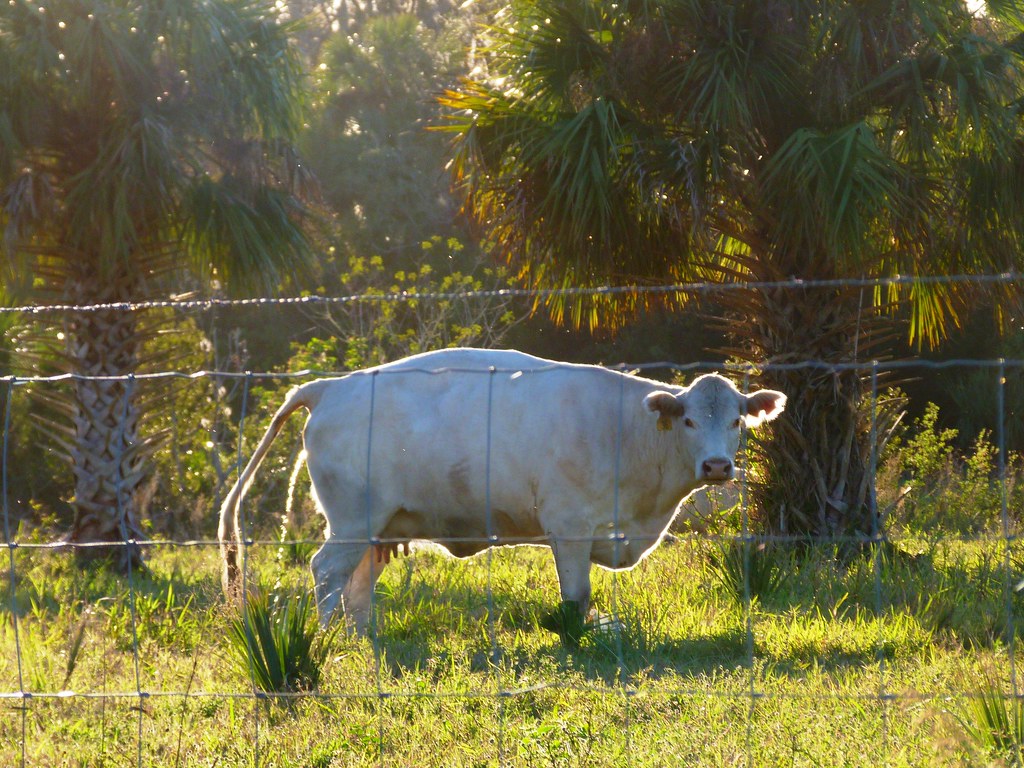
Florida Cracker Architecture: Reading the Houses Along the Drive
Florida Cracker architecture is not a folk style defined by decoration. It is engineering logic applied to a specific climate. Every feature of a Cracker house solves a problem posed by northeast Florida's heat, humidity, and insect population. The style thrived from roughly the 1860s through the 1930s, when rural electrification and changing building materials began to shift construction away from the old forms.
- The dogtrot breezeway - an open central passage that divides the house into two halves under a continuous roof; in summer, the breezeway becomes a wind tunnel that cools both sides of the house without mechanical assistance; it also served as the primary work and social space during hot months
- Raised pine floors - set on brick or wood piers well above the ground surface; this separates the living space from ground moisture, discourages termites and snakes, and allows air circulation under the entire structure year-round
- Deep wraparound porches - these perform double duty: shade the walls and windows from direct sun during the long Florida summer, and provide outdoor living and sleeping space during the months when indoor temperatures stayed high through the night
- Board-and-batten pine siding - vertical board-and-batten construction used local longleaf pine that swells when wet, sealing any gap in the wall naturally; the material was cut from the same forests surrounding the homestead
- Metal roofs - standing-seam tin or corrugated metal sheds rain fast, resists the high winds that move through the corridor during storm season, and outlasts wood shingles by decades in a humid climate
Surviving examples concentrate in north Florida, and the northeast corridor contains some of the most intact remaining houses in the state. When driving the route, look for the characteristic silhouette: a low-pitched gabled roof, a central open gap at the porch level suggesting the breezeway, and the raised floor line visible between the porch steps and the siding. Metal roof glinting above a stand of live oaks, with the house set back behind an old fence line, is the visual signature of the Cracker era along this drive.
Near-Extinction and the State Rescue (1960s-2018): How Florida Saved Its Own Cattle Breed
The near-extinction of Florida Cracker cattle happened quietly, over two decades, without any single dramatic event. After World War II, the beef industry pushed hard toward larger, faster-growing commercial breeds. Brahman, Angus, and Hereford crossbreeding improved short-term market weight. Florida ranchers, working thin margins like ranchers everywhere, made rational economic decisions: they bred their Cracker cows to commercial bulls. Within a generation, the Cracker genetics were diluted past recovery on most farms. By the 1960s, only a handful of families had maintained truly purebred herds, isolated enough from commercial bulls that the original bloodlines survived intact.
The state's response unfolded in documented steps, and telling the story as a sequence matters because no other account does so coherently:
- 1970 - The state herd initiative: Florida launched a preservation program and established four geographically separated state herds, the separation designed deliberately so that a single disease event could not wipe out the entire preserved gene pool at once; Commissioner Doyle Conner's office drove the effort
- 1989 - The breed associations form: The Florida Cracker Cattle Association registered its first animals; initial certification covered 400 animals as authentic original-bloodline stock from verified lineages - an almost shockingly small number for a breed that once numbered in the tens of thousands; the Florida Cracker Horse Association formed the same year, located remnant horse herds, and established a studbook to prevent the breed from being absorbed into Quarter Horse populations
- 2010 - The census: A population count found roughly 1,300 head in total - around 500 breeding cows and 150 bulls - placing the Florida Cracker among the rarest cattle breeds in North America and establishing a baseline for measuring recovery
- 2018 - Official recognition: Florida designated the Florida Cracker cattle as the official state heritage cattle breed, completing a policy arc that had begun with the Florida Cracker Horse being named Florida's official state horse a decade earlier, in 2008
The pairing of those two designations - horse in 2008, cattle in 2018 - tells a coherent policy story that no other source connects directly. The state made explicit what ranchers had always known: the horse and the cattle were bred for the same landscape, developed in the same culture, and nearly lost through the same process of commercial breed replacement. Saving one without the other would have been only half the job.
The Livestock Conservancy currently classifies the Florida Cracker cattle breed as "threatened" - a status that reflects genuine progress from the crisis years while making clear that the work of conservation is not finished.The Livestock Conservancy Breed Conservation Priority List
By 2022, sustained breeding programs had grown the population to an estimated 2,500 to 5,000 head. That range reflects genuine uncertainty in counting a breed spread across private farms, state herds, and museum properties. Even at the high end of the estimate, the Florida Cracker remains far below the threshold that geneticists consider safe for long-term viability without active management. The "threatened" classification is not a formality.
Where to Encounter Living Cracker Heritage: The Florida Agricultural Museum on Old Kings Road
No other site in the state pulls together all three strands of Cracker heritage - cattle, horses, and architecture - in a single visit. The Florida Agricultural Museum sits on a large working property on Old Kings Road in Palm Coast, directly along the Heritage Crossroads Corridor route. It is one of the few places a visitor can walk from a living cattle herd to a living horse herd to an 1880s farmhouse to a British colonial archaeological site without getting back in the car.
What the Site Contains
The museum is worth breaking down by its components, because the depth of what is here is not obvious from a roadside sign:
- Living Florida Cracker cattle herd - genetically documented animals contributing to the state's distributed conservation effort; watching a Florida Cracker cow work the same wiregrass flatwoods that her ancestors grazed under Spanish mission culture is about as direct an encounter with the ranching history of the corridor as this drive offers
- Living Florida Cracker horse herd - the small, gaited animals descended from 16th-century Iberian stock; seeing the horse and the cattle together on the same property makes visceral what a written description of the cracker cowboy tradition can only approximate
- The Clark House - an authenticated 1880s Florida Cracker homestead in the dogtrot form; raised pine floors, deep porch, the central breezeway open and functional; standing inside it on a hot afternoon, with cross-ventilation moving through the central passage, the engineering intelligence of the design becomes immediately legible in a way that no description fully captures
- British colonial sawmill archaeology - the physical remains of a colonial-era sawmill on the same property, connecting the site directly to the period when Denys Rolle and other British planters were building the ranching and timber infrastructure of the northeast corridor
- African American cattle heritage exhibit - cattle work in Florida from the antebellum period through the late 19th century depended heavily on Black workers, free and enslaved, whose knowledge and labor built the ranching culture that the heritage breed designation now honors; this exhibit addresses a gap that the popular Cracker narrative has historically left open
Check the Florida Agricultural Museum's official website for current operating hours, seasonal programs, and guided tour availability before making the site a focal point of your corridor itinerary. Programming varies by season, and some living heritage demonstrations - cattle working, horse demonstrations - are scheduled events rather than daily features. The museum is easy to miss as a first-time driver because the entry road is not prominent from the main corridor; look for the signage on Old Kings Road and plan to give the property several hours rather than a quick stop.
The Cracker Tradition Today: Festivals, Breeds, and Why It Still Matters
Great Florida Cattle Drive reenactments, held periodically since the 1990s, have put Florida Cracker horses and cattle back on historical routes across the state. These drives serve a function beyond nostalgia: they demonstrate the practical working ability of the breeds, attract new breeders and owners who might not otherwise encounter the animals, and generate press coverage that keeps the conservation story in front of a public that largely does not know the breed exists. Each reenactment is also a low-key registry event - breeders compare bloodlines, evaluate conformation, and sometimes arrange matings that would not happen otherwise.
The Florida Cracker Horse Association's studbook work is what makes the horse a recognized breed rather than a regional type. Without a studbook - a verified record of parentage going back to the founding animals - a breed has no way to enforce standards, track genetic diversity, or prevent dilution by outside genetics. The association's work over the decades since 1989 is what secured the 2008 state horse designation and what prevents the Florida Cracker Horse from being quietly absorbed into the Quarter Horse gene pool the way it nearly was in the postwar decades.
What visitor engagement with the breeds means in genetic terms is concrete. Consumer interest in heritage breeds has historically been one of the most reliable drivers of breed recovery - more reliable, in some cases, than purely conservation-focused programs operating without public attention. Florida Cracker beef has not developed a comparable premium market yet, but the breed's qualities - heat tolerance, parasite resistance, the ability to maintain condition on native forage without supplemental feed - are increasingly relevant as ranchers in the southeast contend with changing conditions and rising input costs.
For anyone driving the Heritage Crossroads Corridor with serious interest in the Cracker cattle story, the Florida Cracker Cattle Association and The Livestock Conservancy both maintain current information about where registered herds are located and the breed's population status. And the landscape itself, looked at carefully from the road - the wiregrass flatwoods, the saw palmetto flats, the longleaf pine ridges - is not generic Florida scenery. It is the specific terrain that produced a specific cattle breed, a specific working culture, and a specific way of building houses, all of which were nearly erased and are still being recovered, 500 years after seven Andalusian cattle came ashore.
Frequently Asked Questions
Why are Florida cowboys called Crackers?
The most historically grounded explanation is the crack of the long braided leather whips Florida cowboys used to drive cattle through dense palmetto scrub. Rope lassos were impractical in the thick Florida vegetation, so the whip became the primary cattle-working tool, and the cracking sound it made in a working drive became the defining auditory signature of the Florida cowboy. Two alternative theories - the corn-cracker and Elizabethan braggart etymologies - exist but have fewer direct connections to the Florida cattle landscape and its specific working conditions.
How small are Florida Cracker cattle compared to regular beef cattle?
Florida Cracker cattle average around 600 pounds at maturity, which is roughly half the weight of common commercial beef breeds. That compact size is not a breeding failure; it is the result of centuries of natural selection for efficiency on Florida's protein-poor wiregrass range. A Cracker cow can maintain condition on native forage that would cause a commercial Angus to lose weight rapidly, which is precisely why the breed survived for 500 years on the Florida landscape before the postwar crossbreeding crisis nearly ended it.
Can you see purebred Florida Cracker cattle anywhere along the corridor?
Yes. The Florida Agricultural Museum on Old Kings Road in Palm Coast maintains a living herd of Florida Cracker cattle as part of the state's distributed conservation effort, and it is the most accessible point on the Heritage Crossroads Corridor for a confirmed encounter with the breed alongside its historical context. The Florida Cracker Cattle Association can provide information about other registered herds in the region for visitors who want to go further.
What is the dogtrot and why was it built in northeast Florida?
The dogtrot is the defining feature of Florida Cracker architecture: an open central breezeway that runs through the middle of the house, dividing the structure into two halves under a continuous roof. It functions as a passive cooling system, funneling prevailing wind through the living space before mechanical air conditioning existed. Northeast Florida has some of the best-surviving examples in the state, and the Clark House at the Florida Agricultural Museum is an authenticated 1880s example a visitor can walk through and experience as a working building rather than a roped-off exhibit.
How close did Florida Cracker cattle come to extinction, and are they safe now?
By the 1960s, decades of crossbreeding with commercial beef breeds had reduced the purebred Florida Cracker population to a handful of isolated family herds. A population census around 2010 found roughly 1,300 head total - approximately 500 breeding cows and 150 bulls - placing the breed among the rarest in North America at that point. Conservation work since the 1970 state herd initiative has grown the population substantially, but The Livestock Conservancy still classifies the breed as "threatened," meaning the population remains too small for long-term genetic security without continued active management and breeding programs.
Did the British period in Florida contribute anything lasting to the Cracker cattle tradition?
Directly, yes - and this is the chapter of the story most popular accounts skip entirely. During the 1763-1783 British East Florida period, planters including Denys Rolle ran large cattle operations in the northeast Florida corridor. Rolle's St. Johns River ranch held more than 1,000 head on tens of thousands of acres, one of the largest concentrated ranch operations in North America at the time. The British introduced additional European cattle genetics into the northeast Florida population and left behind ranching infrastructure - improved pastures, cattle pens, working routes - that subsequent American settlers inherited and continued building on.