Spring training in Florida was a minefield in 1946. The state's Jim Crow laws governed every public space - sports venues, hotels, restaurants, and the buses that carried players between cities - so thoroughly that Branch Rickey, president of the Brooklyn Dodgers, spent weeks trying to find a Florida city willing to let his new signing take the field. Jackie Robinson, recently married and already bumped from two airline flights, arrived in Daytona Beach by bus after a 450-mile crossing of the state. He came as a last viable option, not a preferred one. That Daytona Beach said yes - and kept saying it through a full spring of organized obstruction from every surrounding city - was not an accident of geography or civic virtue. It was the product of deliberate political work by one person whose institution sits on what is now the heritage corridor connecting Flagler, St. Johns, and Volusia counties.
Why Daytona Beach? The Geography and Politics That Made One City Different
Florida in 1946 had a formal and informal architecture of racial exclusion that extended to professional sports. Organized baseball was understood to be a white institution; no Black player had competed against a white professional team in modern organized baseball in decades. When Branch Rickey signed Robinson and pitcher Johnny Wright to the Montreal Royals - the Dodgers' Triple-A farm team - and announced they would train in Florida, city governments and police departments treated the news as a provocation rather than a sporting event.
Daytona Beach was different for a specific reason. Mary McLeod Bethune, then 70 years old, had spent decades building political relationships with Daytona Beach's white civic leadership. As the founder of Bethune-Cookman University and a former advisor to President Franklin D. Roosevelt, she carried a credibility and social weight that most Black leaders in the South were never permitted to accumulate. When Robinson's spring training came down to city-by-city permission, Bethune worked those relationships. Historian Jules Tygiel later assessed the result directly:
Daytona Beach was an island of enlightenment in a sea of bigotry.
Jules Tygiel, historian
The heritage corridor's geographic and institutional reality mattered. Daytona Beach lies in Volusia County, bordered by St. Johns County to the north and Flagler County further north still - a stretch of Atlantic coast with a distinct history of Black institution-building, anchored by Bethune-Cookman and the community that had grown around it since the early twentieth century. That institutional base gave Robinson and his wife Rachel somewhere to stay, somewhere to eat, and a community network when every commercial accommodation in the city was closed to them.
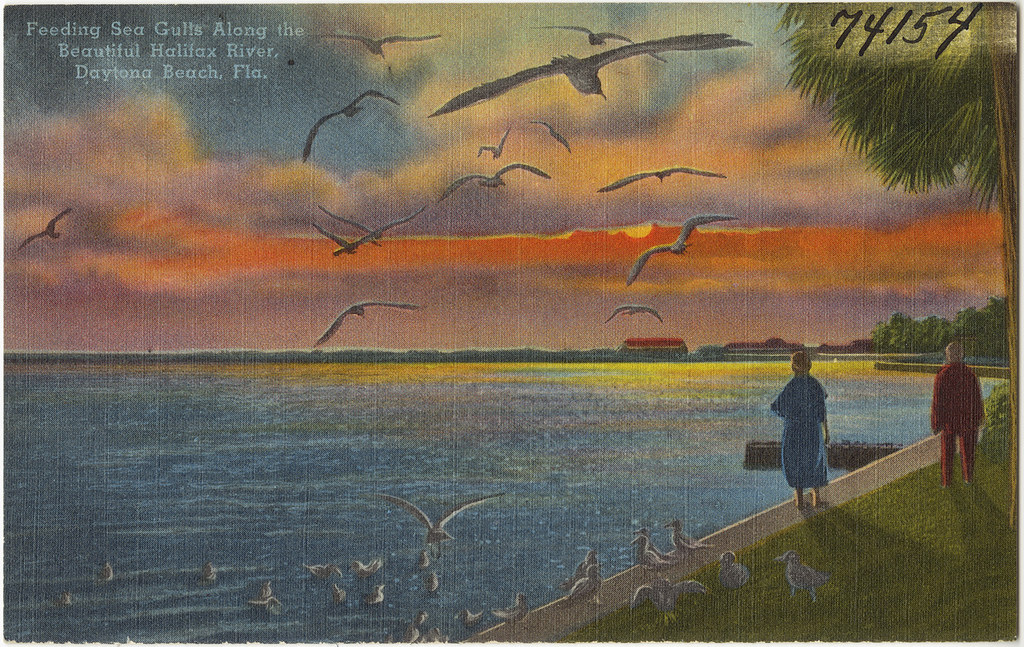
The Journey South: Two Bumped Flights, an Empty Bus, and Arriving as Newlyweds
Jackie and Rachel Robinson had been married for exactly two weeks when they left for spring training. They married on February 10, 1946, and departed almost immediately afterward. Rachel was the only wife traveling with the team, and what should have been a routine flight to Florida became a demonstration of how the system operated before anyone had thrown a single pitch.
- The Robinsons boarded their first flight but were bumped before departure - their seats given to white passengers without explanation or apology.
- They rebooked and boarded a second flight. They were bumped again, the same way, by the same mechanism.
- With air travel denied twice, they traveled by bus toward Florida, routed through Pensacola at the state's far western panhandle.
- From Pensacola, they rode an empty bus 450 miles east across Florida to Daytona Beach - a journey that consumed most of a day across a state where they could not eat at most restaurants or sleep at most hotels along the route.
Rachel Robinson later described the bus ride as one of the most wearing experiences of the entire spring - not because of any single incident, but because of the relentlessness of a system that arranged each indignity in sequence. They arrived exhausted, newly married, and already under conditions designed to grind them down before Robinson ever put on his uniform.
Three Doors Slammed Shut: Sanford, Jacksonville, and DeLand
Daytona Beach's willingness becomes clearest when measured against what every other Florida city did. Robinson and Wright encountered organized, official resistance at each stop - resistance that took different forms but arrived at the same result every time.
| City | Method of exclusion | Stated reason | Outcome |
|---|---|---|---|
| Sanford | Police chief entered the dugout mid-game | None offered - direct order to leave | Robinson removed after two innings |
| Jacksonville | Stadium locked before game day | None made public | Game cancelled entirely |
| DeLand | Daytime game cancelled | Lighting problems | Cancelled on a physically impossible pretext |
| Daytona Beach | No obstruction | Not applicable | Robinson played; full spring training completed |
The DeLand Deception
The DeLand case is the one most often dropped from accounts of this spring, and it is the most revealing of the three refusals. City officials cancelled a scheduled game involving Robinson on the stated grounds that the lights were not working. The game was scheduled for daytime. Lighting problems cannot affect a game played in daylight. The fabricated excuse was so transparent it communicated the real message without ambiguity: no Black player would take this field, and no explanation even close to plausible would be attempted.
In Sanford, police chief Roy G. Williams walked directly into the Royals' dugout after two innings and ordered Robinson off the field. This was not a stadium policy or a legal proceeding - it was a police officer entering a professional sports venue mid-game and removing a player by direct command. The Royals management complied without public protest. In Jacksonville, the stadium was simply locked shut. Each method was different; the purpose was identical.
The Island of Enlightenment: Mary McLeod Bethune, Joe Harris, and Bethune-Cookman as Base Camp
When Robinson arrived in Daytona Beach, he needed more than permission to play. He needed somewhere to sleep and somewhere to eat, because Florida's segregation laws and customs meant no hotel that served the white Royals would take him, and no restaurant that served his teammates would seat him. The solution to both problems was local and human.
Joe Harris and the Spruce Street Household
Joe Harris, a Black pharmacist and politically active community leader in Daytona Beach, opened his home on Spruce Street to Jackie and Rachel Robinson for the duration of spring training. His wife Duff was part of this arrangement. This was not casual hospitality - it was deliberate community infrastructure, providing the Robinsons with a stable and safe domestic base in a city where no commercial option was available to them. For meals, Robinson and Wright ate at Bethune-Cookman College. The campus functioned as a dining hall and community hub for the two Black players who could not access anything the rest of their team took for granted.
What Bethune brought to the broader situation went beyond any single conversation with city officials:
- Decades of direct working relationships with Daytona Beach's white civic leadership, built through her role as college president and national figure
- A direct connection to federal power through her advisory role to President Roosevelt, which gave her a standing that local officials could not easily dismiss
- An institutional campus that provided meals, community support, and a physical base for Robinson and Wright throughout the entire spring
- A political framing that positioned Robinson's presence as a civic achievement for Daytona Beach rather than a threat to local custom
Without Bethune's groundwork, Robinson and Wright had no field to play on and no safe daily infrastructure between games. The heritage corridor's civil rights history did not merely background this story - it actively created the conditions for it.
March 17, 1946: What Happened on the Field - and in the Stands
City Island Ballpark on March 17, 1946, held a crowd of 3,100. The Montreal Royals faced their parent club, the Brooklyn Dodgers, in an exhibition game. Jackie Robinson stepped onto the field and became the first Black player in decades to compete against a white professional team in organized baseball. The Dodgers won 7-2.
The game itself was an exhibition, the kind of low-stakes inter-organization scrimmage that takes place dozens of times every spring training season. What made it consequential was not the score or even Robinson's individual performance that afternoon - it was the fact that the game was played at all, and finished. After Sanford, Jacksonville, and DeLand, the completion of this game on this field was the proof of concept Branch Rickey needed: organized integration of professional baseball was physically possible, and the sky did not fall.
What the official record tends to omit is what was happening in the stands while Robinson was on the field. Black fans, including Rachel Robinson, were required to sit in the ballpark's segregated section. The integration was real on the diamond and partial in the grandstand: Jackie crossed a line his wife could not cross that afternoon. The gap between the two was itself the condition of 1946 - progress offered with one hand and the same arrangement enforced with the other.
City Island Ballpark, which had opened on June 4, 1914, was already the oldest ballpark in continuous use in Minor League Baseball. It had seen more than three decades of professional baseball before this game. Nothing that had happened on its field before or since carries the weight of those two hours in March 1946.
The 1946 Montreal Royals Season: Statistics That Proved the Gamble
Branch Rickey's strategy required more than a completed spring training game. It required Robinson to demonstrate, over a full professional season, that a Black player could not only compete but dominate at a high level under conditions designed to make him fail. The 1946 season for the Montreal Royals provided that demonstration in full.
Robinson's final numbers in the International League:
- Batting average of .349 - led the entire International League
- 113 runs scored - another league-leading figure across 124 games
- 40 stolen bases and 66 runs batted in
- 92 walks against only 27 strikeouts - a disciplined plate approach maintained under sustained physical intimidation on the base paths by opposing players
The Montreal Royals went 100-54 as a team and advanced to the Little World Series against the Louisville Colonels - a matchup that carried its own charge, since Louisville was a Southern city with a heavily segregated fan base. The Royals won four games to two. Montreal fans celebrated Robinson as a city hero; the contrast with what he had encountered in Florida five months earlier was not lost on anyone watching. These numbers, compiled during a season in which Robinson also received death threats, were the evidence Rickey needed to proceed with the final step.
From Daytona to Havana to Brooklyn: How Florida's Hostility Shaped What Came Next
The Florida experience did not end with the 1946 spring training. It had direct and traceable consequences for how the Brooklyn Dodgers organization managed its operations in the years that followed.
After the obstruction in Sanford, Jacksonville, and DeLand, Rickey decided that returning to Florida for the Dodgers' 1947 spring training - with Robinson now on the major league roster - was not workable. He moved the entire Brooklyn Dodgers operation to Havana, Cuba, for the 1947 spring. Cuba did not enforce Jim Crow. Robinson could stay where his teammates stayed, eat where they ate, and prepare for his major league debut without the state apparatus working against him at every turn.
The Havana arrangement was not permanent. For the 1948 season, the Dodgers leased a former US Naval Air Station from the City of Vero Beach, Florida, and converted it into a training compound called Dodgertown that the organization controlled entirely, allowing them to integrate their own facilities regardless of local Florida custom. Dodgertown became the most celebrated spring training complex in baseball history and remained in use through 2008. Its origin was the problem that Daytona Beach, Jacksonville, Sanford, and DeLand had collectively created in 1946.
Robinson made his Brooklyn Dodgers debut on April 15, 1947, at Ebbets Field. That date is now observed annually as Jackie Robinson Day across all of Major League Baseball, with every player wearing his number 42. The chain from Daytona Beach to Havana to Ebbets Field is unbroken and direct.
Jackie Robinson Ballpark Today: The Historic Site, the Statue, and the Renovation
City Island Ballpark was renamed Jackie Robinson Ballpark in 1990. A bronze statue was dedicated on September 15, 1990 by Rachel Robinson herself - who made the journey from Brooklyn to Daytona Beach for the ceremony, forty-four years after she sat in the segregated section of these same stands. The sculptor was Jules LaSalle, based in Montreal.
The statue's subject matter is worth noting before you arrive. Robinson is not depicted in a batting stance or sliding into base - the conventional athletic memorial pose. He is shown in conversation with two children: one Black, one white. The choice of image points toward what Robinson himself often said his career was about - not baseball statistics, but what those statistics demonstrated about American possibility and what it was costing the country to deny it.
The ballpark was added to the National Register of Historic Places in November 1998 and is included on the Florida Black Heritage Trail. A major renovation begun in late 2024 is expected to run through spring 2026. The scope of the project includes:
- A large multi-story player development facility new to the site
- New clubhouses for home and visiting teams
- Indoor batting cages and upgraded dugouts
- Expanded seating throughout the ballpark
The Daytona Tortugas, the Single-A affiliate of the Cincinnati Reds who play their home games at the ballpark, are playing elsewhere during the construction period. Check the City of Daytona Beach's official site and the Daytona Tortugas' site for current access conditions and an updated completion timeline before making the trip specifically to see the site - renovation work may limit or restrict standard visitor access through the construction period.
Placing Daytona Beach in the Corridor's Civil Rights Arc
The heritage corridor through Flagler, St. Johns, and Volusia counties carries multiple layers of Black history that reinforce each other when traced in sequence. The 1946 spring training story sits in the middle of a longer arc that runs from the colonial period through the civil rights era.
Fort Mose, north of St. Augustine in St. Johns County, was the first legally sanctioned free Black settlement in what became the United States, established in 1738 - two centuries before Robinson took the field in Daytona Beach. The same corridor runs through Bethune's founding work and the legacy of Volusia Beach, the Atlantic coastline that Bethune worked to open to Black families when every other nearby stretch of beach was segregated. Further along the corridor, St. Augustine in 1964 became the site of some of the most sustained confrontations of the civil rights movement, with protesters wading into the ocean in front of segregationists to force federal attention on Florida's resistance to the Civil Rights Act.
The Robinson story is not an isolated event in this geography - it is one point in a continuous line of organized effort against a system that controlled space, movement, and access. Bethune's work to open Daytona Beach to integrated baseball in 1946 was the same work, applied to a different surface, that she had been doing on this corridor for forty years before Robinson arrived and that others continued for twenty years after he left.
Frequently Asked Questions
Can you visit Jackie Robinson Ballpark today?
Jackie Robinson Ballpark is on City Island in Daytona Beach and is listed on the National Register of Historic Places. A major renovation that began in late 2024 is expected to run through spring 2026, so normal visitor access and game-day availability may be limited or unavailable during construction. Check the City of Daytona Beach's official site and the Daytona Tortugas' site for current hours and access status before planning a visit.
Why was Daytona Beach the only Florida city that allowed Robinson to play?
Daytona Beach city officials permitted integrated play largely because of the influence of Mary McLeod Bethune, the founder of Bethune-Cookman University, who had built working relationships with local white civic leaders over decades as a college president and national political figure. No other Florida city had a comparable figure working in Robinson's favor. In Sanford, Jacksonville, and DeLand, the official response ranged from physical removal to padlocked stadiums to a fabricated excuse for a daytime cancellation.
What was the DeLand lighting cancellation, and why does it matter?
DeLand cancelled a scheduled game involving Robinson on the grounds that the lights were not working - but the game was scheduled for daylight hours, making the excuse physically impossible. It matters because it shows the resistance was organized and willing to use whatever mechanism was available, including transparent fabrications, rather than simply being an incidental enforcement of existing rules. The DeLand case makes visible the breadth of systemic opposition beyond the more famous Sanford incident.
What happened to the Brooklyn Dodgers' spring training after 1946?
After the obstruction Robinson encountered across Florida, Branch Rickey moved the entire Dodgers' 1947 spring training to Havana, Cuba, to avoid the state's Jim Crow laws. For the 1948 season, the Dodgers leased a former naval air station in Vero Beach, Florida and converted it into a training compound called Dodgertown that the organization controlled entirely, which became the most celebrated spring training complex in baseball history and remained in use through 2008. Florida's organized hostility in 1946 directly caused both decisions.
Who was Johnny Wright, and what was his role in spring 1946?
Johnny Wright was a Black pitcher signed by the Brooklyn Dodgers organization who accompanied Robinson through spring training in 1946 as the second Black player in modern organized baseball. He made the same bus journey, faced the same exclusions in Sanford, Jacksonville, and DeLand, and trained alongside Robinson in Daytona Beach throughout the spring. Wright did not achieve sustained statistical success with the Royals and was later released from the roster, but his presence confirms that Robinson's integration was not a solo experiment - Rickey signed two Black players simultaneously, which added to the pressure on Florida's segregated baseball establishment.
How does Jackie Robinson Ballpark connect to the other civil rights sites along the heritage corridor?
The ballpark in Daytona Beach anchors the southern end of the corridor's civil rights geography, which also runs through the Bethune-Cookman University campus (also in Daytona Beach, a walkable separate destination), the site of Volusia Beach where Bethune worked to establish Black beachfront access, and northward to Fort Mose in St. Johns County - the first legally sanctioned free Black settlement in what became the United States, established in 1738. St. Augustine, further north in St. Johns County, was a focal point of the 1964 civil rights campaigns that helped push Congress toward passing the Civil Rights Act that year.